
Sudan’s war has become what the United Nations calls an “epicentre of human suffering,” and the consequences are increasingly visible not only in displacement figures and famine alerts, but also in the return of diseases that should be largely preventable.
Among the clearest warning signs is the sharp resurgence of measles across conflict-affected areas — particularly in Darfur, where insecurity, destroyed health infrastructure, and interrupted vaccination programs have created ideal conditions for outbreaks. Aid workers on the ground describe the situation as “incredibly worrying,” not because measles is a mystery, but because it is an indicator of systems collapsing: when routine immunization stops, measles returns first.
A predictable outbreak — and a deadly one in famine conditions
Measles is one of the world’s most contagious viruses. In stable settings, most children recover — but in displacement camps and famine conditions, the story changes dramatically. Malnutrition weakens the immune system, and complications such as pneumonia, diarrhoea, and dehydration become fatal at far higher rates.
Health agencies warn that Sudan’s broader crisis is deepening in ways that amplify outbreaks: in 2025, over half the population (about 30.4 million people) is estimated to need humanitarian assistance, and 12.8 million people have been forcibly displaced, creating a vast population with disrupted healthcare access.
Recent medical reporting shows the outbreak is not limited to isolated pockets. A 2025 analysis tracking the spread across Sudan reports thousands of measles cases across multiple states, with North Darfur among the hardest hit.
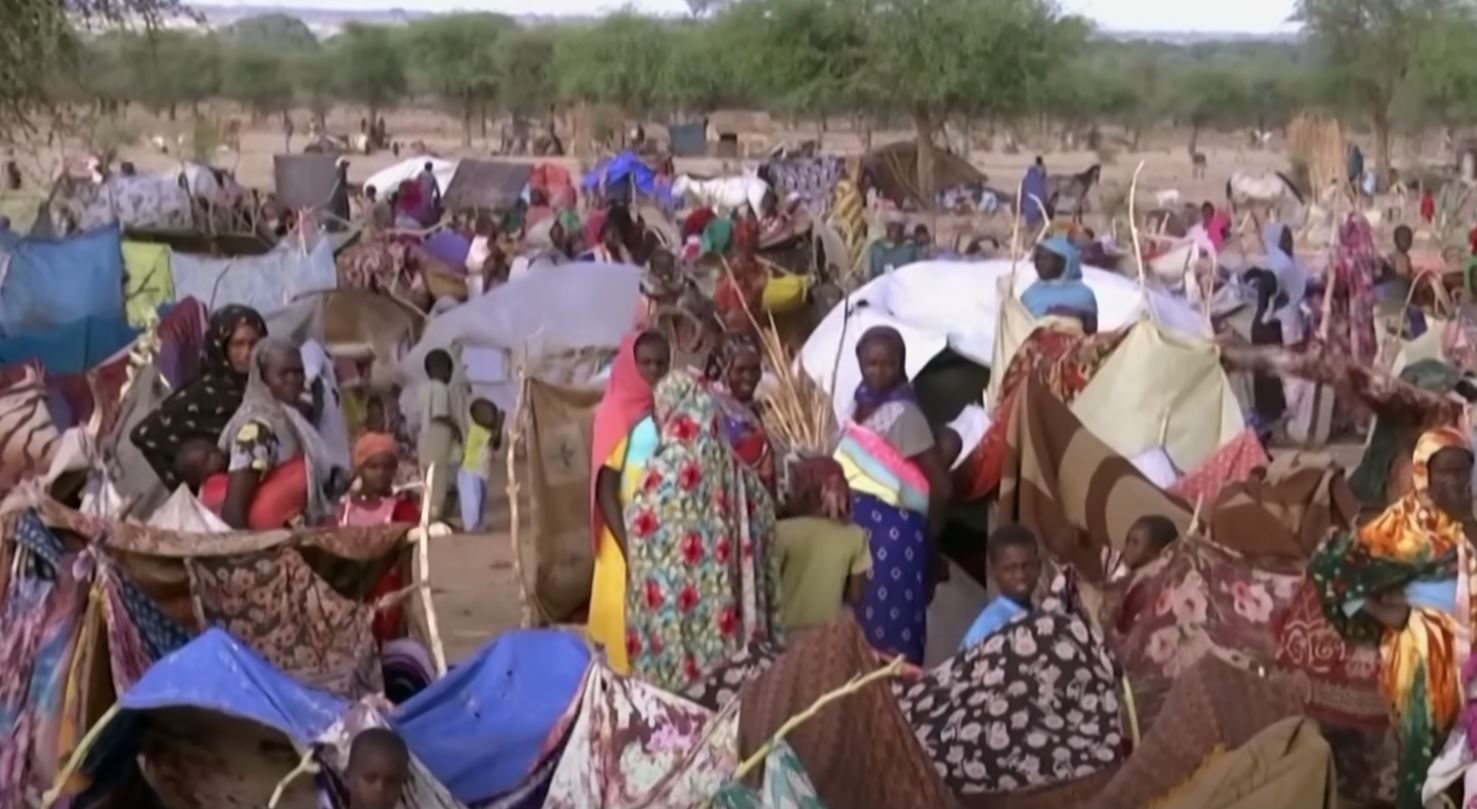
Darfur: where vaccination gaps become outbreaks
Doctors Without Borders (MSF) and other organizations have documented how months-long interruptions in immunization programs are directly linked to rising measles transmission. In some camps, vaccination stopped entirely for extended periods due to road blockades, supply shortages, and administrative impediments.
Where rapid vaccination campaigns have been possible, the impact is immediate. MSF reports that in areas such as Jebel Marra and Rokero, emergency vaccination and treatment efforts reached tens of thousands of children and sharply reduced cases — proof that the crisis is not about “lack of tools,” but lack of access and sustained operational capacity.)
Why Nordic population should pay attention: measles in Sudan is not “only Sudan’s problem”
For Nordic audiences, the risk is not that measles will “spread from Sudan to Scandinavia” in a simplistic sense, but that outbreaks in conflict zones reveal — and reinforce — vulnerabilities in global health systems and domestic preparedness. This is both a policy question and a public health question, and increasingly, a business continuity question.
Below are three angles Nordic decision-makers should consider.
1) The public health reality: Nordic safety depends on maintaining high vaccination coverage
Measles does not respect borders — it exploits immunity gaps. Nordic countries have strong vaccination programs, but even high-income nations can see outbreaks when:
- vaccine uptake drops in specific communities
- coverage gaps arise among newly arrived populations who missed routine vaccinations
- health services don’t catch up quickly enough
Globally, WHO, UNICEF and partners have warned of rising measles risk due to humanitarian crises, funding constraints, and stalled immunisation progress.
Nordic takeaway: the most effective protection remains high MMR coverage, rapid outbreak response capacity, and targeted catch-up vaccination for those with missing doses — not travel bans or alarmist narratives.
2) The policy reality: outbreaks in fragile states are a stress test of global health security
Sudan’s measles resurgence is inseparable from the collapse of routine services during war — the same conditions that also fuel cholera, malnutrition, and wider mortality. The crisis underscores a broader lesson: health security cannot be separated from conflict resolution, humanitarian access, and sustained financing.
For Nordic governments, this intersects with:
- humanitarian funding policy and priorities
- diplomacy and ceasefire support (health corridors, safe access)
- multilateral engagement through WHO, UNICEF, and Gavi (especially for “zero-dose” children)
Public health researchers have explicitly framed Sudan’s measles situation as part of a wider “zero-dose” gap — children who receive no vaccines at all — which tends to grow rapidly during conflict.
Nordic takeaway: if humanitarian funding is delayed or fragmented, measles becomes an early indicator of much larger systemic failure — and rebuilding becomes more expensive later.
3) The business reality: disease resurgence is now a measurable operational risk
Nordic companies with regional supply chains, humanitarian logistics, mining or infrastructure exposure, or staff travel to East/North Africa should not interpret measles as a “rare medical issue.” It can create:
- restrictions on staff movement or insurance requirements
- disruption to logistics corridors already strained by conflict
- heightened duty-of-care expectations for employers
- reputational exposure if companies are seen as ignoring humanitarian impacts
When MSF withdrew from famine-stricken Zamzam camp due to intense fighting, it highlighted a core operational truth: in high-risk contexts, security can shut down health services overnight, and when health services shut down, outbreaks can accelerate rapidly.
Nordic takeaway: health risks in fragile states increasingly affect operations, resilience planning, and ESG scrutiny — even for organizations not directly “in health.”
What should the Nordics do? A practical, non-alarmist checklist
For public health authorities
- Maintain high MMR vaccination coverage (especially in areas with declining uptake).
- Strengthen catch-up programs for children and adults with incomplete vaccination histories.
- Improve early detection & outbreak response (testing capacity, contact tracing, rapid immunization).
For policymakers
- Support humanitarian access and safe corridors for immunization delivery.
- Sustain vaccine financing through multilateral channels, particularly for conflict-affected areas.
- Coordinate with EU/Nordic partners on health security planning tied to displacement and conflict.
For employers and business leaders
- Ensure staff travel policies include proof of immunity / vaccination where relevant.
- Build disease resurgence into risk registers for fragile-state exposure.
- Support credible humanitarian partners — and communicate clearly to avoid “virtue signalling” and focus on impact.
A note on language: avoiding stigma while staying realistic
Reporting on outbreaks in conflict zones must avoid implying that displaced people themselves are “the risk.” The risk comes from systems failing — and from the dangerous idea that humanitarian crises can be contained by distance. The practical response is not fear, but prevention: vaccination, access, and financing.
Footer — Next issue: where this story goes next
Follow-up direction for the next article:
A strong next instalment would examine the economics of immunisation collapse: What does it cost — in lives, in humanitarian spending, and in regional stability — when routine vaccination drops below herd-immunity thresholds? This could include a Nordic perspective on funding mechanisms, “zero-dose” recovery strategies, and how public-private partnerships can support cold chains, last-mile delivery, and rapid catch-up campaigns in fragile settings.
Connect with Nordic Business Journal:
If you work in policy, healthcare, risk management, logistics, or humanitarian finance and have insights, data, or case studies, we want to hear from you. Reach out to the editorial team to contribute expertise, propose topics, or collaborate on future reporting.