
U.S. President Donald Trump would rather purchase Greenland than attempt to seize it militarily, according to U.S. Secretary of State Marco Rubio, as reported by several American media outlets.
Rubio made the remarks during a closed-door briefing with senior lawmakers from the defence and foreign-policy committees in both chambers of Congress. His comments appear designed to cool tensions following an earlier White House statement that the use of military force to secure Greenland was “always a possibility.”
When Trump told The Atlantic on 4 January that the United States “needs Greenland for national security,” the Nordic response was swift and coordinated. Within 90 minutes, every Nordic head of government issued an identical statement on X—written in English—declaring: “Territorial integrity is non-negotiable.”
For investors who remember the 2019 freeze in Arctic capital flows, the sense of déjà vu is palpable. This time, however, the stakes are materially higher. Greenland holds an estimated 25 per cent of the world’s untapped rare-earth oxides. The EU’s Critical Raw Materials Act is now law. And Copenhagen has approved a DKK 5 billion infrastructure package designed to mobilise EU funds, Nordic pension capital and ESG-linked financing into the island.
What began as geopolitical theatre is rapidly evolving into a capital-markets chess match—and Nordic business is already placing its pieces on the board.
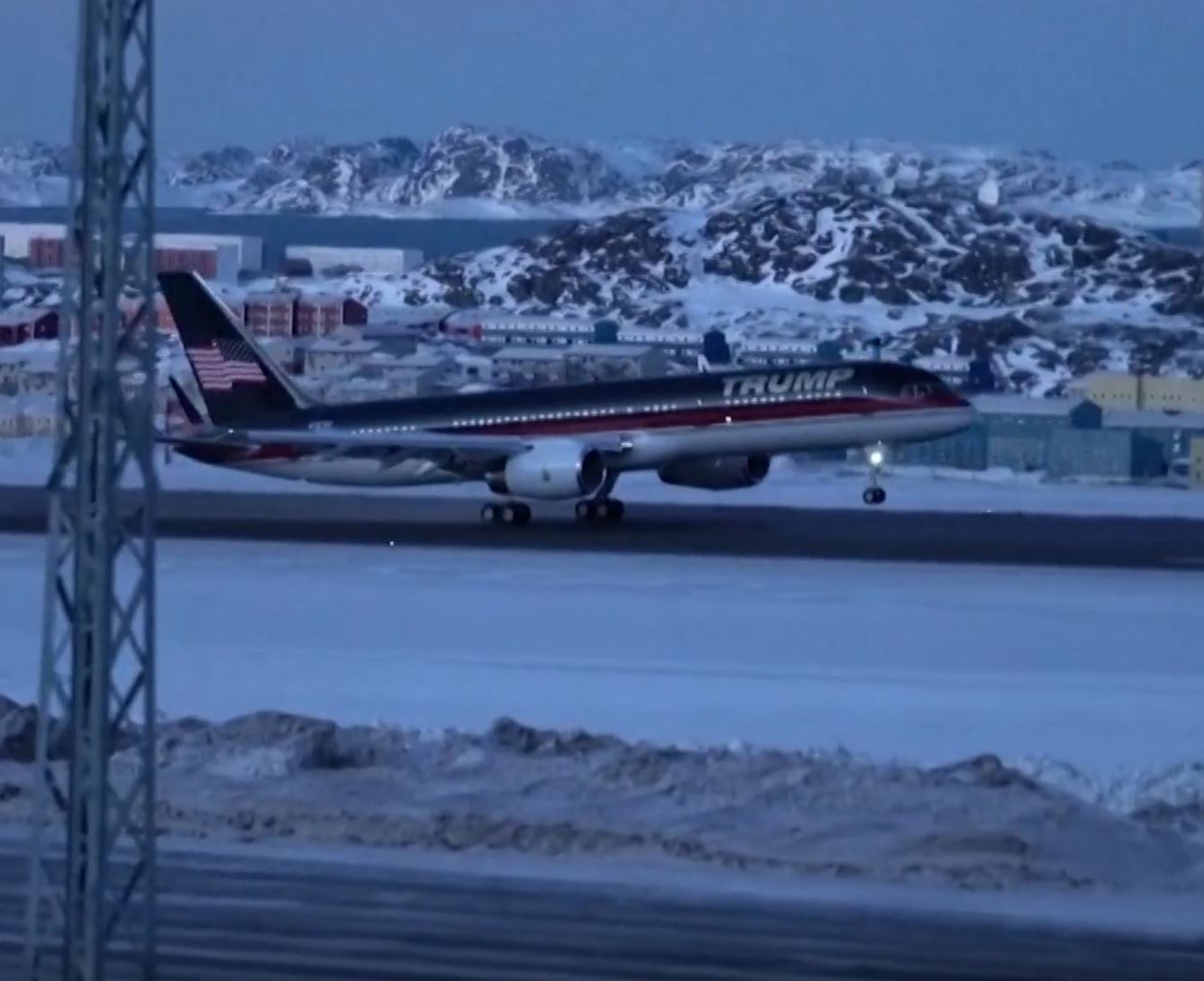
Donald Trump Jr.’s plane landed at Nuuk Airport in Greenland for what was described then as a private visit. | Ganileys
The Hard Numbers
- 50 kt – Annual rare-earth concentrate Europe will require from Greenland by 2030 to meet EV-magnet targets (EU Commission forecast).
- 65 % – China’s share of global rare-earth processing; Brussels’ target is <10 % by 2035.
- 38 – Active mining and infrastructure permits currently under review in Greenland (Bureau of Minerals & Petroleum, Jan 2026).
- DKK 5 bn – Danish state green-transition loan facility earmarked for Arctic transport, energy and telecoms, signed into law on 20 December 2025.
- 11 % – One-day rise in OMX Copenhagen’s “Arctic cluster” index (Royal Arctic Line, Greenland Airport Authority, Vestas, Danfoss) following Prime Minister Frederiksen’s 4 January statement.
Nordic C-Suite Takes Sides
Norway’s Equinor, Sweden’s LKAB, and Finland’s Terrafame all maintain off-balance-sheet options on Greenland licences via joint ventures with local junior miners. On 5 January, the CEOs of all three companies publicly endorsed the Nordic prime ministers’ statements on LinkedIn—an unusually explicit signal to Washington that any forced change in sovereignty would trigger force-majeure clauses, project re-pricing, and likely credit-rating reviews.
Shipping groups are moving even faster. Wallenius-Wilhelmsen, NYK Line, and Greenland-owned Royal Arctic Line have activated “scenario-B” clauses in charter contracts, rerouting heavy-lift capacity through Reykjavík and Tórshavn should U.S. sanctions affect Danish-flagged traffic. Freight forwarders report a 17 per cent spike in Copenhagen–Nuuk container rates within 48 hours.
Capital-Markets Angle
Arctic exposure remains a niche allocation—but its option value is rising sharply.
- Oslo Børs’ Arctic Sea ETF (ARC.SE) recorded DKK 420 million in net inflows on 4–5 January, its strongest two-day intake since launch.
- The Greenland Infrastructure Fund (GIF), a DKK 2.5 billion vehicle backed by PKA, PFA and KommuneKredit, raised its hurdle rate by 150 basis points to reflect “sovereign-risk volatility,” according to a 5 January investor note reviewed by NBJ.
- Nordea’s Arctic Equity Research desk issued a “buy-the-dip” note on Greenland Minerals (GML.AX), citing a 30 per cent share-price decline since Trump’s interview despite unchanged JORC resources and an intact EU off-take MoU. Target price: AUD 0.45 versus last AUD 0.27.
What Happens Next: Three Scenarios
1. Diplomatic Detour (60 % probability)
The EU and Washington open a formal Greenland raw-materials partnership, modelled on the 2023 U.S.–Japan critical-minerals agreement. Danish sovereignty remains intact, while U.S. buyers secure long-term off-take contracts. Nordic suppliers retain strategic positioning.
2. Sanctions Spiral (25 %)
The Trump administration imposes Section 232 tariffs on Danish-Arctic exports. The EU responds with carbon-border adjustments on U.S. LNG. Capital temporarily exits Nuuk, but long-term EU subsidy windows widen—favouring Nordic ESG-aligned contractors.
3. Market Freeze (15 %)
Escalating annexation rhetoric triggers a project-finance moratorium. Royal Arctic Line bond spreads widen by 400 bps, and GIF delays port PPPs. For cash-rich Nordic pension funds, this mirrors the post-2014 Russia-sanctions playbook: volatility first, value later.
Bottom Line for Boardrooms
Greenland is no longer a peripheral Danish issue. It has become a live stress test for EU strategic autonomy, Nordic pension capital, and Arctic-grade ESG logistics.
Companies with flexible balance sheets and compliant supply chains can treat the current 15–20 per cent equity discount as an entry point. Firms with thin working-capital buffers should hedge freight, FX and political risk immediately—liquidity evaporates quickly once sovereign-risk headlines dominate Bloomberg terminals.
Looking Ahead
Parliamentary hearings in Copenhagen on 12 January will clarify whether the Social-Liberal coalition will:
a) fast-track the DKK 5 billion facility into a state-guaranteed export-credit structure, or
b) open direct equity co-investment to Nordic pension funds.
Either outcome is likely to set the pricing floor for Greenland’s critical-mineral licences through 2026–27.
Pondering Next Issue
Nordic Business Journal will publish an exclusive valuation model for Greenland’s rare-earth assets under varying sovereign-risk assumptions, alongside a league table of Nordic suppliers best positioned to secure EU-backed EPC contracts.
Subscribe to our Arctic Capital Alert to receive the full data deck 24 hours before release.
Connect With Us
LinkedIn: Nordic Business Journal
X: @NordicBizJ
Email: insight@nordicbusinessjournal.com
We invite CFOs, fund managers and project engineers to share how they are pricing Arctic risk. Reach out for inclusion in our upcoming NBJ round-table.