
Sweden may soon confront a costly but consequential reckoning with diesel emissions. New particle-measurement technology indicates that tens of thousands of relatively modern diesel cars would fail stricter emissions inspections currently being prepared at EU level. While industry actors are urging early action, Swedish authorities remain reluctant to move ahead of Brussels, citing uncertainty and potential costs for vehicle owners.
Preliminary pilot tests reviewed by SVT and conducted by Bilprovningen, Sweden’s vehicle inspection service, show that between 3 and 5 percent of tested diesel cars exceed proposed EU particle limits—a dramatic increase compared with today’s failure rate of just 0.02–0.05 percent. The discrepancy highlights a structural blind spot in current testing methods, many of which date back more than half a century.
“It feels wrong that we carefully inspect brakes, tyres and turn signals, but not what actually comes out of the exhaust pipe—despite the fact that these emissions cause more premature deaths than traffic accidents,”
— Johanna Brunge Grant, Sustainability Manager, Bilprovningen
Outdated Testing, Modern Risks
Today’s standard diesel exhaust test—the so-called opacity test—measures how dense exhaust smoke appears, not the number of ultrafine particles emitted. These particles, often smaller than 2.5 micrometres (PM2.5), are among the most harmful pollutants to human health. According to the Swedish Environmental Research Institute (IVL), around 1,400 premature deaths per year in Sweden are linked to particle pollution.
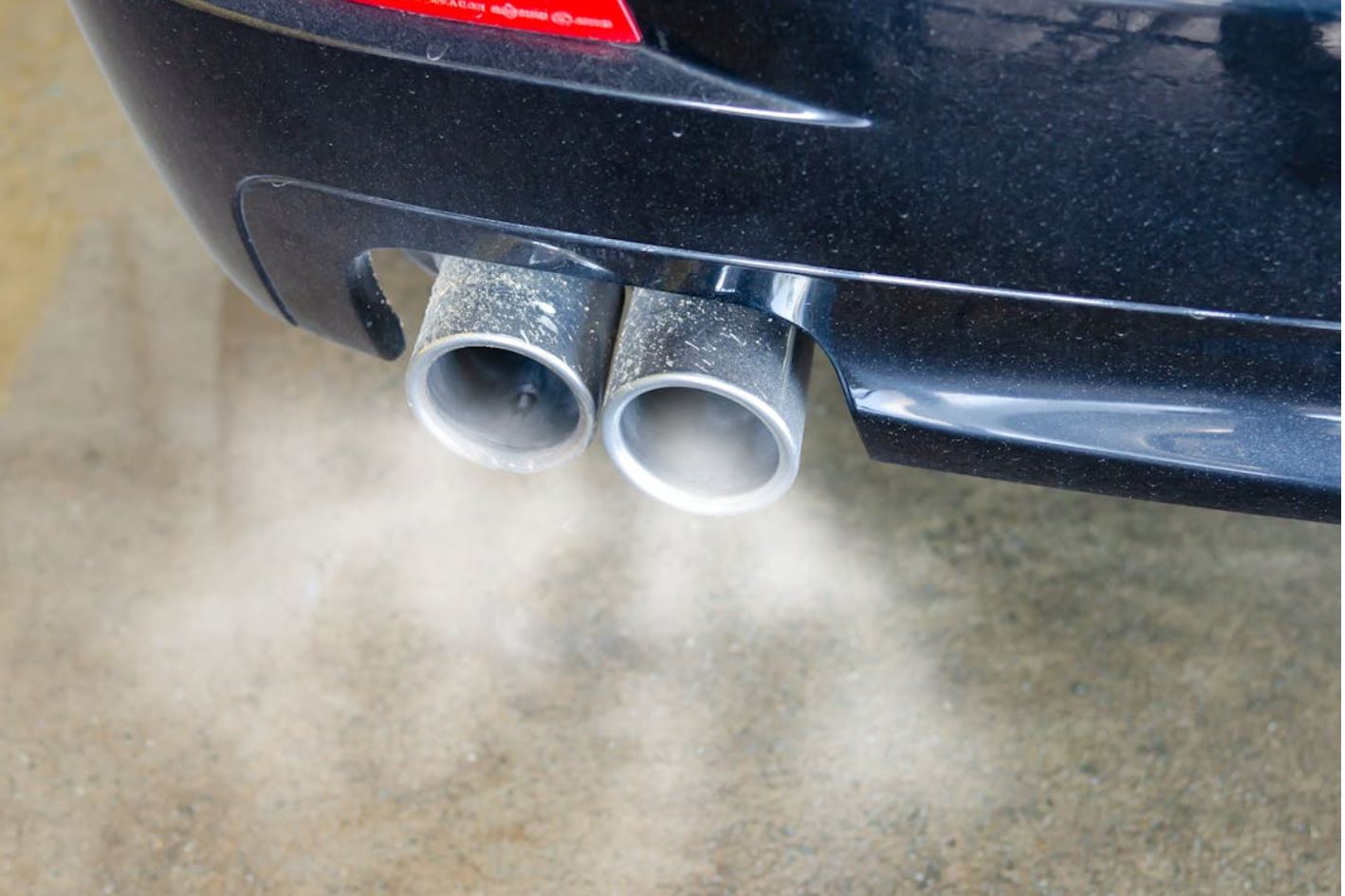
New particle-number (PN) measurement technology, already deployed in Germany, reveals what opacity testing misses: a single broken or manipulated diesel particulate filter can release millions of particles per cubic centimetre, compared with just a few hundred from a properly functioning system.
Bilprovningen has recorded readings as high as 6 million particles/cm³ in Swedish pilot tests.
Lessons from Germany—and a Nordic Dilemma
Germany introduced the EU-proposed limit of 250,000 particles/cm³ for Euro 6 diesel vehicles in 2023. Roughly 3 percent of vehicles fail under this standard. Applied to Sweden, the implications are significant.
According to the Swedish Transport Agency, Sweden has over 1.16 million Euro 5 and Euro 6 diesel cars. If particle measurement were introduced only for Euro 6 vehicles registered from 2015 onward—about 747,000 cars—and failure rates matched Germany’s, more than 22,000 vehicles would fail inspection. Including Euro 5 vehicles, as envisaged in the EU proposal, would raise that figure substantially.
For vehicle owners, this could mean repair or replacement of diesel particulate filters, often costing several thousand kronor per car. For society, however, the calculation is broader.
“Yes, there is a cost—just like when brakes are faulty. But the highest price is paid by those whose health is already compromised and who are exposed daily to these ultrafine particles,”
— Johanna Brunge Grant, Bilprovningen
Government Caution vs. Public Health Economics
Despite mounting evidence, the Swedish government and the Swedish Transport Agency have opted not to move ahead of EU-wide regulation. Common EU inspection rules are still under negotiation and may not enter into force until 2028–2029.
“This is a completely new method, and we assess that it could cause significant challenges for vehicle owners,”
— Per Öhlund, Investigator, Swedish Transport Agency
From a business and policy perspective, this hesitation reflects a familiar Nordic tension: short-term household costs versus long-term societal gains. While repair costs are visible and immediate, the economic burden of pollution—healthcare spending, lost productivity, and reduced quality of life—remains largely externalised.
For the inspection industry, aftermarket suppliers, and automotive service providers, earlier adoption could also represent a transition opportunity, not just a compliance burden.
A Turning Point for Diesel in the Nordic Region
As of 2025–2026, diesel sales across the EU continue to decline, and several Nordic cities are expanding low-emission or zero-emission zones. Stricter inspection regimes would further accelerate the phase-out of poorly maintained diesel vehicles, while rewarding owners who invest in proper upkeep.
Importantly, the upcoming EU rules do not apply to petrol vehicles, underlining that this is not a blanket automotive crackdown but a targeted response to a specific and measurable health risk.
When EU-wide particle measurement is finally implemented, Sweden will not be exempt. The key question is whether policymakers choose a gradual, nationally managed transition—or a sudden adjustment imposed from Brussels.
Facts: What the New Data Shows
- Proposed EU limit for Euro 6 diesel cars: 250,000 particles/cm³
- Well-functioning filter: Hundreds of particles/cm³
- Broken/manipulated filter: Millions of particles/cm³
- Pilot tests in Sweden:
- 3% failed at 250,000 particles/cm³
- 5% failed at 1,000,000 particles/cm³
- Current failure rate for diesel exhaust in Sweden: ~100 cars per year
What Comes Next?
Follow-up direction for our next article:
We will examine the economic ripple effects of stricter emissions inspections—who pays, who benefits, and how Nordic policymakers can design fair transition mechanisms for households and small businesses.
Stay connected with Nordic Business Journal for in-depth reporting on regulation, sustainability, and the business decisions shaping the Nordic economy.
Join the conversation, share your perspective, and follow us for continued coverage.