
One year after Sweden armed its customs officers—a move intended to bolster border security in an era of rising cross-border crime—the policy has run into an unexpected obstacle: Norway’s strict prohibition on foreign armed personnel operating on its soil.
The result? A fragmented and increasingly inefficient customs corridor along the Sweden–Norway border, one of the Nordic region’s most vital trade arteries. While Swedish customs officers can now carry firearms on their side of the border, they must stop dead at the line. This has created operational blind spots, disrupted long-standing bilateral protocols, and—ironically—led to a surge in contraband slipping through the cracks.
A Border Agreement Out of Sync with New Realities
Historically, Sweden and Norway have enjoyed a cooperative customs arrangement that allows officers from either country to operate within a designated “border zone” on both sides. This flexibility was designed to streamline inspections, reduce duplication, and maintain fluid cross-border commerce—critical for industries from timber and automotive to renewable energy components.
But since Sweden’s decision in early 2025 to arm its customs force—part of a broader EU trend toward heightened border security in response to organised crime and hybrid threats—the arrangement has stalled. Norwegian law explicitly bans foreign officials from carrying weapons on its territory, including allied Nordic neighbours.
“We get to the border—and then it stops,” says Stefan Ekenbäck, Group Manager at the Swedish Customs Authority in Värmland, which oversees one of the busiest crossing points. “If there’s no Norwegian officer present on the other side, suspects we’ve flagged can simply walk across and disappear.”
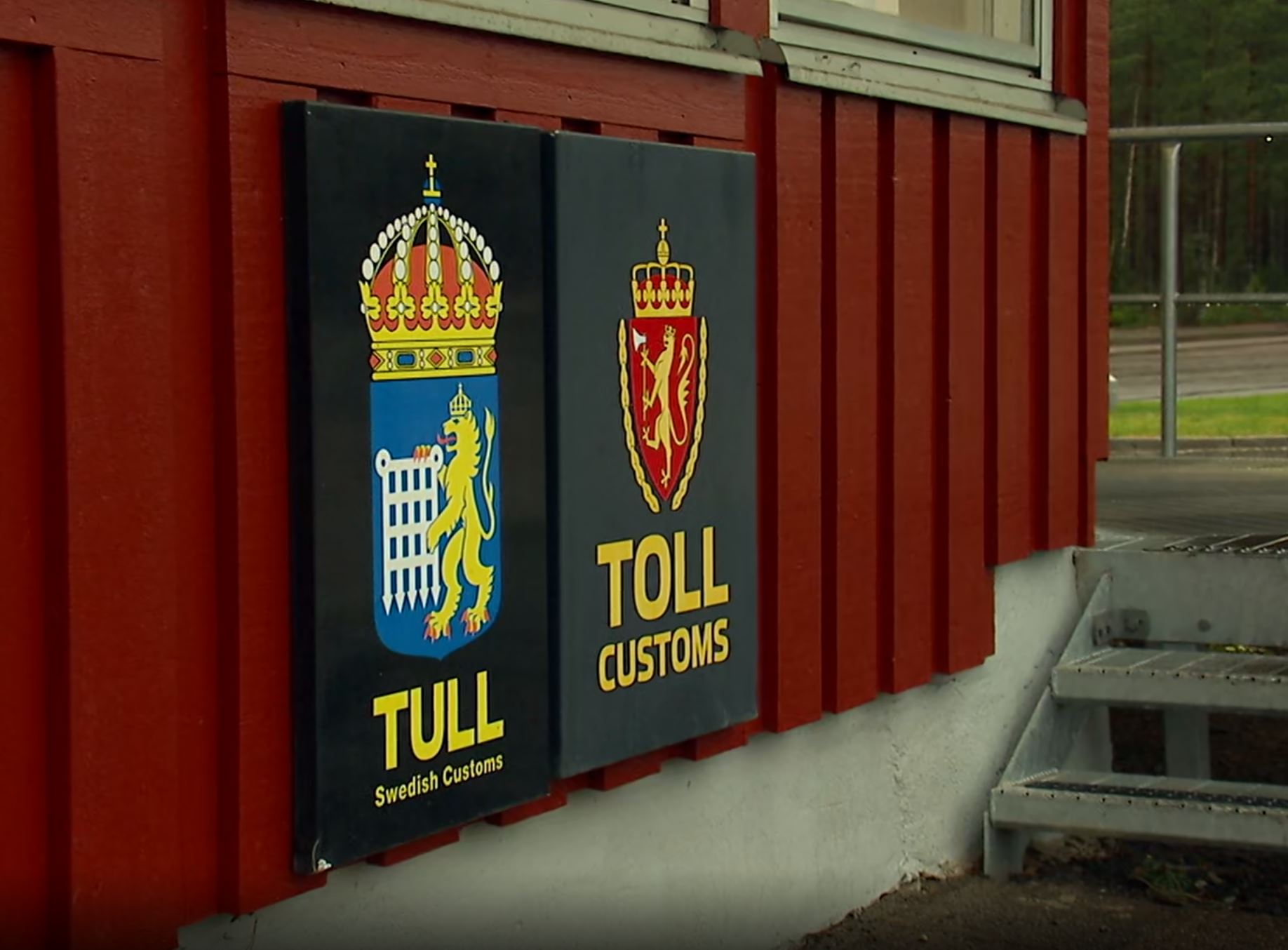
Contraband Seizures Spike—But Coordination Falters
Paradoxically, while cooperation has degraded, illegal trafficking has surged. According to newly released data from the Norwegian Customs Directorate, seizures of illicit goods—including alcohol, narcotics, and unregistered tobacco—rose by 30% between 2022 and November 2025 along the Norwegian side of the shared frontier.
Analysts attribute this not to increased crime alone, but to asymmetric enforcement capabilities. Armed Swedish officers can intercept suspects more assertively on their side, pushing criminal networks to shift operations just meters across the line—where unarmed Norwegian inspectors lack the tactical authority to respond with equal force.
This isn’t just a law enforcement issue—it’s a trade integrity problem,” notes Dr. Linnea Bergström, a security policy fellow at the Stockholm Institute for Nordic Affairs. “Inefficiencies at the border add compliance costs, delay supply chains, and erode trust in the seamless Nordic market we’ve worked decades to build.”
Norway’s Cautious Stance—and the Search for a Compromise
The Norwegian Ministry of Finance, which oversees customs policy, acknowledges the friction. In a statement to SVT and reaffirmed to the Nordic Business Journal, it admitted that “differing armament policies create operational challenges” and confirmed it is “continuously evaluating how these challenges can be reduced.”
Yet as of early 2026, no concrete proposal has emerged. Norway remains reluctant to amend its longstanding stance on foreign armed personnel—a position rooted in both legal principle and public sentiment. Meanwhile, Sweden shows no sign of disarming its customs force, citing growing threats from transnational smuggling rings and the need to align with EU best practices.
One potential middle ground under quiet discussion: designated demilitarised inspection zones where Swedish officers temporarily surrender sidearms before entering Norwegian territory, or the deployment of joint, unarmed rapid-response teams trained in both jurisdictions. But such models require political will—and legal harmonisation—that has so far been absent.
Why Nordic Businesses Should Pay Attention
For Nordic enterprises reliant on just-in-time logistics or cross-border compliance, this customs impasse is more than a bureaucratic quirk. Delays, inconsistent inspections, and the risk of goods being flagged (or missed) due to jurisdictional gaps can translate into real financial losses.
Moreover, as both Sweden and Norway deepen their security cooperation within NATO and the EU’s evolving border frameworks, this disconnect highlights a broader challenge: how to maintain Nordic exceptionalism—our tradition of seamless cooperation—amid increasingly divergent national security postures.
What’s Next?
In our next article, we’ll explore how Finland and Denmark are navigating similar tensions in their border operations, and whether the Nordic Council can spearhead a region-wide customs security protocol that balances sovereignty, safety, and economic efficiency.
We invite our readers—especially those in logistics, trade compliance, and supply chain management—to share their frontline experiences with Nordic border delays. Connect with us at insights@nordicbusinessjournal.com or join the conversation on LinkedIn using NordicBorderWatch. Your insights could shape our next investigation.