
In a striking display of civic commitment, new polling data reveals that foreign-born residents in Sweden’s socioeconomically challenged suburbs are among the most willing to defend the country in the event of a national crisis. This finding—both counterintuitive and deeply symbolic—offers fresh insight into integration, national identity, and the evolving social contract in modern Sweden.
The poll, conducted by Indikator Opinion on behalf of the Järvaveckan Foundation and originally published in late 2023, has gained renewed relevance amid heightened geopolitical tensions in Northern Europe. With Finland and Sweden now full NATO members as of March 2024, and Russia’s war in Ukraine continuing to destabilize the region, questions of national defence and societal cohesion have moved from academic discourse to urgent public policy.
According to the survey, residents in so-called utsatta områden (vulnerable areas)—many of whom are immigrants or children of immigrants—express stronger willingness to take up arms or otherwise support Sweden’s defence than the national average. One respondent, 20-year-old Meron, who fled Eritrea as a child, encapsulated this sentiment: “Sweden gave me an education, safety, and freedom. If it were ever under threat, I would stand for it without hesitation.”
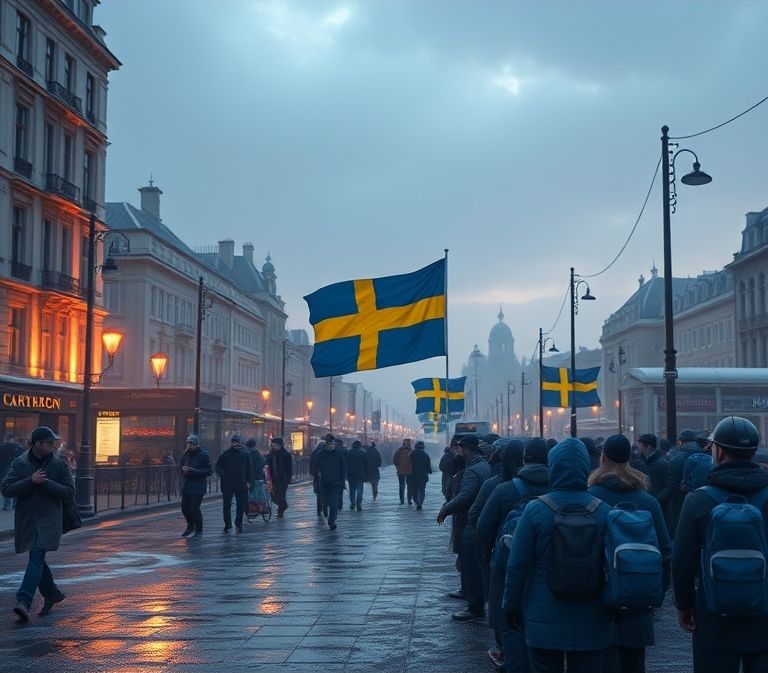
Why This Matters for Business and Policy Leaders
At first glance, this data might seem purely sociological—but its implications ripple across labour markets, public investment strategies, and corporate social responsibility frameworks.
1. Integration as Strategic Asset: The loyalty expressed by these communities underscores a critical truth: successful integration is not just a moral imperative but a strategic national advantage. Businesses investing in workforce development, language training, or mentorship programs in these areas aren’t just fulfilling CSR goals—they’re nurturing future talent pools with high civic engagement.
2. Defence Industry & Workforce Readiness: As Sweden scales up its defence capabilities—including increased defence spending (now exceeding 2% of GDP as pledged under NATO commitments)—there is growing demand for skilled personnel in logistics, cybersecurity, engineering, and emergency response. The very communities often portrayed as “marginalised” may hold untapped potential for national resilience.
3. Narrative Shift in Public Discourse: Media and political narratives have long framed vulnerable suburbs through lenses of crime or social strain. This data challenges that framing, revealing deep reservoirs of patriotism and belonging. Forward-thinking companies and municipalities can leverage this positive narrative to co-create inclusive economic initiatives—such as innovation hubs in Rinkeby or Rosengård—that align local ambition with national interest.
A 2026 Update: From Sentiment to Strategy
Since the original poll, Sweden’s security posture has transformed dramatically. The country’s NATO accession has not only altered its military alliances but also triggered a nationwide conversation about civil preparedness. In 2025, the Swedish Civil Contingencies Agency (MSB) launched “Trygghet i Samverkan” (Security Through Collaboration), a program explicitly engaging diaspora communities in emergency planning—recognising their networks, multilingual skills, and local knowledge as force multipliers.
Moreover, municipalities like Malmö and Stockholm have begun piloting “integration through service” models, where newcomers can fulfil civic orientation requirements via volunteer roles in fire brigades, neighbourhood watch groups, or digital literacy programs—blending inclusion with national readiness.
Looking Ahead
This shift—from passive recipients of welfare to active contributors to national security—represents a profound redefinition of citizenship in the 21st century. It also presents Nordic businesses with an opportunity: to invest not only in markets but in the social infrastructure that sustains them.
Next in Our Series:
“From Suburb to Startup: How Immigrant Entrepreneurs Are Fuelling Innovation in Sweden’s Periphery” — We’ll explore how tech incubators in vulnerable areas are producing scalable ventures, supported by public-private partnerships and EU cohesion funds.
We Want to Hear From You:
Are you a business leader, policymaker, or community organizer working at the intersection of inclusion and national resilience? Share your insights with us at insights@nordicbusinessjournal.com. Let’s shape the next chapter of the Nordic model—together.