
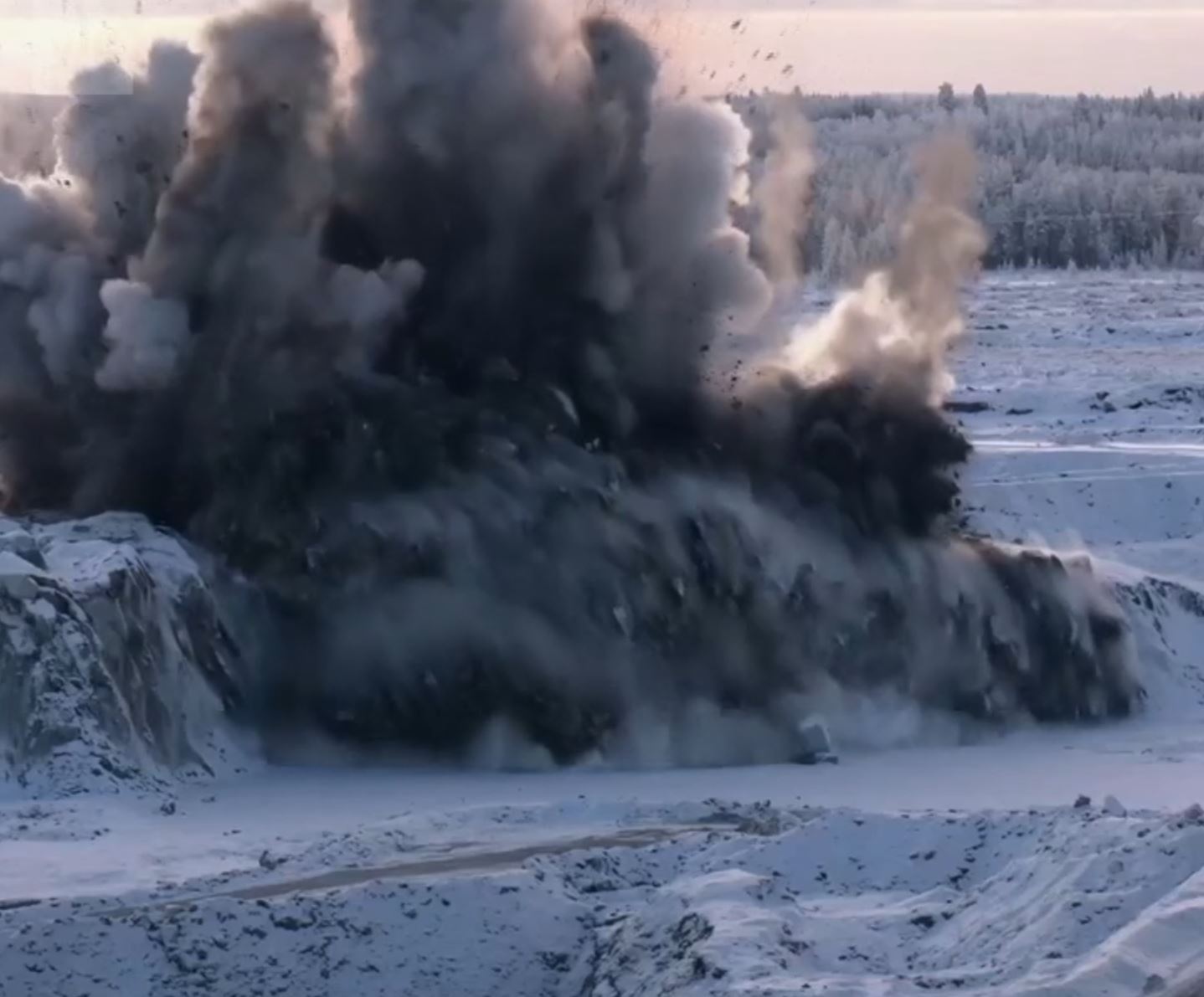
In the frozen expanse of Kaustinen, western Finland, a shift in the geopolitical landscape of the green transition occurred this week. Mining firm Keliber has officially commenced operations at the Syväjärvi open-pit mine, marking the inauguration of Europe’s first fully integrated, battery-grade lithium production chain.
While the blasting of spodumene veins is a physical milestone, the broader implication is economic: Europe is taking its first tangible step toward decoupling its electric vehicle (EV) supply chain from Asian dominance.
The Project at a Glance
The €800 million infrastructure project spans three municipalities—Kaustinen, Kokkola, and Kronoby. Unlike traditional mining ventures that export raw ore, Keliber’s model is vertically integrated. The ore extracted at Syväjärvi will be crushed and enriched at the nearby Päiväneva plant before being refined into lithium hydroxide at a chemical plant in Kokkola.
This “mine-to-cathode” approach is set to create approximately 350 direct jobs, but its strategic footprint is far larger. With the Päiväneva concentrator scheduled for full operation this spring and the Kokkola chemical plant following by year-end, Finland is positioning itself as a nexus for the Nordic battery cluster, complementing existing gigafactories in Sweden and Germany.
Market Analysis: Navigating Volatility and Strategic Premiums
For business leaders and investors, the Keliber launch raises a critical question: Is this viable in a corrected market?
When South African miner Sibanye-Stillwater acquired an 80% stake in Keliber (with the Finnish Minerals Group holding the remaining 20%) in late 2022, lithium prices were near historic highs. Since then, prices have corrected sharply, trading significantly below the five-year average due to slowed EV demand growth and increased supply from Australia and China.
The Business Case for Resilience:
Despite the price correction, Keliber CEO Hannu Hautala maintains the project will be profitable. Our analysis suggests three factors underpinning this confidence:
1. Low-Cost Jurisdiction: Finland offers stable energy costs (crucial for chemical refining), high grid reliability, and a skilled workforce, reducing operational risk premiums common in emerging markets.
2. The “Green Premium”: European battery manufacturers, bound by the EU’s new Critical Raw Materials Act (CRMA), face mandates to source a percentage of materials domestically. Keliber’s lithium, produced under strict Nordic ESG standards, commands a strategic premium over carbon-intensive imports.
3. Long-Term Off-take: Unlike spot-market sellers, integrated players often secure long-term contracts with automakers seeking supply security over short-term price fluctuations.
The Geopolitical Moat
The significance of Keliber extends beyond balance sheets. Currently, Europe refines very little of the lithium it consumes. Portugal possesses reserves but lacks refining capacity, exporting concentrate to China. Serbia’s massive Jadar project remains stalled following regulatory and social pushback.
By completing the value chain domestically, Finland offers a “friend-shored” alternative. The logistics advantage is tangible; shipping lithium hydroxide from Kokkola to a battery plant in Germany or Hungary reduces lead times and carbon footprint compared to shipments from Western Australia or South America.
Future Outlook and Expansion
The Syväjärvi and Rapasaari deposits alone boast an 18-year mine life, but Keliber is not stopping there. The company holds permits for six additional mining areas in the region and continues active prospecting.
However, challenges remain. The capital intensity of the chemical plant requires steady cash flow during the ramp-up phase. Furthermore, the global lithium market remains cyclical. Keliber’s success will depend on its ability to maintain cost discipline while the EU’s EV adoption rates mature.
Keliber is more than a mine; it is a proof-of-concept for European industrial sovereignty. For Nordic investors, it signals a maturing ecosystem where raw material extraction, refining, and battery manufacturing are converging. While commodity prices fluctuate, the strategic imperative for domestic supply chains remains a secular growth trend.
Editor’s Note: Where We Go From Here
Follow-Up Direction:
In our next issue, we recommend a deep dive into The Nordic Battery Ecosystem’s Supply Chain Bottlenecks. While mining is starting, the mid-stream processing (refining) and recycling infrastructure still lag behind cell manufacturing capacity. An analysis of where the next investment opportunities lie—specifically in black mass recycling and cathode active material production—would be highly valuable for our investment-focused readership.
Connect With Us:
Are you an investor, policymaker, or industry leader tracking the Nordic green transition? We want to hear your insights.
- Share your perspective: insights@nordicbusinessjournal.com
- Subscribe for deeper analysis: www.nordicbusinessjournal.com/subscribe
- Join the conversation: LinkedIn @NordicBusinessJournal
Stay ahead of the curve with the Nordic Business Journal.