
The United States has formally approved the potential sale of the M142 High Mobility Artillery Rocket System (HIMARS) to Sweden, a deal valued at approximately $930 million (SEK 8.5 billion). While the political green light from Washington is a significant milestone, the final decision to write the check rests in Stockholm. Prime Minister Ulf Kristersson (M) has struck a characteristically cautious tone, telling SVT that “the US is prepared to sell if Sweden is prepared to buy. But we are not there yet.”
For the readers of Nordic Business Journal, this is not merely a defence procurement story; it is a complex calculus of industrial policy, fiscal strategy, and geopolitical realignment.
Beyond the Headline: What the $930 Million Actually Buys
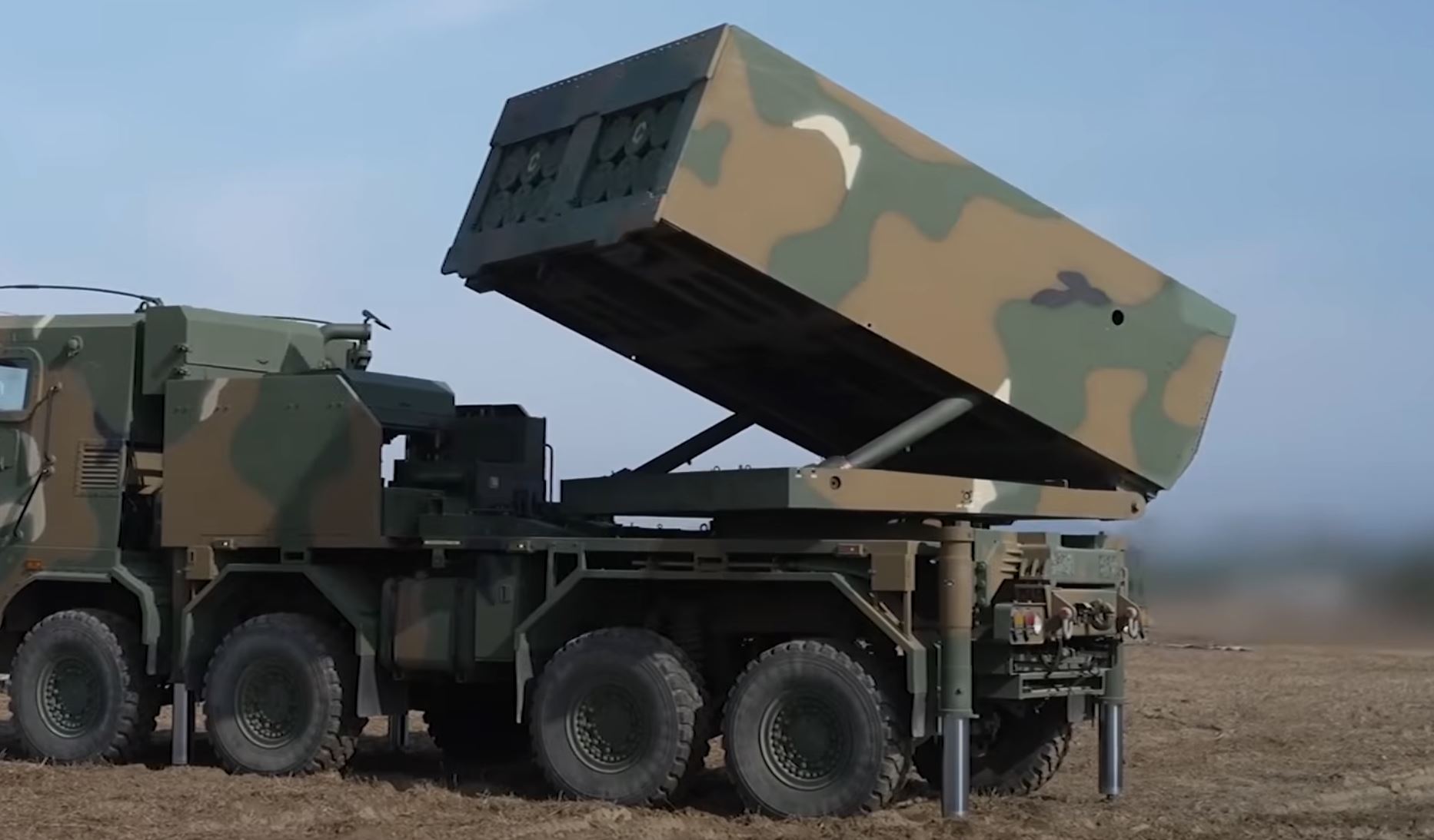
While initial reports vaguely mentioned “associated equipment,” the Defence Security Cooperation Agency (DSCA) notification provides a detailed breakdown of a package that is as much about digital warfare as it is about explosive power. Sweden has requested twenty M142 launchers. However, the strategic value lies in the munitions and the “kill chain” architecture:
– Deep Strike & Precision: The package includes a mix of M57 Army Tactical Missile Systems (ATACMS), capable of reaching targets up to 300 kilometres, and a significant number of Guided Multiple Launch Rocket System (GMLRS) munitions. Notably, the request includes Extended-Range (ER) GMLRS pods, which can engage targets at 150 km—double the range of standard rockets.
– Network Integration: Crucially, the sale includes 24 International Field Artillery Tactical Data Systems (IFATDS) and advanced AN/PRC-158 radios. This is the “invisible” component that allows Swedish units to plug directly into the U.S. and NATO joint fires network, receiving targeting data in real-time.
Analysis: The “Nordic Precision” Doctrine
For Sweden, this acquisition represents a doctrinal leap. The Swedish Armed Forces have long prioritized territorial defence with systems like the Archer artillery. HIMARS offers something different: theatre-level reach.
From a business and strategic standpoint, this move signals Sweden’s intent to become a “framework nation” for precision fires within the Nordic flank of NATO. By acquiring a system that is interoperable with the U.S. Marine Corps and NATO allies like Norway and Finland (who operate or are acquiring similar systems), Stockholm is ensuring that its military industrial complex—led by giants like Saab and BAE Systems Hägglunds—can integrate seamlessly with allied forces in a high-intensity conflict.
The recent combat performance of HIMARS in Ukraine has been a game-changer. Its “shoot-and-scoot” mobility and GPS-guided accuracy have proven decisive in disrupting Russian logistics and command structures. For Sweden, facing a similar potential threat spectrum across the Baltic Sea, the system offers a potent deterrent that can strike adversary naval assets, air defence sites, and staging areas from stand-off distances.
The Current Context: From Approval to Acquisition
As of March 2026, the ball is firmly in Sweden’s court. The Defence Materiel Administration (FMV) must now negotiate a final Letter of Offer and Acceptance (LOA) with the U.S. government.
Update on the Procurement Landscape:
Global demand for HIMARS is at an all-time high. Lockheed Martin has ramped up production to 96 launchers per year, but the order book is swelling with commitments to Poland, Taiwan, and multiple European allies. If Sweden finalizes this deal, delivery timelines will be a critical factor. Will these systems arrive in time to replace aging systems, or will they be part of a mid-term capability build-up slated for the early 2030s?
Furthermore, the cost is not static. The $930 million price tag covers the initial hardware, training, and support. However, the true cost of ownership includes a steady diet of precision munitions, each carrying a price tag of hundreds of thousands of dollars. For the Swedish taxpayer, this represents a shift from the “quantity” stockpiles of the Cold War to a “quality” model of high-cost, high-precision warfare.
The Geostrategic Imperative
This sale underscores a new reality: Sweden’s non-alignment is a historical footnote. As a NATO member, its defence posture is now intrinsically linked to American industrial capacity and strategic priorities. For Washington, the sale is a bargain—it strengthens a Nordic ally with minimal U.S. investment while ensuring that a NATO member’s military architecture remains dependent on American technology and software updates for decades to come.
Follow-Up Direction:
In our next issue, we will investigate the industrial offsets and local production opportunities. Will Swedish defence firms secure maintenance or component manufacturing contracts for the European HIMARS user community? We analyse the “made in Sweden” potential of this American system.
Connect with Us:
What does this defence spending mean for the Nordic industrial base? Share your insights here or follow the discussion on our LinkedIn page.