
Sweden’s public broadcaster confronts a perfect storm of political pressure, technological disruption, and funding constraints that offers lessons for media organisations across the Nordics
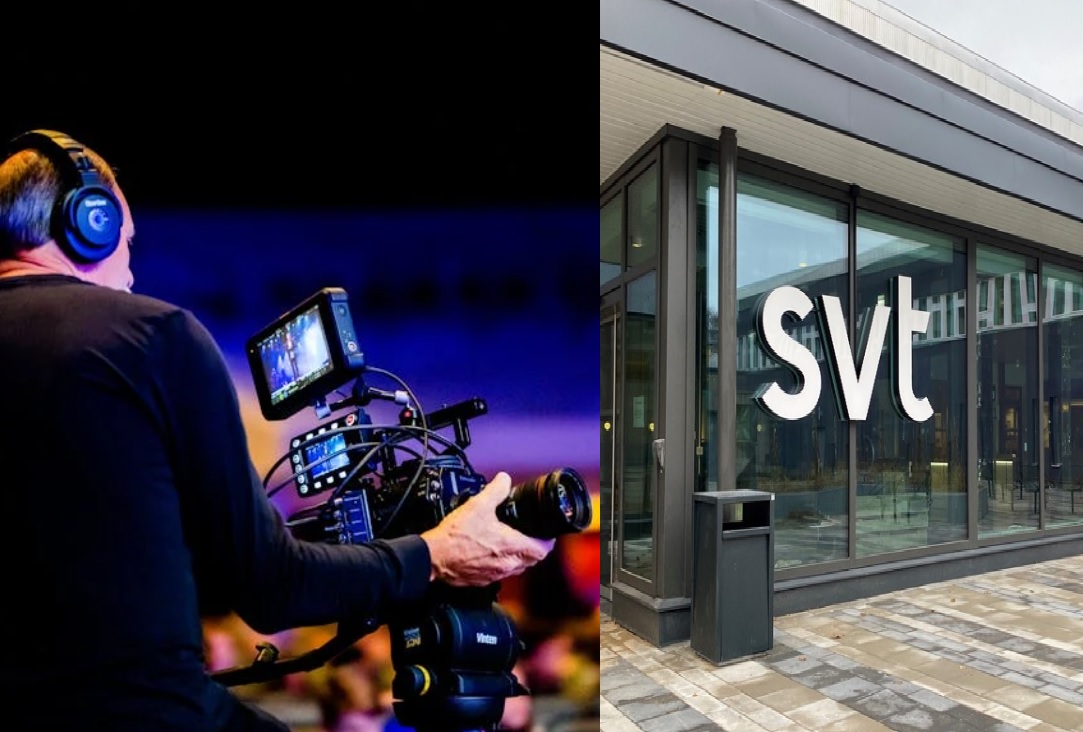
Swedish public television is haemorrhaging talent and institutional knowledge. Sveriges Television (SVT) confirmed this week that its national news division, Riksnyheterna, will shed 30 positions—representing one in ten jobs at its Stockholm headquarters—as part of a sweeping SEK 355 million cost-reduction program that eliminates 141 positions company-wide and shutters several popular programs.
The cuts, announced by CEO Anne Lagercrantz, represent merely the visible tip of a structural transformation reshaping public service media across Scandinavia. For business leaders and media investors, SVT’s crisis illustrates the precarious economics of public broadcasting in an era of fragmenting audiences, political polarisation, and technological disruption.
The Immediate Impact
The operational consequences are stark. Beyond the 10% reduction in national news staffing, SVT Sport faces parallel cuts of approximately ten positions. The flagship “Sportnytt” program will see reduced airtime, while sports coverage will be eliminated entirely from “Morgonstudion” (Morning Studio)—a move that diminishes the broadcaster’s ability to capture the valuable morning demographic that advertisers and competitors covet.
These reductions follow Lagercrantz’s broader strategic pivot toward digital transformation and AI integration. In recent interviews, she has emphasized SVT’s deployment of AI tools for content verification, automated subtitling, and investigative journalism—including synthetic voice technology for source protection. Yet she acknowledges a troubling reality for the industry: “We’re increasing individual efficiency and creativity, but we’re not saving any money. Right now, everything is more expensive”.
The Structural Context: A Funding Model Under Pressure
The current austerity measures must be understood within a deteriorating fiscal framework. Swedish public media—comprising SVT, Sveriges Radio (SR), and educational broadcaster UR—operates through a public service fee capped at SEK 1,249 annually per taxpayer (approximately €110), collected via income tax.
However, the 2024 Public Service Inquiry (Public service-utredningen) chaired by Anna Skarhed proposed a funding trajectory that broadcasters warn will amount to de facto cuts: 3% increases in 2026, tapering to 2% annually through 2030, then just 1% through 2033. With Swedish inflation hovering above 2%, this represents a structural compression of real resources.
SVT’s Head of Strategy, Kristian Lindquist, projected a SEK 400 million gap between funding allocations and operational requirements, particularly given expanded mandates around national security and civil defence preparedness. The government, supported by the nationalist Sweden Democrats, defends the framework as “reasonable,” arguing that public broadcasters must tighten operational belts.
Political Headwinds and Erosion of Consensus
What distinguishes this crisis from previous budget cycles is the breakdown of Sweden’s traditional political consensus around public service media. For the first time since the 1920s, the broadcasting license renewal process (covering 2026-2033) failed to achieve cross-party agreement, producing competing proposals from the governing coalition and opposition.
The Sweden Democrats have long accused SVT and SR of “left-wing bias”—claims that academic research consistently refutes—but their influence over government policy has introduced new pressures, including mandated impartiality reviews and external audits that broadcasters view as infringements on editorial independence. Trust in public media among Sweden Democrat voters runs 50 percentage points lower than among supporters of other parties.
This politicisation coincides with broader European trends. The European Media Freedom Act, implemented in August 2025, sought to safeguard public service media independence across the EU, yet experts remain sceptical about its effectiveness in preventing political interference, particularly in Hungary and Poland where state capture of broadcasters has accelerated.
Competitive Disruption and Market Dynamics
SVT’s contraction creates vacuum effects across Sweden’s media ecosystem. The broadcaster maintains a dominant position—reaching more Swedes daily than Netflix—and its retreat from sports and morning programming opens opportunities for commercial competitors including TV4, which recently announced a complete transition to digital broadcasting.
Paradoxically, this shift forces SVT to maintain costly terrestrial analogue infrastructure without cost-sharing partners, even as audiences migrate to digital platforms. SR has similarly warned that analogue network maintenance costs threaten to consume resources otherwise allocated to journalism.
The emergence of alternative media ventures—most notably “100%” launched by entrepreneur Henrik Jönsson in late 2025 as a right-wing challenger to public broadcasting—further fragments the landscape, though these operations lack the scale to replace SVT’s nationwide infrastructure.
Strategic Implications for Business Leaders
For Nordic Business Journal readers, SVT’s restructuring offers three critical insights:
First, the “efficiency paradox” of digital transformation: AI and automation tools, while enhancing individual productivity, currently increase net operational costs through implementation, training, and quality assurance requirements. Lagercrantz’s candid assessment that “everything is more expensive” should temper expectations about technology-driven cost savings in knowledge industries.
Second, the vulnerability of institutionally funded media to political realignment. Sweden’s public broadcasters enjoyed decades of bipartisan protection; the current fragmentation demonstrates how quickly populist movements can reshape funding environments, even in stable democracies with strong rule-of-law traditions.
Third, the strategic value of crisis preparedness infrastructure. As SR CEO Cilla Benkö noted, “Even those who believe that we don’t need to be there editorially understand that we need to exist for the safety of the nation. If, God forbid, there should be a war in Sweden, SR might be the only media company in the country that can still transmit. We’ll keep broadcasting, even if the lights go out”. This resilience capability—maintained through public funding—represents a form of democratic infrastructure that market-driven media cannot replicate.
Looking Forward
SVT’s current trajectory suggests continued contraction through 2027 as the organization attempts to achieve SEK 355 million in savings against rising costs and stagnant funding. The elimination of 141 positions—following 200+ journalism jobs lost across Swedish public media in the preceding two years —risks creating a hollowed-out institution incapable of fulfilling its expanded civil defence mandate while maintaining democratic accountability functions.
The Swedish case serves as a bellwether for neighbouring public broadcasters in Norway, Denmark, and Finland, all facing similar pressures from platform competition, political scrutiny, and technological transition. How SVT navigates the next 18 months will likely establish templates for public service media survival across the Nordic region.
What’s Next
Nordic Business Journal will continue monitoring SVT’s restructuring and its implications for Sweden’s media market. Our upcoming coverage will examine how commercial broadcasters are positioning to capture displaced audiences and talent, and whether the government’s funding framework can sustain public service journalism through the 2026 license period. We invite readers to share perspectives on public media’s role in democratic accountability—contact our editorial team or connect with us on LinkedIn to contribute to this ongoing conversation.
Sources: This report draws on recent statements from SVT leadership, the 2024 Public Service Inquiry findings, and analysis from the European Broadcasting Union and Public Media Alliance.