
In a move that has sent ripples through the European infrastructure sector, the Stockholm Region has terminated its agreement with China Railway Tunnel Group (CRTG), the state-owned enterprise commissioned to construct the much-anticipated subway extension to Nacka. The decision, announced this week, stems from what authorities describe as “unacceptable and escalating” deficiencies in workplace safety standards—deficiencies that, according to regional officials, posed grave risks to human life.
The Breaking Point: Safety Failures That Could Not Be Ignored
The Stockholm Region’s decision to halt the CRTG-led construction project did not come abruptly. According to Per Ling-Vannerus, Head of Administration for the Stockholm Region, the final four months preceding the contract termination witnessed a marked deterioration in safety compliance at the construction site. “No one has died, but with the shortcomings we see in the workplace now, the risks to both life and health are far too great,” Ling-Vannerus stated in an official press release, underscoring the gravity of the situation that forced the region’s hand.
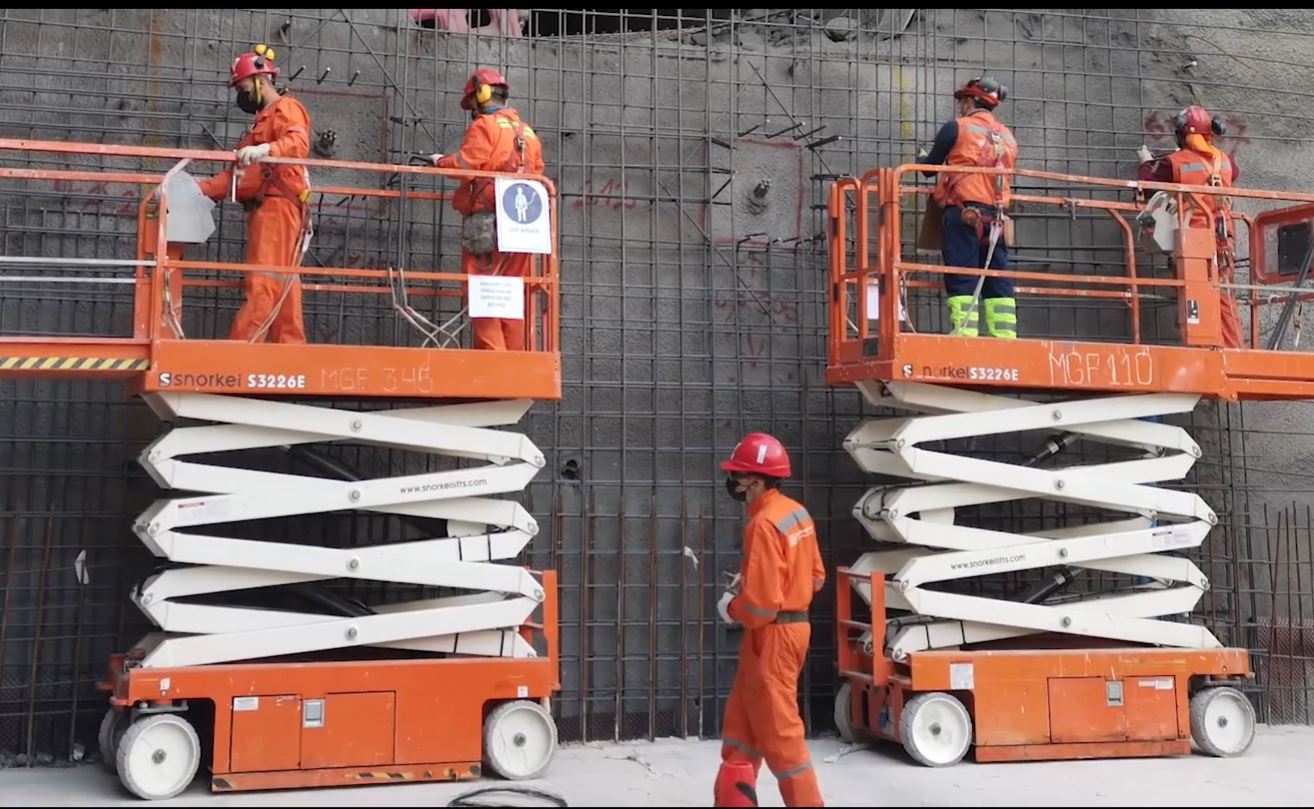
The safety deficiencies identified by regional inspectors were far from minor. Among the most critical issues flagged were structural inadequacies in scaffolding systems, which form the backbone of worker safety in tunnel construction operations. Additionally, fire safety protocols were found to be substandard—a particularly alarming finding given the enclosed, combustible materials-rich environment of subway tunnel excavation. Escape routes within the construction zone were deemed inadequate, leaving workers with dangerously limited options in emergency scenarios. Perhaps most troublingly, fall protection measures—arguably the most fundamental safety requirement in any construction setting—were found to be insufficient.
Immediate Consequences: Work Stops Across the Project
The contract termination carries immediate and far-reaching implications. Under the terms of the cancellation, both CRTG and all its subcontractors are required to cease operations forthwith. The project, which promised to bring much-needed transit connectivity to the Nacka municipality and surrounding communities, now faces an uncertain future. Regional officials have declined to provide any forecast regarding how the stoppage will affect the overall construction timeline, leaving commuters, local businesses, and stakeholders in a state of limbo.
This development is particularly significant given the project’s strategic importance. The Nacka subway extension has been positioned as a cornerstone of Stockholm’s broader metropolitan transportation expansion strategy, designed to accommodate the capital region’s continued population growth and reduce congestion on existing transit corridors. The sudden halt raises questions about whether the project can meet its originally projected completion dates—and what the financial implications of the delay will be for the Stockholm Region and its taxpayers.
A Pattern of Concerns: International Contractors Under the Nordic Microscope
The CRTG contract termination is not occurring in a vacuum. It arrives amid heightened scrutiny of international construction firms operating within the Nordic region, where labour standards, safety regulations, and contractual obligations are among the most stringent in the world. Several high-profile incidents across Scandinavia in recent years have prompted lawmakers and procurement officials to reexamine the due diligence processes employed when awarding major infrastructure contracts to foreign-owned enterprises.
The Nordic model of public procurement has traditionally emphasized value-for-money considerations, often leading to the selection of competitive bids from international firms. However, critics have long argued that this approach sometimes comes at the expense of workforce compliance and long-term project stability. The Stockholm incident may now accelerate a broader policy debate about whether Nordic infrastructure authorities need to adopt more robust vetting procedures—or whether the emphasis should shift toward contractual mechanisms that ensure ongoing compliance rather than relying solely on pre-award qualification criteria.
Industry Expert Analysis: What Went Wrong?
Infrastructure analysts suggest that the CRTG situation reflects a common challenge when large-scale construction firms enter markets with markedly different regulatory environments. “State-owned enterprises from regions with less stringent safety frameworks sometimes underestimate the degree to which Nordic authorities will enforce standards—and the speed with which they will act when those standards are violated,” noted Dr. Maria Lindqvist, Professor of Construction Management at the Royal Institute of Technology in Stockholm. “What we are seeing in Stockholm is the Nordic regulatory model functioning exactly as intended: protecting workers by holding contractors accountable.”
The timing of the escalation is also noteworthy. Construction industry insiders point to supply chain disruptions and labour shortages that have plagued the sector since the post-pandemic period as potential contributing factors. When contractors face pressure to meet deadlines while managing constrained resources, safety protocols are often among the first areas where corners are cut. Whether such pressures played a role in the CRTG situation remains to be determined through any subsequent investigations, but the possibility underscores the importance of vigilant oversight on complex infrastructure projects.
Regional and International Ramifications
The termination has already attracted attention beyond Sweden’s borders. Nordic neighbours Finland, Norway, and Denmark have all witnessed increased volumes of international construction investment in recent years, and the Stockholm incident is likely to inform procurement discussions across the region. Within the European Union, questions about the adequacy of single-market procurement rules in ensuring workforce safety standards have periodically surfaced—and the CRTG case provides a fresh data point for those advocating for stronger harmonisation.
For China Railway Tunnel Group, the reputational damage extends beyond the immediate project suspension. As a subsidiary of China Railway Construction Corporation—one of the world’s largest infrastructure conglomerates—CRTG operates in numerous international markets. The Stockholm termination, given Sweden’s prominence in European policy circles, carries an outsized signal value. How CRTG and its parent organization respond to this setback will be closely watched by competitors, regulators, and potential clients alike.
The Path Forward: Stockholm Must Act Swiftly
For the Stockholm Region, the immediate priority is clear: ensure site safety during the transition period and develop a credible plan for resuming construction. Whether this involves re-negotiating with CRTG under revised terms, re-tendering the contract to a new firm, or bringing elements of the project in-house, regional officials face a complex logistical and financial challenge. The metro extension cannot remain in limbo indefinitely; the longer the delay, the greater the cost to both the public purse and the communities awaiting improved transit access.
The incident also raises important questions about risk management in major infrastructure projects. Public authorities awarding contracts to international firms must balance competitive procurement principles with the need to ensure that selected contractors can deliver not only on time and within budget, but also to the safety and quality standards that Nordic citizens rightly expect. The CRTG case will likely become a reference point in that ongoing policy conversation.
Looking Ahead: What the Nordic Business Journal Will Cover Next
This story is far from over. In our forthcoming coverage, the Nordic Business Journal will examine the Stockholm Region’s contingency planning and timeline for resuming construction, including interviews with regional transportation officials and independent construction analysts. We will also explore the broader implications for international firms seeking to operate in Nordic infrastructure markets, profiling the due diligence frameworks that separate successful projects from costly failures. Additionally, we will analyse the financial dimensions of the contract termination—including potential claims, re-tendering costs, and the impact on project financing.
For readers seeking to engage further with this topic, the Nordic Business Journal welcomes correspondence from industry professionals, policy experts, and affected stakeholders. We invite readers to share their perspectives on international infrastructure procurement and workplace safety standards in the Nordic context. To contribute a Letter to the Editor or to suggest a topic for our upcoming investigative series, please reach out to our editorial team. Follow us on our digital platforms for real-time updates as this developing story unfolds.
Contact the Nordic Business Journal:
– Email: editorial@nordicbusinessjournal.com
– LinkedIn: Nordic Business Journal
– Twitter/X: @NordicBizJournal
– Website: www.nordicbusinessjournal.com