
A strategic assessment of currency shifts, geopolitical realignments, and what Nordic businesses must prepare for.
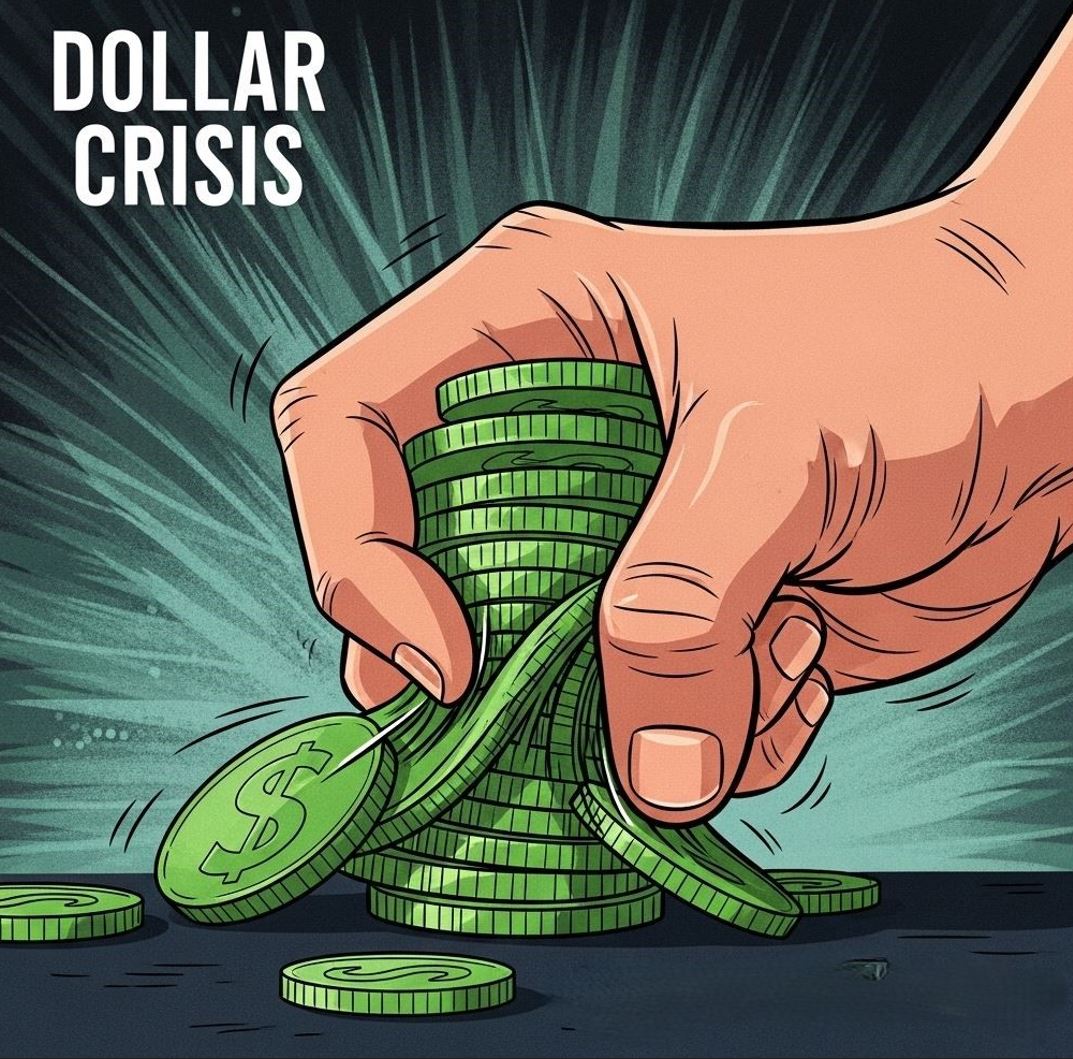
The petrodollar system—where global oil is priced and traded predominantly in U.S. dollars—has underpinned American economic hegemony for half a century. Yet this arrangement faces unprecedented strain. While the euro remains the world’s second reserve currency, current data reveals a more complex picture: the dollar retains dominance despite erosion, while the euro’s position is weakening, not strengthening. For Nordic businesses operating across global energy and finance markets, understanding these shifts is critical.
The State of Play: Dollar Dominance Persists, But Cracks Show
According to the IMF’s latest Currency Composition of Official Foreign Exchange Reserves (COFER) data for Q4 2025, the U.S. dollar’s share of global reserves stands at 56.77%, down marginally from 56.93% in Q3 . The euro, however, has not capitalized on this decline—its share decreased to 20.25% from 20.36% over the same period. This represents a significant revision from earlier 2025 estimates and contradicts assumptions that the euro is gaining ground.
The Chinese renminbi has shown modest growth, reaching 1.95% of reserves, while a notable trend is the rise of “other currencies”—now comprising 6.13% of reserves, more than double their 2021 level. This fragmentation suggests a move toward multipolarity rather than a simple euro-dollar binary.
Analysis for Nordic readers: The dollar’s decline is real but gradual. The euro is not the primary beneficiary—instead, we’re seeing diversification into smaller currencies and alternative payment systems. For Nordic exporters, this means currency risk management must become more sophisticated, hedging against multiple currency pairs rather than just EUR/USD volatility.
Can the Euro Replace the Dollar? Structural Barriers Remain
The euro’s internationalization faces fundamental constraints that oil pricing alone cannot resolve:
1. Fragmented Capital Markets: The EU lacks the deep, liquid capital markets that make U.S. Treasuries the world’s safe asset. The EU’s fiscal integration remains incomplete, preventing the issuance of true “safe” euro assets at scale.
2. Safe Asset Scarcity: While the U.S. can issue unlimited Treasuries backed by its sovereign credit, eurozone safe assets are fragmented among member states. German Bunds serve this function but in insufficient volume.
3. Geopolitical Disunity: Recent U.S. policy volatility under the Trump administration has paradoxically weakened the euro’s appeal by undermining confidence in Western financial stability broadly, rather than driving capital specifically toward European markets.
Current Reality Check: A euro challenge requires not just more oil trade in euros, but deeper structural reforms—including unified EU fiscal capacity and integrated capital markets—that remain politically elusive. The euro will likely become more important in regional trade, but “overtaking” the dollar would require a generational shift, not a quick pivot.
The Real Disruptor: China’s Petroyuan and Digital Alternatives
While the euro stagnates, China has made concrete advances. The petroyuan is now operational with Russia, Iran, Venezuela, and increasingly with Saudi Arabia and UAE. More significantly, the mBridge project—a digital currency platform backed by central banks including China, UAE, Saudi Arabia, Thailand, and Hong Kong—processed over $55.5 billion in transactions by late 2025, with the digital yuan accounting for 95% of volume.
China’s strategy combines:
– Gold convertibility for yuan oil contracts (addressing convertibility concerns)
– CIPS (Cross-Border Interbank Payment System) as a SWIFT alternative
– Digital currency infrastructure reducing transaction costs and U.S. oversight
Strategic Implication: Nordic energy and commodity firms must prepare for a world where yuan-denominated contracts become standard in Asian markets. This isn’t about replacing the dollar globally, but about regional fragmentation where different currencies dominate different trade blocs.
Iran’s Role: Catalyst for Acceleration, Not Systemic Change
Iran continues to bypass dollar sanctions through alternative channels, routing oil to China via “dark fleet” tankers with settlements entirely outside U.S. banking systems. However, Iran alone cannot rewrite the global order.
The more significant development is the broader move toward multipolar finance. Countries across the Global South are building parallel financial infrastructure—not to collapse the dollar, but to reduce vulnerability to U.S. policy shifts. This “de-risking” strategy is accelerating due to:
– Sanctions overreach concerns
– U.S. policy unpredictability under the Trump administration
– Desire for settlement efficiency in regional trade
Impact Assessment: EU and USA
For the European Union
More non-dollar energy trade offers mixed blessings:
– Reduced dollar dependence could modestly support euro internationalization
– Increased exposure to energy price volatility and Gulf geopolitics
– Competitive pressure as yuan-based trade offers cheaper settlement costs for Asian markets
The ECB has noted that U.S. tariffs and policy uncertainty have created unusual market behaviour where the dollar fell alongside equities during volatility—contradicting its traditional “flight-to-safety” role. This suggests a structural reassessment of dollar assets by global investors, but not necessarily a flight to the euro.
For the United States
educed dollar dependence threatens a key geopolitical advantage: the ability to finance deficits cheaply due to persistent global demand for dollars and Treasuries. With foreign investors holding approximately $22 trillion in U.S. assets (about one-third of their combined portfolios), any significant rebalancing could accelerate dollar depreciation.
However, the immediate risk for both regions is not currency shift but energy market disruption. Oil price spikes, shipping bottlenecks, and inflationary pressure from conflict around Iran or the Strait of Hormuz would impact both EU and U.S. economies regardless of the settlement currency.
Trump Administration: Erosion at the Margins
It is premature to claim Trump is “killing” U.S. economic power—the U.S. economy remains the world’s largest and is projected to grow. However, economists warn that tariff policies, fiscal expansion, and institutional attacks are eroding the foundations of dollar dominance.
Key concerns:
– “Liberation Day” tariffs (April 2025) triggered unusual dollar weakness alongside market volatility, breaking the currency’s traditional safe-haven behaviour
– Fiscal trajectory remains unsustainable, with the “One Big Beautiful Bill” projected to widen deficits further
– Federal Reserve independence faces political pressure, undermining confidence in U.S. monetary governance
The Wharton Budget Model projects Trump’s tariff plan could reduce long-run U.S. GDP by approximately 6% and wages by 5%, with middle-income households facing $22,000 in lifetime losses.
Nordic Business Angle: U.S. policy uncertainty creates both risk and opportunity. Nordic firms with U.S. exposure should prepare for continued volatility, while those offering stability and ESG-compliant alternatives may find receptive markets among investors seeking to diversify from dollar assets.
Strategic Outlook: What Nordic Business Leaders Should Watch
1. Currency Diversification: Prepare for a fragmented system where the dollar, euro, and yuan each dominate specific corridors. Treasury functions need multi-currency capabilities.
2. Digital Currency Integration: Monitor mBridge and central bank digital currency (CBDC) developments—these could reduce transaction costs but require new compliance frameworks.
3. Geopolitical Hedging: Energy-intensive Nordic industries should stress-test supply chains against Strait of Hormuz disruptions, regardless of currency considerations.
4. ESG and Stability Premium: As U.S. policy becomes less predictable, Nordic stability and sustainability credentials become competitive advantages in attracting international capital.
Next in this Series: “The Digital Yuan and Nordic Trade: Preparing for Asia’s New Financial Architecture” — We’ll examine how China’s CBDC expansion affects Nordic-Asia trade flows and what compliance infrastructure businesses must build now.
Connect with Nordic Business Journal: Share your perspectives on currency risk management and global trade strategy. Join the conversation at insight at www.nordicbusinessjournal.com or follow our LinkedIn for real-time analysis on geopolitical risk and Nordic business strategy.
This analysis is based on IMF COFER data through Q4 2025, Federal Reserve international currency reports, and ECB monetary policy assessments. Data current as of March 2026.