
As the Strait of Hormuz remains in limbo, Scandinavian airports and businesses must prepare for a summer of disruption that could reshape regional supply chains
European airports are staring down a fuel crisis that could ground flights and disrupt summer travel plans within weeks. Industry association ACI Europe, representing airports across the EU, has issued stark warnings that aviation fuel shortages are becoming a reality—with the Nordic region particularly exposed due to its limited refining capacity and dependence on seaborne fuel deliveries.
The warning, backed by documents seen by the Financial Times, comes directly from EU Transport Commissioner Apostolos Tzitzikostas, who cautioned member states that “a shortage of aviation fuel is becoming a reality for the EU.” For Nordic businesses, this isn’t just an operational headache—it’s a systemic risk that threatens everything from tourism revenues to just-in-time logistics networks that keep Scandinavian industry humming.
How We Got Here: The Anatomy of a Chokepoint
The crisis crystallized on February 28, 2026, when coordinated U.S.-Israeli airstrikes targeted Iran’s leadership and military infrastructure. Within hours, Iran’s Revolutionary Guard Corps closed the Strait of Hormuz—the 21-mile-wide passage through which roughly one-fifth of global oil shipments flow. Daily traffic plummeted from 150 vessels to fewer than 20.
The International Energy Agency (IEA) immediately characterized the disruption as “the largest supply disruption in the history of the global oil market” . While member countries released 400 million barrels from strategic reserves—approximately twenty days’ worth of normal Hormuz traffic—the relief proved temporary. By early April, Gulf producers had begun shutting in wells, cutting output by at least 10 million barrels per day as storage capacity tightened.
The market mechanics tell their own story: Brent crude surged toward $120 per barrel even as laden tankers completed their voyages. Forward-looking traders had already priced in future scarcity, illustrating how quickly energy security can unravel in an interconnected system.
Nordic Vulnerability: Why Scandinavia Is Exposed
While the headlines focus on Asian rationing—Vietnam has already implemented jet fuel restrictions—the Nordic region faces unique structural vulnerabilities that merit closer attention:
Limited Domestic Refining Capacity: Unlike Germany or the Netherlands, the Nordics maintain minimal jet fuel refining infrastructure. Sweden’s Preem and Norway’s Equinor operations are optimized for regional consumption, not surplus production. When global supply chains constrict, there’s no domestic buffer.
Geographic Isolation: The region’s airports rely on seaborne fuel deliveries that must navigate increasingly congested alternative routes. With the Strait of Hormuz restricted, cargoes are rerouting around the Cape of Good Hope—adding weeks to delivery schedules and compressing available supply.
Summer Demand Surge: The timing couldn’t be worse. Nordic aviation enters its peak season in May, with leisure travel to Mediterranean destinations and business traffic between Stockholm, Copenhagen, Oslo, and Helsinki accelerating sharply. A fuel shortage in June doesn’t just mean higher prices—it means cancelled routes and stranded passengers.
Cargo Connectivity: Beyond passenger inconvenience, Nordic businesses depend on air freight for high-value exports—pharmaceuticals from Denmark, precision engineering from Sweden, seafood from Norway. Any fuel constraint ripples immediately through export-led supply chains.
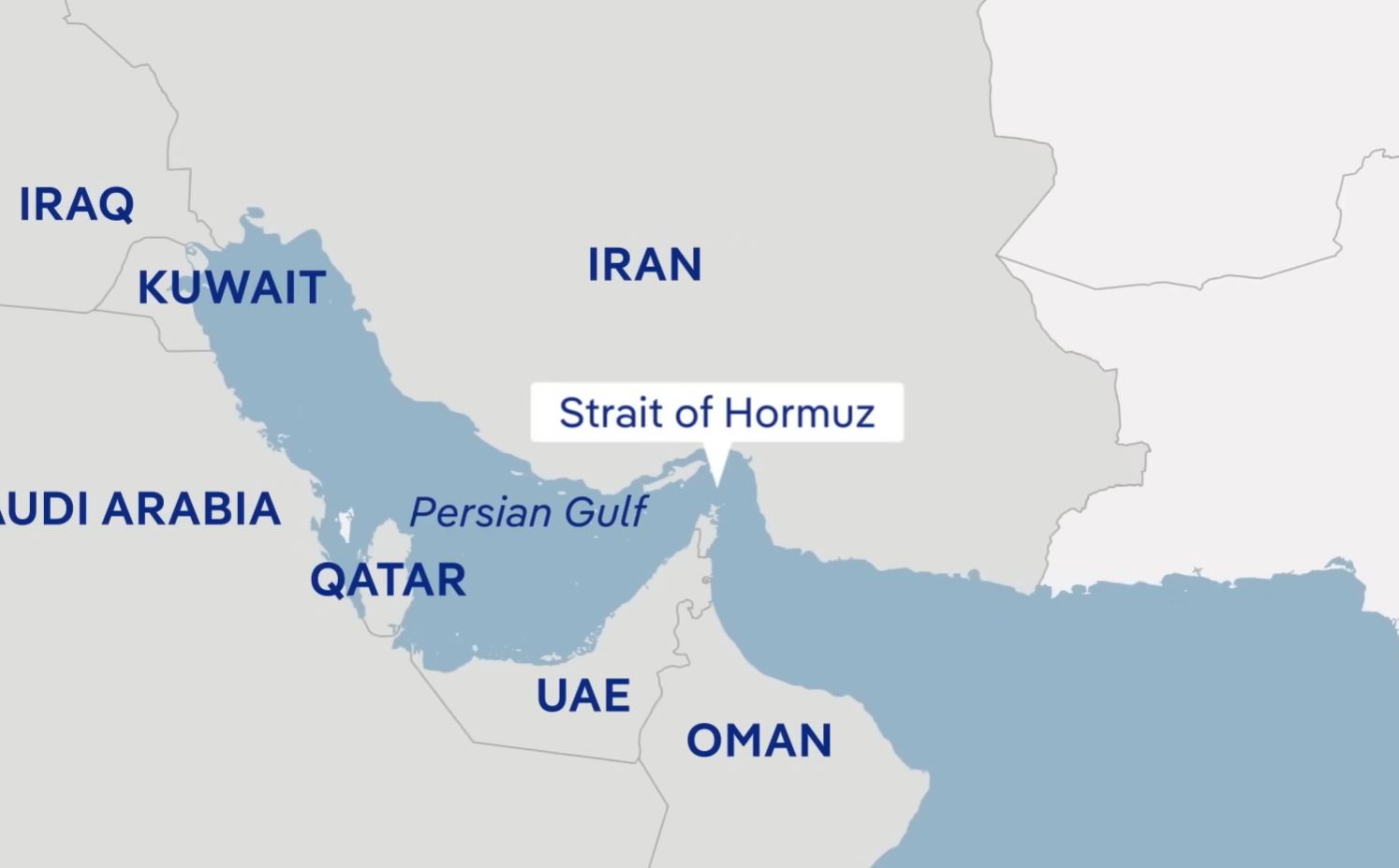
Market Outlook: Volatility Is the Only Certainty
As of April 12, 2026, the collapse of ceasefire negotiations in Islamabad has reignited market fears. Here’s what Nordic finance directors and supply chain managers need to track:
Oil Price Trajectory
Analysts expect significant volatility in the coming week. JPMorgan and other major brokerages anticipate oil prices will “retrace” recent losses, reversing the 13–15% drop seen during ceasefire talks as the “geopolitical premium” returns. President Trump’s threat of an “effective immediately” naval blockade of the Strait of Hormuz has markets on edge—if implemented, Brent crude could surge back toward $100–$120 per barrel.
The divergence in institutional forecasts reflects profound uncertainty:
| Institution | Brent Q2 2026 | WTI Q2 2026 | Rationale |
| EIA | $115.00/b | $103.00/b | Peak disruptions in April; production shut-ins reach 9.1 million b/d |
| Goldman Sachs | $90.00/b | $87.00/b | Trimmed from $99/$91 following brief ceasefire; upside risks remain |
| StoneX | $100–$110/b | $100–$115/b | “Base case” volatility; WTI could break $120 if strikes continue |
| J.P. Morgan (FY) | $60.00/b | $54.00/b | Bearish long-term view based on surplus supply despite geopolitical rallies |
| Morgan Stanley | $75–$80/b | $70.00/b | “Short-lived frictions” scenario; normalization expected after brief spike |
Critical Insight: The Brent-WTI spread is expected to widen to $12–$15 per barrel in April. Brent’s sensitivity to Middle Eastern shipping costs makes it the bellwether for European aviation fuel pricing, while WTI’s landlocked U.S. production offers only partial insulation.
Broader Economic Implications
The crisis extends far beyond the tarmac. Nordic businesses should monitor three interconnected risk vectors:
Equity Market Fragility: Analysts at Evercore ISI note that broad stock gains from the post-ceasefire “relief rally” remain fragile. A “crash is quite possible” if military strikes resume, with European markets particularly exposed to energy sector volatility.
Safe-Haven Rotation: Investors are already shifting toward defensive assets. Gold and the U.S. Dollar have strengthened as Islamabad talks collapsed, suggesting capital flight from European equities if tensions escalate.
Inflationary Pressure: The OECD warns that sustained high energy costs could add nearly a full percentage point to global inflation. For Nordic central banks—already navigating delicate balancing acts between growth and price stability—this could force postponement of planned interest rate cuts, tightening credit conditions for businesses already facing elevated input costs.
Strategic Analysis: What Happens Next?
The crisis reveals uncomfortable truths about energy interdependence. Maritime tracking data indicates Iran has effectively converted the Strait into a “graduated tollbooth,” charging transit fees for safe passage and selectively allowing vessels without direct U.S. or Israeli ties to pass. French- and Japanese-linked shipping has reportedly begun moving through under this arrangement.
This creates a complex strategic landscape for Nordic businesses:
1. Supply Chain Reconfiguration: Companies dependent on-air freight should immediately audit alternative routing options. Rail freight between Europe and Asia—already expanding—is likely to see demand surge.
2. Fuel Hedging: Airlines and logistics operators with sophisticated hedging programs will weather this storm better than competitors. The window for protective positions may be narrowing.
3. Inventory Strategy: Just-in-time logistics assumptions require stress-testing. Nordic manufacturers should evaluate whether holding additional inventory of critical components offsets the carrying costs against disruption risk.
4. Policy Coordination: The UK’s convening of 40 countries on April 2 to discuss reopening the Strait—without U.S. participation—suggests diplomatic channels remain active. French officials have called forced reopening “unrealistic” while bombing continues, indicating European powers are pursuing parallel tracks.
The Bottom Line
For Nordic business leaders, the Hormuz crisis is a stress test of supply chain resilience. The aviation fuel shortage isn’t hypothetical—it’s already materialising in Asia and threatening European operations within weeks. With summer demand approaching and no clear resolution to the Strait’s status, the region faces a summer of operational disruption that could reshape competitive dynamics across sectors.
The companies that thrive will be those that treated energy security as a strategic priority before it became a crisis headline.
About This Coverage
This analysis draws on official documents from ACI Europe, the International Energy Agency, and institutional research from JPMorgan, Goldman Sachs, Morgan Stanley, and StoneX. Market data reflects conditions as of April 12, 2026.
What’s Next: Follow Our Coverage
Coming Next Week: “Grounded: How Nordic Airlines Are Rewriting Route Maps and Fuel Contracts in Real Time” — An exclusive look at how SAS, Norwegian, and Finnair are navigating the fuel crisis, with insights from executives on contingency planning and fleet reallocation strategies.
Connect With Us:
– LinkedIn: Nordic Business Journal
– Twitter/X: @NordicBizJournal
– Newsletter: Subscribe at nordicbusinessjournal.com for weekly briefings on Nordic energy security and supply chain resilience
Have insights on how the fuel crisis is affecting your operations? Contact our editorial team at editor@nordicbusinessjournal.com
Sources: Oxford University Blavatnik School of Government, “Lessons from the Strait of Hormuz crisis” (April 9, 2026)