
The Fall of Europe’s Last Kremlin Ally and What It Means for the Continent’s Future
When Hungarians flooded the streets of Budapest chanting “Russians go home” on election night, they weren’t merely celebrating a change in government—they were witnessing the unravelling of one of Vladimir Putin’s most strategic relationships within the European Union. The decisive victory of Péter Magyar over incumbent Prime Minister Viktor Orbán marks a seismic shift in European geopolitics, one that reverberates far beyond Budapest’s baroque streets. After fourteen years of Orbán’s increasingly cozy relationship with the Kremlin, the EU’s most persistent Russia-sympathizer has been relegated to opposition status, leaving Putin without his most reliable ally within the bloc.
The implications extend from the corridors of Brussels to the contested regions of the South Caucasus, where nations once firmly within Moscow’s orbit are watching the shifting tides with keen interest. For businesses operating across the Nordic-Baltic region, understanding these geopolitical realignments is no longer optional—it’s essential for navigating an increasingly volatile operating environment.
The Anatomy of a Strategic Partnership Undone
Viktor Orbán’s relationship with Vladimir Putin was never merely ideological—it was transactional, pragmatic, and remarkably consistent even as the rest of Europe united against Russian aggression. Since Russia’s full-scale invasion of Ukraine in February 2022, Orbán had systematically positioned himself as the EU’s designated spoiler, vetoing aid packages to Ukraine, blocking sanctions discussions, and serving as an information conduit between Brussels and Moscow. His “peace mission” trips to meet Putin in February 2024 were perhaps the clearest demonstration of a leader willing to isolate himself diplomatically rather than abandon a relationship he viewed as essential.
The cost of this loyalty was substantial. Hungary found itself increasingly sidelined within EU institutions, with Brussels triggering a landmark rule-of-law procedure that ultimately froze approximately €30 billion in cohesion funds. Yet Orbán gambled that his ability to extract concessions—most notably the unblocking of EU funds in late 2023 through procedural compromises—demonstrated the leverage his relationship with Putin provided. That calculation proved catastrophically wrong when Hungarian voters delivered their verdict.
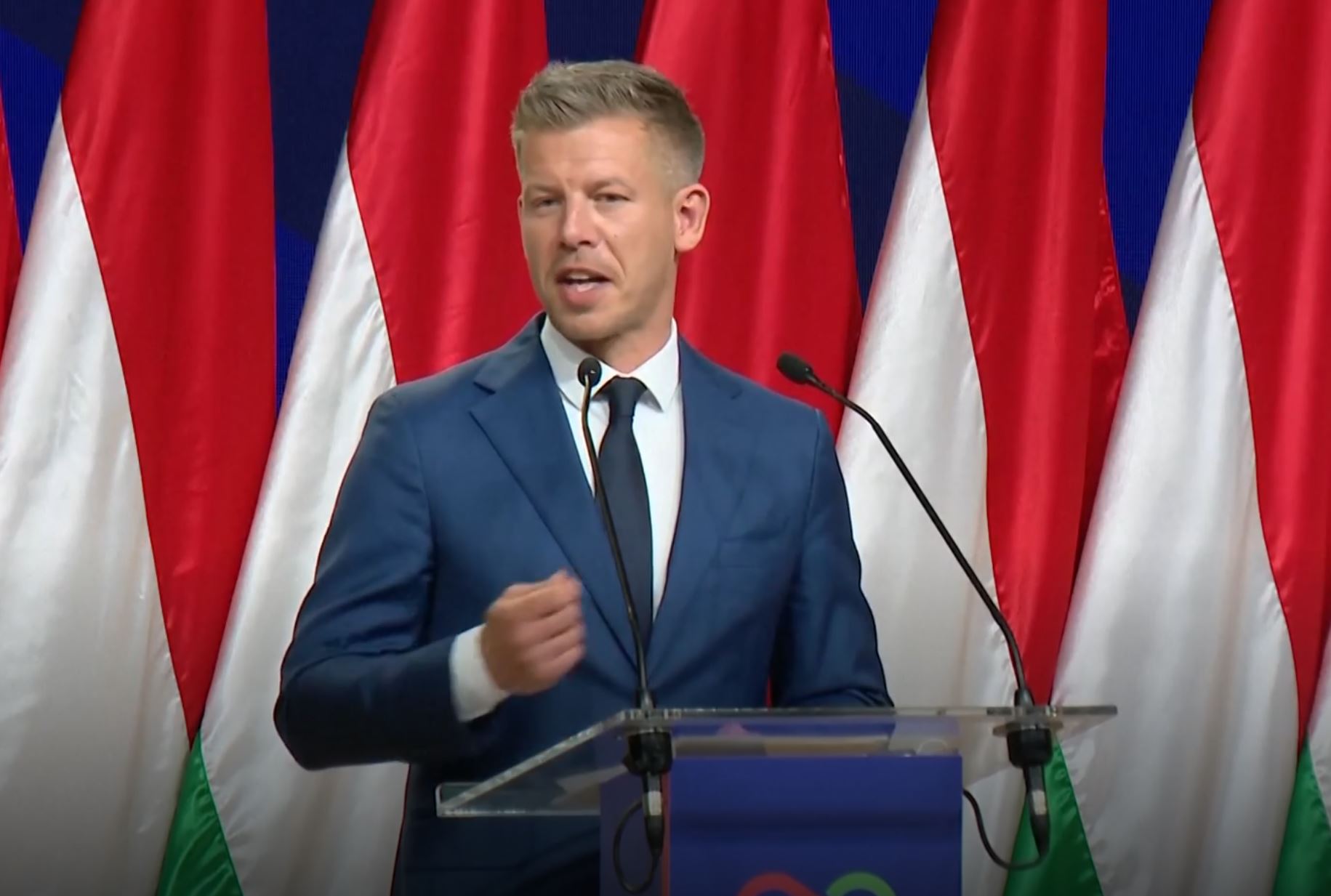
Péter Magyar’s victory wasn’t simply a rejection of Orbán’s domestic policies; it represented a wholesale repudiation of the government’s foreign policy orientation. Magyar, a political newcomer who emerged from the remnants of Orbán’s own Fidesz party, ran explicitly on a platform of normalizing Hungary’s relationships with Western partners. His immediate post-victory statements signalled a dramatic pivot, committing Hungary to supporting EU aid to Ukraine and positioning the country as a constructive rather than obstructive member of the European family.
Moscow’s Calculated Loss
For the Kremlin, Orbán’s defeat represents more than the loss of a convenient ally—it signals the potential collapse of a carefully constructed infrastructure of influence within European institutions. Russian state media, typically measured in their assessments of international developments, offered notably subdued coverage of the Hungarian election results, a telltale sign of genuine concern in Moscow.
The strategic dimensions of this setback are considerable. Putin has systematically cultivated relationships with populist leaders across Europe—figures who share an affinity for illiberal governance models and a scepticism toward both NATO and EU integration. Orbán was the crown jewel of this network, a head of government within the EU’s decision-making structures who could be relied upon to slow, dilute, or block measures hostile to Russian interests. His removal leaves a vacuum that Moscow will struggle to fill.
Consider the practical implications. When EU member states negotiate sanctions packages, they now operate with full consensus among 27 members rather than the previous arrangement where Hungary could be managed through bilateral pressure. The billions in aid to Ukraine that Orbán blocked can now flow more freely. Hungary’s rotation as holder of the EU Council presidency in the latter half of 2024—during which Orbán conducted unauthorized “peace missions” to Kyiv, Moscow, and Beijing—will not be repeated in the same form.
Russian foreign policy commentators have begun discussing the Orbán defeat in terms of a broader “losing streak,” noting that Moscow’s influence operations in the Western Balkans, Central Asia, and the South Caucasus are also showing signs of fatigue. The Ukrainian counteroffensive, whatever its ultimate territorial gains, has succeeded in demonstrating that Russian military power is not inexorable—a perception shift with profound implications for Moscow’s ability to project influence.
The South Caucasus Reckoning
The reverberations of Budapest’s election results are being felt thousands of kilometres to the east, in the contested spaces between Russia, Turkey, and Iran. Armenia, Georgia, and Azerbaijan have all navigated complex relationships with Moscow, relationships that are now being fundamentally reassessed in light of changing European dynamics.
Armenia presents the most striking example of this recalibration. For decades, Yerevan maintained a close security partnership with Russia, hosting a military base and relying on Moscow for both economic integration and security guarantees against Azerbaijan. That relationship has deteriorated precipitously since 2020, and especially following Azerbaijan’s military operation in Nagorno-Karabakh in September 2023 that resulted in the ethnic cleansing of the region’s Armenian population.
Russian peacekeepers, deployed under a 2020 agreement, proved unable—or unwilling—to prevent this outcome. Armenian public opinion has shifted dramatically, with polls showing that confidence in Russia as a security partner has collapsed. Armenia’s government, under Prime Minister Nikol Pashinyan, has begun actively diversifying its security relationships, signing military exercises agreements with Western partners and signalling interest in deeper EU integration.
Armenian civil society activists, speaking from Yerevan in the aftermath of the Hungarian election, have drawn direct connections between these developments. The message from Budapest—where voters rejected a leader perceived as too close to Moscow—is being heard in the South Caucasus. Pavel Kleshnin, a Russian exile living in the Armenian capital, described the Hungarian results as “the latest evidence that the Russian empire project is failing” and expressed optimism that “Armenia can finally escape the gravitational pull of Moscow.”
Garegin Miskarjan, an Armenian political activist, was more blunt in his assessment. The combination of Orbán’s defeat and Russia’s military quagmire in Ukraine, he argued, demonstrates that “Russian imperial ambitions are outdated and dangerous.” The implication is clear: nations that break from Moscow’s orbit can find new partners; those that remain find themselves increasingly isolated.
Georgia’s Precarious Position
Georgia occupies a uniquely uncomfortable position in this shifting landscape. The country has long pursued EU integration as an explicit policy goal, and received candidate status in late 2023. Yet the government of Prime Minister Irakli Kobakhidze—a Fidesz-aligned party called Georgian Dream—has been moving in an increasingly authoritarian direction that alarms Brussels.
The passage of a “foreign agents” law modelled on Russian legislation, combined with mass protests and a violent police response, has put Georgia’s EU accession process in serious jeopardy. The European Parliament voted overwhelmingly in May 2024 to reject the government’s characterization of protests as “subverted by the West” and to call for new elections. Orbán’s government, despite being nominally supportive of Georgian EU candidacy, served as a template for the Georgian Dream’s governance model—a model that now appears to be leading Tbilisi toward the same international isolation Budapest experienced.
The irony is acute: Orbán’s defeat may paradoxically strengthen European leverage over Georgia by removing a potential protector within EU institutions. A Hungary under Magyar’s leadership would have little appetite to shield Georgian Dream’s authoritarian drift, whereas Orbán might have vetoed or diluted any EU response.
Implications for Nordic Business
For companies with interests across the Nordic region, the Baltic states, and the broader European market, these developments carry concrete implications. The normalization of Hungary’s EU relationship removes one source of institutional uncertainty that complicated decision-making in Central European markets. Hungarian foreign policy, while unlikely to transform overnight, will increasingly align with EU consensus positions—a development that enhances regulatory predictability and reduces political risk premiums.
More broadly, the demonstrated resilience of European institutions in the face of populist challenges has implications for long-term investment horizons. The Orbán era demonstrated that EU mechanisms, while slow, ultimately possess sufficient enforcement power to change behaviour. This lesson may embolden Brussels to take stronger positions on rule-of-law issues elsewhere, with potential consequences for business environments in member states that have historically benefited from weaker oversight.
The South Caucasus developments are perhaps more directly relevant to energy and infrastructure interests. Armenia’s pivot away from Russian integration creates opportunities for alternative transit corridors connecting Europe to Central Asia and beyond. Georgian instability, conversely, threatens existing logistics routes and complicates energy transit arrangements. Companies assessing opportunities in these markets should factor in the geopolitical transition costs alongside traditional commercial considerations.
Looking Forward: The New European Geometry
The fall of 2024 will test whether the European moment created by Orbán’s defeat can be translated into durable strategic gains. Several developments warrant close attention.
First, the pace of Hungary’s foreign policy recalibration under its new leadership will reveal whether the Orbán relationship was purely personal or reflected deeper structural interests. Magyar’s statements have been consistently pro-European, but governing coalition dynamics, Fidesz’s continued parliamentary presence, and the interests of Hungarian business groups with Russian exposure could slow any pivot.
Second, the EU must demonstrate that it can absorb Hungary productively rather than punish it permanently. A Hungary that feels ostracised could yet produce a different kind of populist challenge than Orbán’s version. The balance between accountability and reintegration will require careful diplomacy.
Third, the broader populist wave that Orbán exemplified has not receded elsewhere. Slovakia’s Robert Fico, despite his pro-Russian orientations, controls a minority government. The Czech Republic and Romania have seen significant far-right electoral advances. The Hungarian model may be discredited, but its underlying appeal—to voters who feel left behind by globalisation and alienated from liberal institutions—remains potent.
Finally, the war in Ukraine continues to define European security calculations. Any negotiated settlement, if it comes, will test European unity in entirely new ways. The question of reconstruction, security guarantees, and long-term EU-Ukraine relations will require sustained consensus that becomes easier without Hungary as a permanent spoiler—but remains challenging given other divisions.
The scenes in Budapest on election night marked more than a change of government—they signalled the end of an era in which one EU member state maintained open channels to Moscow while the rest struggled to maintain unity. For Putin, Orbán’s defeat is a strategic setback that compounds the military and economic pressures Russia already faces. For Europe, it represents an opportunity to restore full institutional functionality—but one that must be seized carefully lest it create new grievances.
The broader message from Budapest, Yerevan, and the contested spaces between Russia and the EU is consistent: the imperial project that Moscow has pursued for centuries is encountering resistance that would have seemed unimaginable a decade ago. How that resistance evolves will define European security, prosperity, and identity for decades to come.
About the Nordic Business Journal
The Nordic Business Journal provides in-depth analysis of geopolitics, business strategy, and regional developments affecting the Nordic-Baltic corridor and broader European economy. Our editorial team combines journalistic rigour with strategic expertise to deliver insights that matter to decision-makers.
Contact Us:
– Editorial: editor@nordicbusinessjournal.com
– Subscriptions: subscribe@nordicbusinessjournal.com
– Intelligence Services: enterprise@nordicbusinessjournal.com
Further Reading & Recommended Follow-Up:
For readers seeking to deepen their understanding of the issues covered in this analysis, we recommend the following directions for continued engagement:
1. “The Evolution of EU Conditionality: From Cohesion Funds to Core Values”
An in-depth examination of how the European Union has developed and deployed rule-of-law mechanisms, and what Hungary’s experience portends for future applications. This piece will analyse the €30 billion in frozen funds, the Article 7 procedure, and the broader debate over whether economic leverage effectively changes behaviour or merely breeds resentment.
2. “South Caucasus in Transition: Armenia’s Western Pivot and Its Commercial Implications”
A comprehensive assessment of emerging trade and investment opportunities in Armenia as Yerevan diversifies away from Russian integration. This report will examine infrastructure needs, transit corridor potential, and the regulatory environment facing Nordic companies exploring post-Soviet markets.
3. “The New European Populism: Beyond the Orbán Template”
Following Orbán’s defeat, what becomes of the populist playbook that influenced governments from Bratislava to Tbilisi? This analysis will examine which elements of the Orbán model have been discredited and which remain influential, with particular attention to media consolidation, judicial independence, and civil society restrictions.
4. “Ukraine’s Reconstruction Economy: Opportunities for Nordic Contractors”
As discussions of post-war reconstruction intensify, Nordic companies are well-positioned to compete for infrastructure, energy, and industrial rehabilitation contracts. This report will map the emerging reconstruction landscape, institutional frameworks, and competitive dynamics.
5. “Intelligence Briefing: Russian Influence Operations in 2025”
A classified-track briefing summarising the evolving tactics of Russian influence operations targeting European democracies, with case studies from recent elections and emerging threat vectors. Available to enterprise subscribers.
Reader Engagement:
We invite readers to share their perspectives on these developments and to connect with our editorial team regarding topics they wish to see covered in future editions. The Nordic Business Journal maintains active dialogue with policymakers, business leaders, and academic experts across the region, and we welcome suggestions for coverage priorities.
To discuss potential contributions, interview requests, or intelligence briefing subscriptions, please contact our enterprise services team at enterprise@nordicbusinessjournal.com.
© 2026 Nordic Business Journal. All rights reserved. Reproduction without permission is prohibited. Views expressed in this article represent the editorial position of the Nordic Business Journal and do not constitute investment advice.