
Analysis: How a manufactured diplomatic snub reveals Moscow’s anxiety over Sweden’s €8.2 billion commitment to Ukraine and its strategic pivot from neutrality to NATO leadership
On April 17, 2026, King Carl XVI Gustaf made history as the first monarch to visit Ukraine since Russia’s full-scale invasion, traveling to Lviv alongside Foreign Minister Maria Malmer Stenergard in a powerful demonstration of Sweden’s unwavering solidarity. Yet within hours, Russian state media manufactured an alternative narrative—one that would have readers believe the King refused to shake President Zelensky’s hand.
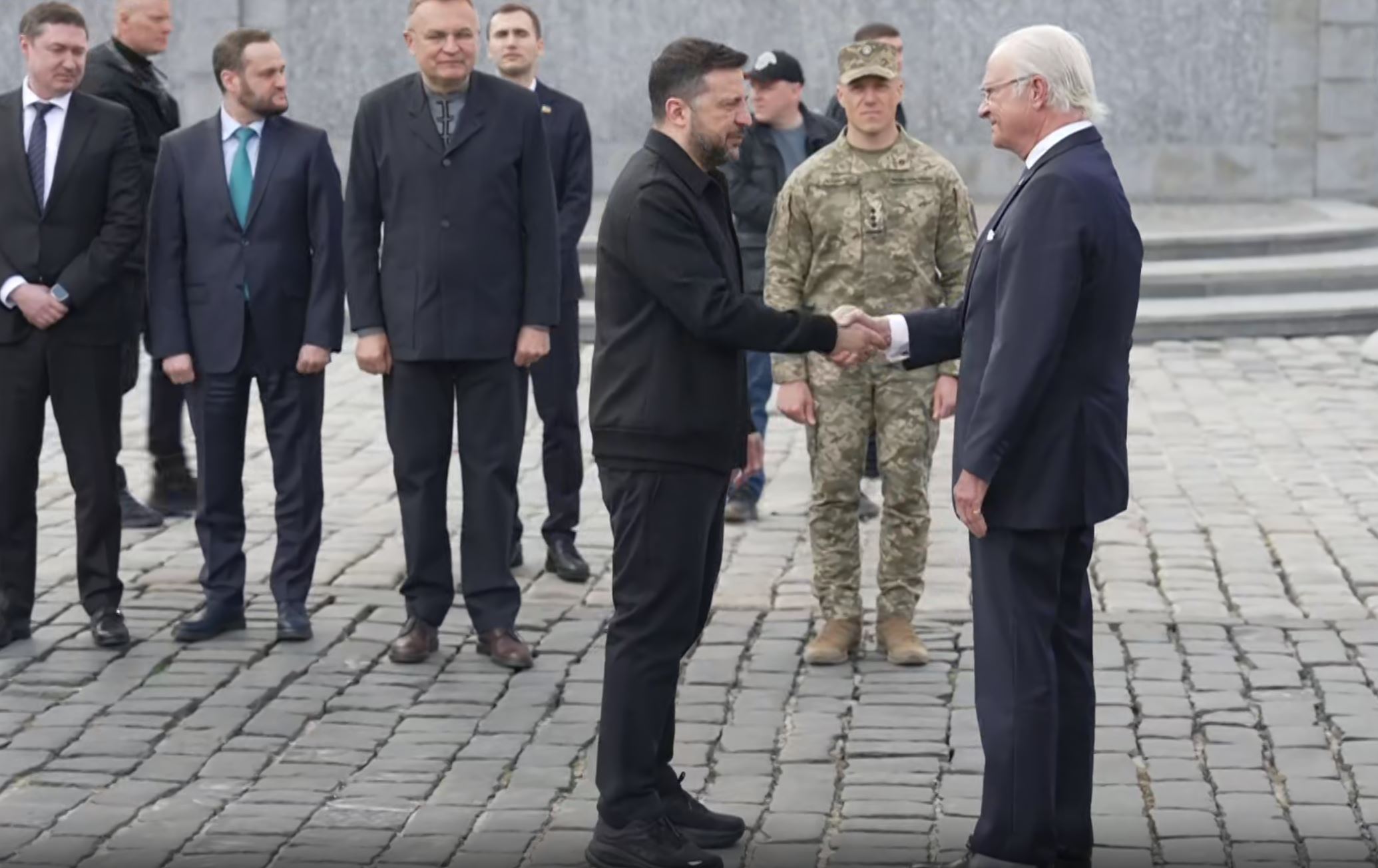
The reality, captured in footage from multiple angles and confirmed by the Swedish Royal Court, shows the two leaders shaking hands repeatedly throughout the visit. The disinformation campaign, spearheaded by RT’s heavily edited clip that garnered over one million views, represents more than clumsy propaganda—it signals Moscow’s acute discomfort with Sweden’s transformation from neutral observer to one of Ukraine’s most committed military backers.
The Economics of Solidarity: Sweden’s Strategic Investment
The timing of this visit is no coincidence. Sweden has committed approximately SEK 103 billion (€9.6 billion) in military support to Ukraine since February 2022, including a SEK 12.9 billion air defence package announced just weeks before the royal visit. This positions Sweden among the top European contributors relative to GDP, transforming what began as humanitarian concern into a strategic economic and security partnership.
For Nordic business leaders, the implications are substantial. Sweden’s 21st military support package includes procurement of newly manufactured air defence systems, long-range capabilities, and ammunition—contracts that flow through Swedish defence industries and create ripple effects across the Nordic supply chain. The framework agreement for 2026-2027 alone allocates SEK 80 billion, providing long-term visibility for defence contractors and their civilian sector partners.
From Disinformation to Deterrence: Reading Moscow’s Signals
Margareta Thorgren, the Royal Court’s head of information, characterised the Russian narrative as “wrong and ugly”—diplomatic language that understates the strategic significance. Foreign Minister Stenergard was more direct: “When reality is not enough, propaganda takes over. Sweden’s strong support for Ukraine is obviously making Russia so stressed that they feel forced to distort reality.”
This analysis merits expansion. The Kremlin’s decision to target a ceremonial handshake rather than contest Sweden’s military aid figures suggests two calculated assessments: first, that Nordic public opinion remains solidly behind Ukraine, making direct appeals futile; second, that sowing doubt about diplomatic cohesion serves Russia’s interest in fragmenting Western support. The disinformation campaign failed because Sweden’s commitment transcends partisan politics—support for Ukraine enjoys broad consensus across Swedish society, from corporate boardrooms to civil society.
The NATO Dimension: Sweden’s New Security Architecture
The visit occurs within Sweden’s first year as a full NATO member, having deposited its Instrument of Accession on March 7, 2024. This membership fundamentally restructures Nordic security cooperation. Sweden now contributes to NATO’s 500,000 high-readiness troops and participates in the alliance’s largest collective defence reinforcement since its founding.
For Ukrainian reconstruction—which will ultimately require Nordic engineering expertise, sustainable technology transfer, and green infrastructure investment—Sweden’s NATO integration provides institutional pathways for long-term security guarantees that extend beyond bilateral aid. The King visit’s emphasis on schools and hospitals signals Sweden’s interest in civilian resilience, a sector where Nordic social welfare models offer relevant expertise.
Business Implications: The Gripen Question
Beyond the ceremonial, the visit advanced practical defence cooperation. Ukrainian and Swedish officials discussed the potential transfer of JAS 39 Gripen fighter jets—an acquisition that would integrate Ukrainian forces with NATO-standard equipment while opening long-term maintenance and training contracts for Swedish aerospace industries. With Sweden already donating ASC 890 airborne surveillance aircraft and Archer artillery systems, the trajectory points toward deeper defence industrial integration.
The €4 billion defence support referenced during the visit represents not merely aid but investment in a future Ukrainian market. Post-war reconstruction will require everything from telecommunications infrastructure to energy grid modernisation—sectors where Swedish firms like Ericsson, ABB, and Vattenfall hold competitive advantages.
Conclusion: The Handshake That Mattered
The handshake that Russian media denied became, paradoxically, the story’s most documented element. Multiple camera angles, Swedish broadcaster SVT’s on-site reporting, and the Royal Court’s swift documentation transformed attempted disinformation into evidence of its opposite.
For Nordic Business Journal readers, the episode illustrates how economic commitment creates diplomatic resilience. Sweden’s SEK 128 billion total support package —encompassing military, humanitarian, and civilian aid—has purchased not merely Ukrainian gratitude but strategic depth. As Russia tests NATO’s resolve through Baltic Sea provocations and potential island seizures, Sweden’s presence in Ukraine demonstrates that Nordic security now extends from the High North to the Black Sea.
The King told Zelensky, “You are a fantastic leader for Ukraine”. The business translation: Sweden is betting on Ukrainian resilience, and the returns will be measured not just in regional stability but in the reconstruction contracts and energy partnerships that will define Europe’s next decade.
Next In This Series: Nordic Business Journal will examine the emerging Ukraine-NATO defence technology partnership through the UNITE program, exploring how Swedish and Ukrainian firms are collaborating on counter-drone systems and air defence innovation—and what this means for Nordic venture capital flows into defence tech.
Connect with us: Follow Nordic Business Journal for continued analysis of Nordic-Ukraine business relations, defence industrial cooperation, and the economic architecture of European security. Share your perspective on how Swedish corporate leadership can engage with Ukrainian reconstruction opportunities at editor@nordicbusinessjournal.com or connect via LinkedIn.
This article has been updated with current figures as of April 2026.