
As war and instability grip the Middle East and the Strait of Hormuz, Norway’s role as Europe’s energy backstop has delivered a revenue surge — and a political backlash. With oil averaging $107.52/bbl in March 2026 amid the U.S.-Israeli war on Iran and tanker traffic choked at Hormuz, Norwegian petroleum exports are filling the gap left by sanctions on Russia and Middle East disruption. The windfall has revived a blunt question from Brussels: Should Oslo hand some of it back?
What Europe Is Asking For
Three demands have crystallized in the European Parliament since late 2024:
1. More aid to Ukraine
Swedish MEP Karin Karlsbro (Liberals) argues Norway’s fiscal position gives it “a new opportunity” to scale up support. “It is clear that expectations are high for a country like Norway, which has a very strong economy… and which, with the current situation, has more opportunities to release resources that others do not have,” she told NRK. The call comes as Norway already pledged nearly $8bn to Ukraine for 2026 — about 20% of all aid Ukraine expects this year — focused on drone production, long-range artillery, and maritime defence.
2. A windfall tax on oil & gas firms
German Green MEP Rasmus Andresen wants a 20–25% special tax on energy majors, including Equinor, with proceeds returned directly to European consumers hit by energy bills. Five EU states have floated similar proposals since Middle East prices spiked.
3. Tapping the sovereign wealth fund
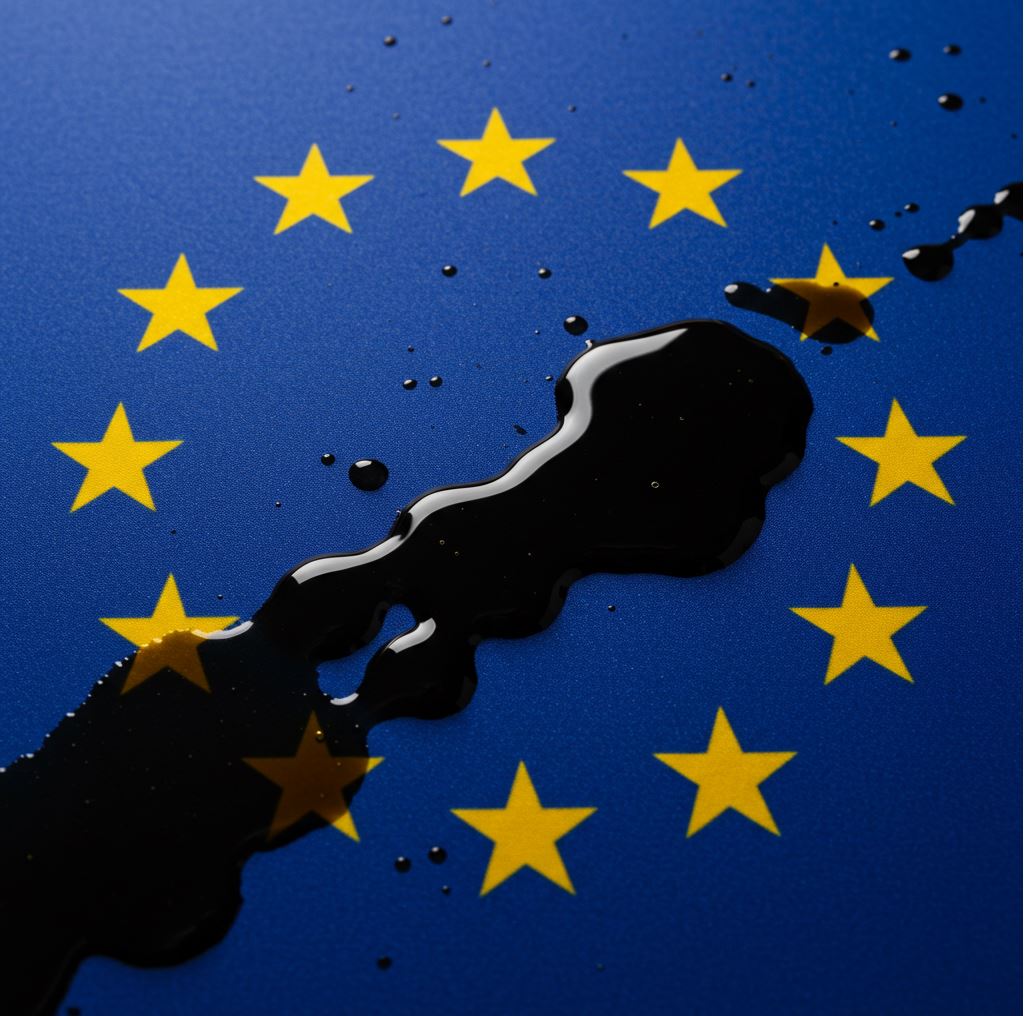
In March 2025, reporting emerged that Norway was considering using resources from its €1.7T Government Pension Fund Global to markedly increase Ukraine support as U.S. military aid wanes. The Labour government’s 2026 budget already plans to spend 579.4bn kr — 2.8% of the fund — with 5bn kr earmarked for Ukraine, within the 3% “handlingsregelen” cap.
Analysis: Why Norway Is a Target — And Why It Pushes Back
| Factor | What It Means for Readers |
| Scale of windfall | Norway earned €109bn in extra natural gas revenue 2022–2023 after Russia cut EU supply. March 2026 saw earnings jump 68% YoY. Equinor posted record 2025 production and expects 3% growth in 2026. |
| Geopolitical leverage | EU gas imports from Russia fell from 45% pre-2022 to 12% in 2025. “Everything that we have been able to produce has moved to Europe… It’s even more important that we continue that journey now after the war in the Middle East,” says Equinor CEO Anders Opedal. |
| Oslo’s counterpoint | Finance Minister Jens Stoltenberg notes Norway gives “more than ten times as much to Ukraine” relative to GDP than other Western states. He warns oil revenue gains can be dwarfed by pension fund losses if global markets fall: “The pension fund is five times as large as the value of all the remaining oil and gas deposits”. |
| Domestic pressure | Norwegian comment threads show rising cost-of-living frustration: “People in Norway are going bankrupt, businesses are laying off… some have to shop in Sweden”. 2026 budget debates triggered accusations of “sending billions abroad while healthcare struggles”. |
| Investment cycle | Norway’s oil investment peaks in 2025 at 275bn kr and is set to decline in 2026–2030 as major projects finish. Output is forecast to hold near 4.1m boed in 2026 but taper toward 3.5m by 2030. The windfall may not last. |
Bottom line for Nordic executives: The “Norway profiteer” narrative is reshaping EU energy diplomacy. Expect three pressure points this year:
1) Conditionality on new Ukraine aid tranches,
2) EU windfall-tax coordination that could hit Equinor’s margins, and
3) ESG/“peace dividend” expectations from institutional investors in the Oil Fund.
Yet Norway’s leverage is real. It now meets ~30% of Europe’s gas needs, and Equinor is boosting international output to >900,000 boed by 2030, led by Brazil’s Bacalhau field. If Hormuz disruption persists, Oslo’s pricing power — and political spotlight — only grows.
What Boards Should Watch
– Tax risk: A 20–25% EU-level levy would rewrite project economics for Johan Sverdrup Phase 3 and Barents Sea tie-backs. Model scenarios now.
– Fund politics: Any move to breach the 3% rule for Ukraine aid could trigger Norges Bank pushback and NOK volatility.
– Reputation arbitrage: Norwegian firms abroad face “war profiteer” framing in media. Proactive disclosure on aid, taxes paid, and energy security contributions will matter in RFPs and AGM season.
Follow-up in our May issue: “Beyond the Windfall: How Norway’s Supplier Industry Plans for a Post-2030 Plateau” — We’ll map capex, subsea tech shifts, and M&A as field developments decline.
Connect with Nordic Business Journal:
Have data or a viewpoint on energy taxation, Ukraine aid, or sovereign wealth strategy? Pitch our editors at editorial@nordicbusinessjournal.com or join the discussion on LinkedIn with NBJEnergy. For custom briefings, contact research@nordicbusinessjournal.com.