
In Sweden, preparing for war is a national conversation. Denmark’s new civil defence minister should take notes—because in a crisis, it’s not armies that win wars, but societies. And increasingly, the companies that survive.
When Mikael Frisell arrives at his desk each morning, one question cuts through every briefing, every budget meeting, and every strategic forecast: How can Sweden best prepare for war?
It is a question that, until recently, would have seemed hyperbolic in most Nordic boardrooms. Not anymore.
“We are in the worst security situation since World War II,” says Frisell, Director General of the Swedish Civil Defence Authority (MSB). “We are not at war, but we are not in peacetime either. In this challenging world, we must plan for the worst-case scenario.”
Frisell’s mandate is deceptively simple: ensure that every layer of Swedish society—citizens, municipalities, regions, and critically, the private sector—is equipped and resilient in the event of a major armed attack, including from Russia.
While military defence falls outside his remit, Frisell is adamant about one strategic truth: “It is society, not armies, that wins wars.” For Nordic business leaders, this is not a political slogan. It is a supply-chain reality.
From ‘Crisis Preparedness’ to ‘War Readiness’
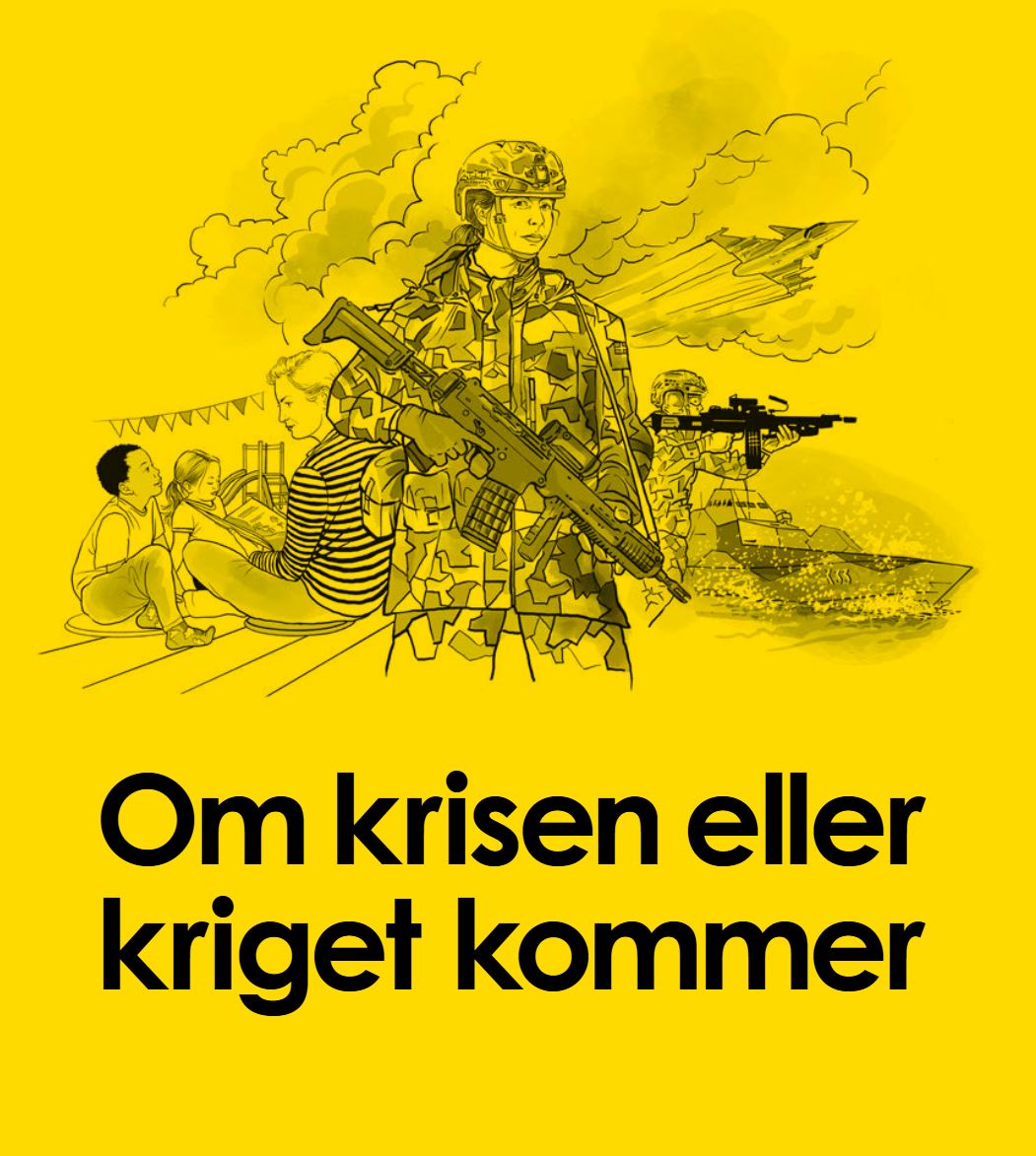
Until the turn of the year, Frisell’s agency was called the Authority for Community Safety and Emergency Preparedness. The name change was deliberate. Sweden has moved from a peacetime mindset of handling floods and cyberattacks to a wartime footing where the worst-case scenario involves missiles, drones, and hybrid warfare lasting up to three years.
Last year, MSB and the Swedish Armed Forces published a detailed report listing seven specific threat scenarios through 2030. These range from hybrid campaigns (influence operations, cyberattacks) to direct attacks on strategic assets like Gotland Island or northern Sweden’s critical mining and logistics hubs.
For businesses, the implications are tangible. Emergency plans now assume prolonged power outages, internet breakdowns, and the need for companies to maintain production under duress. “The best way to achieve peace is to prepare for war,” Frisell states flatly.
Where Denmark (and Others) Lag Behind
Frisell is careful not to criticise, but the contrast is clear. While Denmark established its Ministry of Community Safety and Preparedness only in 2024, Sweden, Finland, and Norway have been operating under a total defence framework for years.
“In Denmark, you have talked about creating a robust society and strengthening preparedness,” he notes. “But I don’t feel that you have talked about preparing the nation for war.”
This distinction matters. A recent report from the International Institute for Strategic Studies (IISS) confirmed that many European countries struggle to finance and implement society-wide civil defence. The Nordic countries that border Russia—Norway, Finland, and Sweden—have no such luxury.
Sweden and Finland’s recent accession to NATO has only sharpened their focus. Having long assumed they would face a potential attack without immediate allied support, their civil-military integration is deeper and more operationally mature.
Openness as a Strategic Asset
One of Sweden’s less-discussed advantages is cultural. According to Frisell, Swedes have a stronger tradition of frank, public discussion about external threats.
“There has always been a debate about how open one should be,” he says. “But citizens follow the news every day. Authorities must be as open as possible to build trust, prepare society, and create a culture of preparedness.”
That culture is now being tested—and, so far, it is holding. “I don’t feel the population is afraid,” Frisell says. “On the contrary, there is an understanding that we need to take the situation seriously.”
He sees signs that Denmark is catching up, notably after the closure of several Danish airports last September due to what acting Prime Minister Mette Frederiksen labelled a hybrid drone attack. But awareness is not yet readiness.
“I believe the Danish government and authorities should take the next step and start discussing this more openly—just as we do in Sweden,” Frisell argues.
A Nordic Total Defence by Christmas?
Frisell’s ultimate ambition is strategic alignment across the Nordics. He envisions common planning assumptions, joint exercises, and eventually, a Nordic total defence framework that integrates civilian and military capabilities from all five countries.
“We have received informal approval from our government and have started discussions with Finland and Norway to develop joint planning assumptions,” he reveals. “We need to get that process started. Hopefully, we can establish a Nordic working group before the summer or right after.”
He adds, with characteristic understatement: “It’s not rocket science. If there is political will in all our countries, I am sure we can have common conditions in place before Christmas.”
What This Means for Nordic Business Leaders
For readers of the Nordic Business Journal, Frisell’s message is not merely geopolitical. It is operational. Companies that integrate civil defence into their risk management—redundant power, distributed supply chains, employee preparedness training—will be the ones that deliver when others fail.
Sweden is already moving in this direction. The question for Copenhagen, Oslo, Helsinki, and Reykjavík is not if business will be drawn into national defence planning, but when.
Follow-Up & Connect
Next article direction: In our upcoming issue, we will examine how Nordic companies are already adapting to total defence requirements—from mandatory contingency plans for energy firms to private-sector participation in civil-military exercises. We will also benchmark Sweden’s new sector-level preparedness standards against Denmark’s emerging framework.
Connect with us:
Have a perspective on how your organisation is preparing for hybrid threats or prolonged crises? We want to hear from you.
Editors@nordicbusinessjournal.com
Follow us on LinkedIn for weekly analysis on Nordic security and economic resilience.
Nordic Business Journal – where strategy meets security.