
Stockholm’s €121 million space investment marks a paradigm shift in Nordic defence economics—and a new frontier for European security contractors
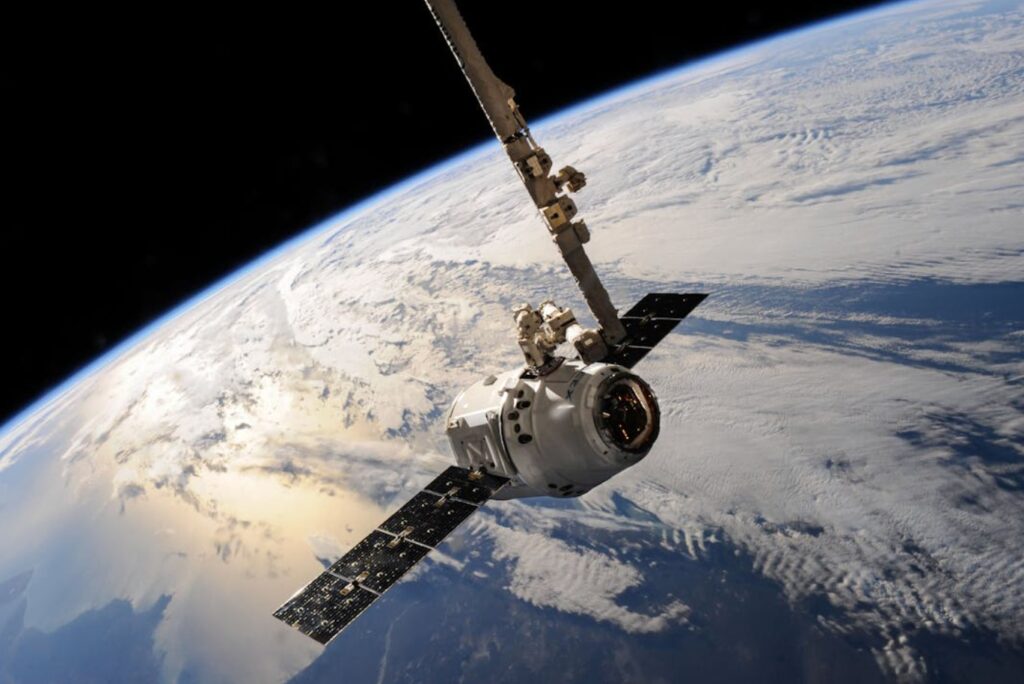
Sweden has officially joined the space intelligence club. On Sunday, a SpaceX Falcon 9 rocket lifted the Swedish Armed Forces’ first dedicated military satellite into low Earth orbit from Vandenberg Space Force Base in California—four years ahead of the original 2030 target.
For a nation that has historically relied on allied or commercial satellite imagery, this is more than a technical milestone. It is a strategic inflection point that carries significant implications for Nordic defence procurement, transatlantic industrial partnerships, and the rapidly commercializing space economy.
From Dependency to Sovereignty: Why Now?
The accelerated timeline reflects the urgency of Sweden’s changed security landscape. Since joining NATO in March 2024, Sweden’s potential area of operation has expanded to the alliance’s external borders, stretching from the High North to the Black Sea. This geographic expansion coincides with the procurement of new long-range weapons systems—capabilities that are only as effective as the targeting intelligence behind them.
“We will have the opportunity to control and prioritize an intelligence sensor that is always up and has the ability to scout at long distances. This is a major capability boost,” says Flotilla Admiral Anders Sundeman, Chief of Space for the Swedish Armed Forces.
The operational logic is straightforward but economically significant: Sweden can no longer afford to wait in a queue for satellite imagery from allies or accept the limitations of commercial providers whose priorities may not align with military exigencies. Sovereign tasking authority means Stockholm decides what to image, when, and how the data is distributed.
The Business of Orbital Intelligence
The Swedish Defence Materiel Administration (FMV) has executed contracts worth approximately 1.3 billion Swedish kronor (€121 million / $141 million) with two providers: U.S.-based Planet Labs for optical electro-optical (EO) satellites and Finland’s ICEYE for synthetic aperture radar (SAR) capabilities .
This dual-vendor approach is strategically astute and commercially notable:
Planet Labs brings high-resolution optical imaging with its “Owl” satellite platform, capable of 1-meter ground sampling distance. The contract is described as a “multi-year, low nine-figure” deal, making it one of Planet’s largest sovereign agreements to date—following similar contracts with Japan and Germany.
ICEYE provides the all-weather, day-night radar layer that is indispensable in Nordic conditions. Its SAR satellites can penetrate cloud cover, rain, snow, and darkness with ground resolution down to 16 centimetres. For a region where winter brings months of limited daylight and persistent cloud cover, radar is not a luxury—it is a necessity.
The combined constellation of approximately ten satellites will deliver a “sensor network” effect: optical imagery for detailed texture, colour, and vegetation analysis; radar for persistent monitoring regardless of atmospheric conditions.
Key Insight for Nordic Business Readers: This procurement model—sovereign ownership with commercial manufacturing—represents a template for mid-sized nations seeking space capabilities without the capital intensity of building domestic satellite industries from scratch. Sweden owns the assets and controls the data, while leveraging the production scale and technical agility of specialised NewSpace companies. It is a “sovereignty-as-a-service” model that balances autonomy with cost efficiency.
The Strategic Chessboard: What Sweden Will See
The satellites will serve two primary intelligence functions:
1. Target Mapping: Identifying and characterizing potential military targets inside Russia, enabling long-range precision strikes should deterrence fail.
2. Threat Warning: Detecting early indicators of Russian troop movements, naval deployments, or infrastructure changes across the Baltic Sea region, the Arctic, and beyond.
With an orbital period of approximately 90 minutes, a single satellite provides intermittent coverage. A constellation of ten satellites—while insufficient for real-time, persistent surveillance—significantly increases revisit rates. Critically, Swedish assets will be integrated into NATO’s broader space architecture, filling gaps in allied coverage rather than duplicating capabilities.
Colonel (Ret.) Joakim Paasikivi, senior geopolitical advisor at Mannheimer Swartling, notes that the ICEYE radar capability is “particularly valuable because it can provide imagery in the challenging weather and light conditions common in Northern Europe”. However, he cautions that expectations should remain realistic: “Sweden is unlikely to achieve real-time coverage with its satellite program” alone.
Operational Realities: From Launch to Mission Readiness
Sunday’s ten-minute launch is only the beginning. The satellite—roughly the size of a washing machine—will require approximately one month to reach its operational orbit.
During the first year, manufacturer Planet Labs will assist with satellite management, including collision avoidance manoeuvres with the estimated 12,000–15,000 military and commercial satellites currently in orbit. Long-term control will transition to a Space Operations Centre at the Air Force Headquarters in Uppsala, staffed by approximately ten personnel. Notably, the centre’s physical location may shift depending on the conflict situation—a reminder that even ground infrastructure is now considered a potential target in peer conflict.
The Unspoken Dimension: Space as a Contested Domain
Sundeman acknowledges an uncomfortable reality: “Countries are starting to acquire offensive capabilities for use in the space domain. It is an area that is becoming more and more relevant”.
Sweden’s satellites will carry no defensive or offensive counter-space capabilities. They are observation platforms, not combatants. Yet their very existence places them within an escalating domain where Russia, China, and the United States are actively developing anti-satellite weapons, electronic warfare systems, and orbital manoeuvring capabilities.
This raises a critical question for Nordic defence planners and investors alike: as space becomes militarised, what is the cost of vulnerability? The Swedish investment suggests that the cost of not having sovereign space capabilities is now deemed higher than the cost of acquiring them.
Looking Ahead: Esrange and European Launch Sovereignty
Sweden’s space ambitions extend beyond satellite operation to launch capability. The nation is planning to develop satellite launch services from Esrange in Kiruna, which would make it one of the few European continental locations capable of orbital launches. Today, no such capability exists on the European mainland—forcing dependency on U.S., Russian (now sanctioned), or French Guiana-based launch infrastructure.
For the Nordic business community, Esrange represents both a strategic asset and a potential commercial opportunity in the expanding European launch market.
Follow-Up Direction: Our next article will examine the economic and industrial implications of Sweden’s Esrange launch development program, including investment timelines, regulatory frameworks, and opportunities for Nordic aerospace suppliers. We will also track the operational performance of the first Swedish satellites as they transition from commissioning to active intelligence collection.
Connect with us: Have insights on Nordic defence procurement, space economics, or security policy? Our editorial team welcomes expert perspectives and reader feedback. Reach us at editorial@nordicbusinessjournal.com or connect via our LinkedIn channel.
Sources: Swedish Armed Forces; FMV; Planet Labs; ICEYE; Reuters; The Baltic Sentinel; SpaceIntelReport