
Denmark’s renewable energy champions Vestas Wind Systems and Ørsted have delivered resilient first-quarter results for 2026, offering Nordic executives critical signals about the sector’s trajectory amid evolving policy frameworks, capital market dynamics, and intensified global competition.
Vestas: Turnaround Gains Traction with Margin Expansion
Vestas reported Q1 2026 revenue of €4.0 billion (approximately DKK 29.6 billion), representing 14.4% year-on-year growth, with an EBIT margin before special items of 3.2%. Order intake reached €5.2 billion, supporting a robust combined backlog of €76.1 billion—a key indicator of future revenue visibility.
Critically, Vestas has raised its full-year 2026 guidance, now projecting revenue of €20–22 billion and an EBIT margin of 6–8%, up from prior expectations. This upward revision reflects successful execution in the Power Solutions segment, where improved project profitability and supply chain optimisation have offset earlier margin pressures.
Executive Insight: Vestas’s dual-business model—Power Solutions (turbine manufacturing/installation) and Service (long-term operations & maintenance)—continues to provide earnings stability. The Service segment, representing ~30% of revenue but ~50% of operating profit, offers predictable cash flows that cushion volatility in new order cycles. For Nordic investors, this structural advantage warrants close monitoring as the company scales its digital service offerings across its installed base of over 165 GW globally.
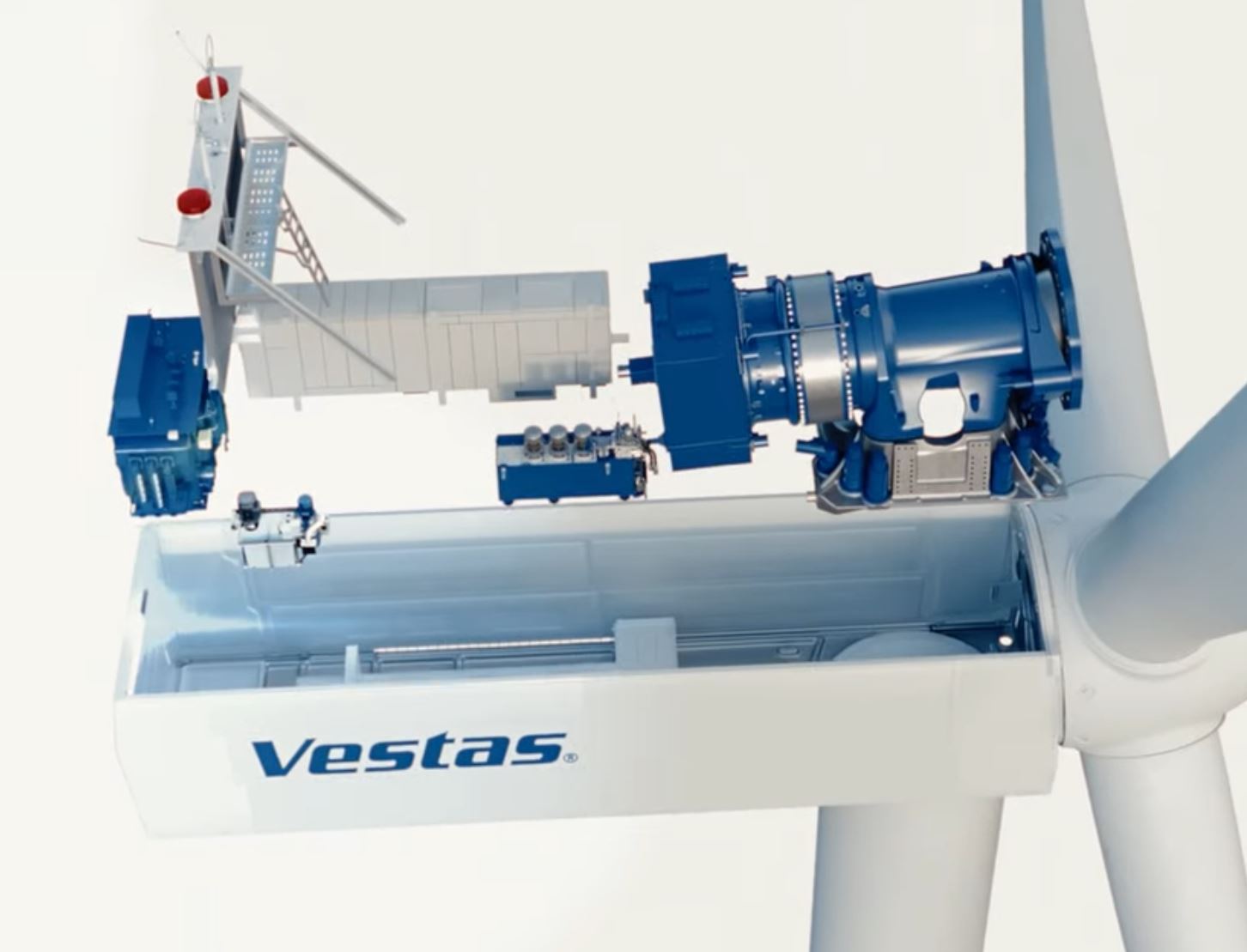
Ørsted: Operational Discipline Amid Strategic Refocus
Ørsted delivered Q1 2026 EBITDA of DKK 9.5 billion, an 11% increase year-on-year, driven by a 27% rise in offshore generation output and disciplined capital allocation. While net profit declined to DKK 2.6 billion (from DKK 4.9 billion in Q1 2025), this primarily reflects non-cash impairments linked to U.S. interest rate adjustments—not operational deterioration.
The company reaffirmed its full-year 2026 EBITDA guidance of >DKK 28 billion and gross investment framework of DKK 50–55 billion, signalling confidence in its strategic pivot toward value-accretive projects in Europe and select APAC markets.
Executive Insight: Ørsted’s portfolio rationalisation—exiting marginal U.S. projects while accelerating European assets like Hornsea 3 (UK) and Baltica 2 (Poland)—reflects a maturing approach to risk-adjusted returns. For Nordic institutional investors, this underscores the importance of scrutinising geographic concentration and policy risk exposure in renewable infrastructure portfolios.
Strategic Context: The North Sea Investment Pact and Nordic Competitive Advantage
Both companies are positioned to benefit from the landmark Joint Offshore Wind Investment Pact for the North Seas, signed at the January 2026 North Sea Summit. The agreement commits signatory nations to coordinated grid development, streamlined permitting, and de-risked financing mechanisms—addressing two historic bottlenecks: grid connectivity and capital cost volatility.
For Nordic executives, three implications stand out:
1. Supply Chain Opportunity: Vestas and Ørsted anchor a Danish-led ecosystem spanning turbine manufacturing, installation vessels, and digital O&M services. With the Nordic renewable energy market projected to reach 183.7 GW by 2031 (CAGR 7.15%), regional suppliers should evaluate partnership pathways with these anchors.
2. Policy Arbitrage: While EU Green Deal policies have modestly increased Nordic power price volatility [[41]], the region’s advanced grid infrastructure and carbon pricing mechanisms create a favourable environment for long-term PPAs. Executives should assess how Vestas/Ørsted’s contracting strategies might inform corporate renewable procurement.
3. Interest Rate Sensitivity: Both companies have demonstrated resilience to higher financing costs through operational leverage and hedging. However, the sector remains exposed to prolonged rate elevation. Nordic CFOs should stress-test renewable asset valuations under multiple rate scenarios.
Forward View: Execution Risk and the Next Growth Inflection
While Q1 results are encouraging, key execution challenges remain:
– Vestas: Scaling next-generation 15+ MW turbine platforms while maintaining supply chain cost discipline amid geopolitical trade tensions.
– Ørsted: Delivering complex offshore projects on time/budget while navigating evolving U.S. Inflation Reduction Act implementation.
The convergence of technology advancement (floating foundations, AI-driven predictive maintenance), policy support (North Sea Pact), and capital market re-rating suggests 2026–2027 could mark a new growth inflection for Nordic wind leadership—if execution holds.
What’s Next for Nordic Business Journal Readers?
In our upcoming deep-dive, we will analyse how Nordic mid-cap renewable technology firms are positioning themselves within the Vestas-Ørsted ecosystem—and where strategic partnership or M&A opportunities may emerge. We’ll also examine the impact of the EU’s revised Renewable Energy Directive on corporate PPA structuring across the region.
We value your perspective. Are there specific sectors, companies, or strategic questions you’d like us to explore? Connect with our editorial team at editorial@nordicbusinessjournal.com or via LinkedIn @NordicBizJournal. Your insights help shape our coverage of the Nordic business landscape.
Disclaimer: This analysis is for informational purposes only and does not constitute investment advice. Readers should conduct independent due diligence before making business or investment decisions.