
With the 2026 election approaching, Elisabeth Svantesson’s promised turnaround has stalled. Slower growth, persistent voter pessimism and energy-price shocks are reshaping the political battlefield – but the Tidö parties may still hold a fuel-price card.
Growth Downgrades Dash the ‘Sunny Picture’
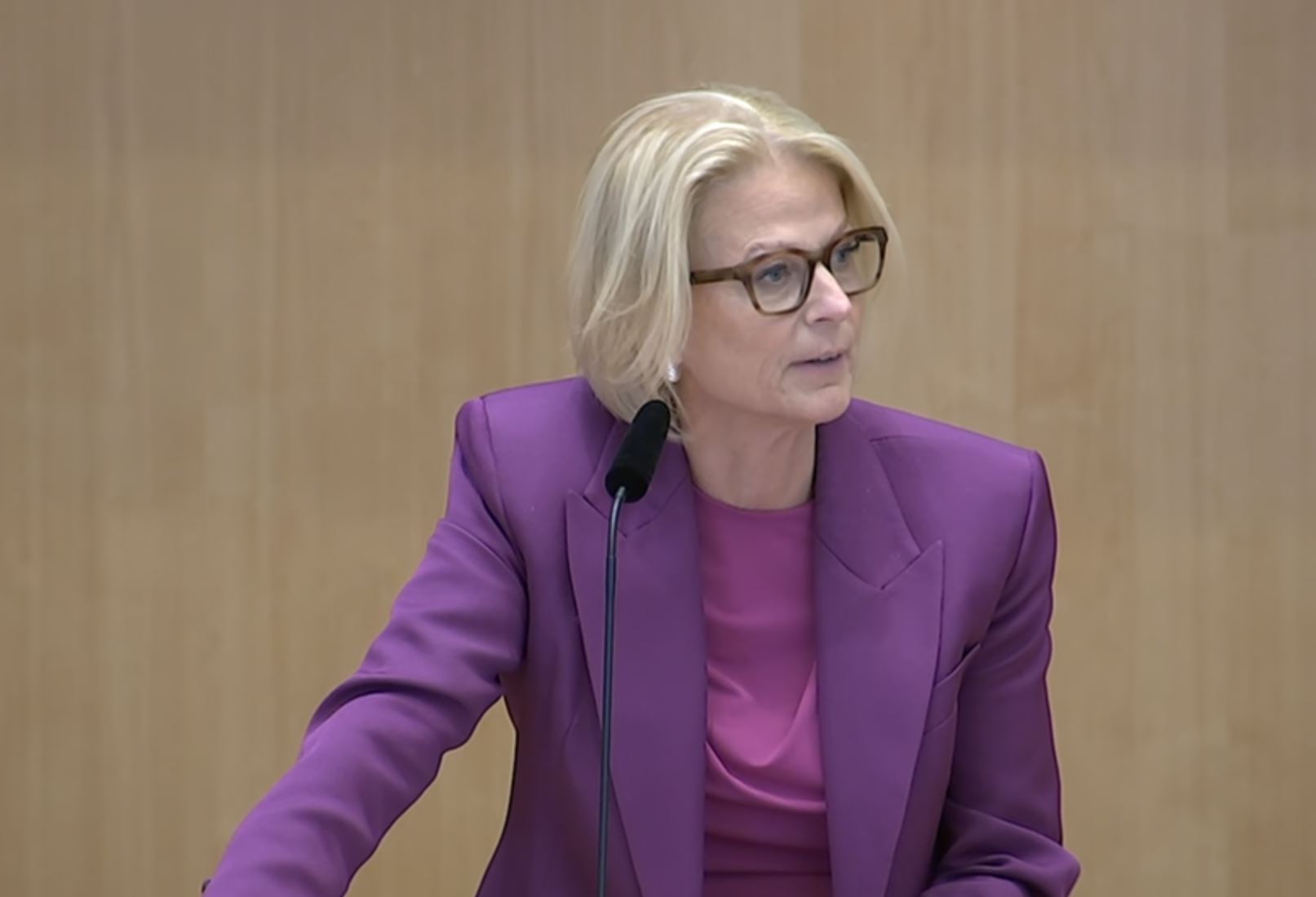
Finance Minister Elisabeth Svantesson’s hope that Sweden would enter the 2026 election year on a wave of economic optimism has run aground. After a weak start to 2025, the government has repeatedly cut its growth outlook. In May, the Ministry of Finance halved the 2025 GDP forecast from 1.8% to 0.9%, citing global trade frictions and a “fairly dark picture” for the economy. The 2026 forecast was also trimmed from 2.8% to 2.3% in the spring, though it has since been raised back to 2.6% as signs of recovery emerge.
The latest revisions came as geopolitical shocks rattled energy markets. An extraordinary forecast update linked to the war in the Middle East and disruptions in the Strait of Hormuz forced Svantesson to warn of direct impacts on Swedish growth. “Oil and fertilizer are hit hardest by these price increases,” she said, noting that energy costs feed straight into household budgets and industry input prices.
Yet by August, the tone had shifted. The Ministry of Finance reported that “recovery is expected to resume in the coming months,” driven by real wage growth, falling interest rates, and expansionary fiscal policy. In December 2025, Svantesson declared that “the Swedish economic recovery has begun,” with domestic demand and public consumption leading the upturn.
The Political Arithmetic: Pessimism vs. Fuel Prices
The government’s problem is timing. Unemployment remains high, peaking at 9% in 2025 before gradually easing to 7.9% by 2027. The Social Democrats’ economic spokesperson Mikael Damberg argues this is the eighth consecutive downward revision to growth and upward revision to unemployment for 2026. “We have lived in a sunny picture of the Swedish economy,” he told SVT, claiming that if Sweden matched euro-area job creation, 100,000 more people would be working.
If household pessimism deepens, it threatens the Moderates-led coalition’s bid for a second term. Swedbank forecasts Swedish GDP to grow 2% in 2025 and 3% in 2026, but notes that geopolitics remain “uncertain”. The European Commission sees 1.5% growth in 2025, accelerating to 2.6% in 2026 on the back of tax cuts, lower VAT on food, and rising real incomes.
But energy remains the wild card. The ongoing Middle East conflict continues to pressure oil markets, with the prolonged closure of the Strait of Hormuz flagged as a key risk to Sweden’s 2026 outlook. Should pump prices spike again, the Tidö parties’ record of cutting fuel tax and resisting EU biofuel mandates could resonate with voters. As one strategist put it: “When growth is abstract but the price at the pump is not, elections are won at the petrol station.”
Analysis: Three Factors That Will Decide the Economic Narrative
1. Household Confidence Is the Swing Variable
Sweden’s recovery hinges on domestic demand. Real wages are rising, the Riksbank has cut its key rate to 2.00% and may cut further, and mortgage costs are falling. Swedbank expects housing prices to rise 5% in 2025 and 7% in 2026, which typically lifts sentiment. If households feel the improvement by Q2 2026, the government can campaign on “delivered relief.” If not, the opposition’s “underperformance” critique sticks.
2. Fiscal Space Is Sweden’s Buffer – But With a Time Limit
Svantesson repeatedly cites “strong government finances” as Sweden’s advantage. Defence spending, public investment and targeted tax cuts are already in play. The IMF notes Sweden is “well-positioned to navigate challenges” but warns that slowing productivity and an aging population weigh on long-term growth. The government can afford stimulus before the election, but must avoid fuelling inflation, which hit 3.1% in October and remains above the Riksbank’s 2% target.
3. External Shocks Favor the Opposition – Unless the Government Owns the Response
Trade wars, U.S. tariffs, and Middle East instability have already “cut off the recovery pretty abruptly” once in 2024. Damberg’s argument that Sweden is underperforming Europe gains traction if global demand falters again. However, the Tidö agreement’s focus on energy security and fuel affordability gives the government a defensive policy platform. Expect campaign messaging to pivot from GDP percentages to kronor saved on diesel.
Current Update: Where Sweden Stands, May 2026
| Indicator | Latest | Outlook |
| 2025 GDP Growth | 0.9% Gov’t forecast; 1.8% actual for full year | Four-year high, but half of early 2025 projection |
| 2026 GDP Growth | 2.6% Gov’t forecast | Driven by consumption, housing investment, public outlays |
| Inflation | 3.1% headline Oct; 2.8% core | Expected to fall sharply in 2026 due to lower VAT on food |
| Policy Rate | 2.00% | Riksbank may cut to 2% in March; further cuts possible |
| Unemployment | 9% peak 2025 | Forecast to fall to 7.9% by 2027 |
The Riksbank, European Commission, and IMF all project that Sweden’s recession will end by 2027. The question for the government is whether voters feel it by September 2026.
What’s Next & How to Connect
Next in Nordic Business Journal: Our follow-up will dissect the election-year budget. We’ll analyse which tax cuts, energy subsidies, and industrial policies could move voter sentiment – and whether Sweden’s fiscal headroom is large enough to outspend uncertainty.
Join the conversation: How is your business planning for a low-growth, high-volatility 2026? Email our editorial desk at editors@nordicbusinessjournal.com or tag us on Threads and Instagram @NordicBizJournal. For reader panels and live Q&As with Sweden’s top economists, subscribe at nordicbusinessjournal.com/join.