Denmark currently ranks among Europe’s fastest-growing economies. Yet this headline success rests on a narrow foundation. Strip away the pharmaceutical sector, and underlying growth nearly disappears. The Danish economy now operates at two distinct speeds. International life sciences exports surge. Domestic industries stagnate. This divergence reshapes capital allocation, currency dynamics, and policy priorities across the Nordic region. Executives, investors, and policymakers must now navigate concentration risk, labour market friction, and shifting trade regimes. The strategic question no longer asks whether Denmark’s pharma-driven boom will continue. It asks how leaders will manage the structural imbalances the boom leaves behind.
The Concentration Engine
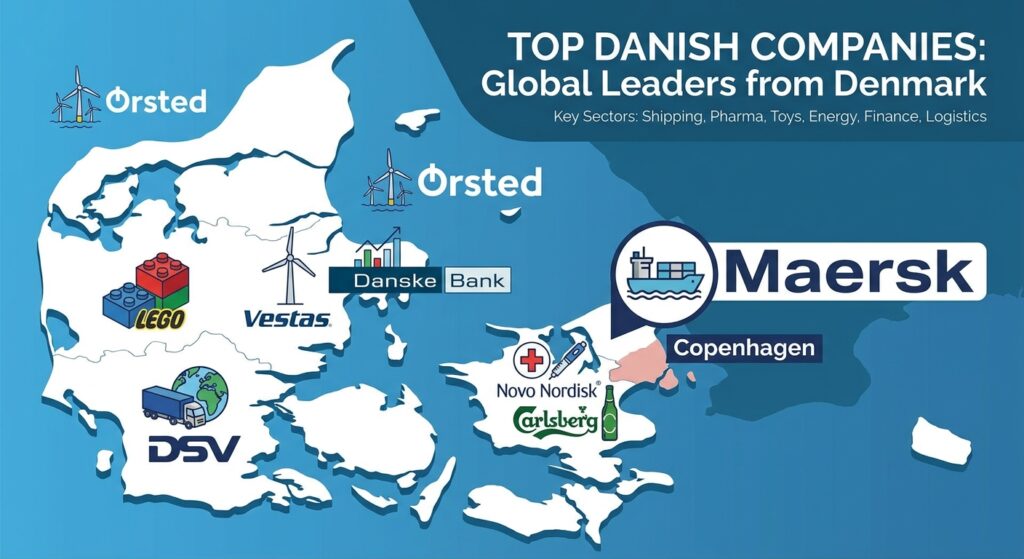
The pharmaceutical sector now drives an unprecedented share of national output. Industry data shows life sciences account for roughly 50 to 90 percent of quarterly GDP growth. In early 2026, headline GDP expanded by 1.9 percent. Excluding pharma, the broader economy grew just 0.2 percent. This imbalance stems directly from sustained global demand for GLP-1 therapies. Novo Nordisk and its integrated supply chain generate record export surpluses. They also deliver substantial corporate tax revenues. Consequently, Denmark maintains one of the largest current account balances among advanced European economies.
Summary of Denmark’s Economic Dichotomy
| Economic Indicator | The “Booming” Side (Pharma & Exports) | The “Worrying” Side (Domestic Economy) |
| Growth Performance | Exceptional, outperforming most of Europe. | Sluggish, showing signs of near-stagnation when isolated. |
| Primary Drivers | International medicine sales, high corporate revenues. | Subdued consumer confidence, high local household debt. |
| Vulnerabilities | Global competition and sudden regulatory or tariff changes. | Severe labour shortages and systemic concentration risk. |
Yet this model creates statistical distortion. Traditional metrics mask underlying fragility. Investors often equate headline growth with broad prosperity. That assumption no longer holds. National output now depends on clinical pipeline approvals, manufacturing scale, and uninterrupted foreign market access. When mid-2025 production constraints emerged, the finance ministry swiftly cut its annual growth forecast from 3.0 percent to 1.4 percent. Such sensitivity underscores a core vulnerability. Concentrated success amplifies both upside momentum and downside exposure.
The Domestic Divergence
While export revenues climb, domestic sectors face persistent headwinds. Construction, manufacturing, and traditional retail report weak order books. Elevated borrowing costs further constrain capital expenditure. Moreover, the labour market reflects a clear structural imbalance. Pharma giants offer premium compensation packages and accelerated career pathways. Smaller enterprises struggle to retain skilled technicians and mid-level managers. Public hospitals and infrastructure developers face identical recruitment bottlenecks. Wage competition intensifies. Productivity growth outside life sciences remains subdued.
Consumer behaviour mirrors this economic split. Household debt approaches historic highs. Variable mortgage rates limit discretionary spending. Furthermore, wealth effects from pharma dividends and equity gains concentrate within a narrow demographic. Most households prioritise essentials over upgrades. Retailers report cautious foot traffic and shorter shopping baskets. E-commerce penetration continues to climb, yet overall consumption growth remains flat. Policymakers now recognize a critical reality. Export strength does not automatically stimulate domestic demand. Credit constraints and wealth concentration effectively block the traditional wealth-to-consumption channel.
Policy Calibration and Currency Dynamics
Copenhagen has deployed a coordinated strategy to rebalance industrial growth. The government now directs public capital toward green infrastructure, digital transformation, and advanced manufacturing. New accelerated depreciation rules target R&D outside life sciences. Targeted skills programs aim to redirect engineering talent toward cleantech, automation, and logistics. Additionally, state-backed liquidity facilities provide working capital for small and mid-sized enterprises. These measures seek to diversify the industrial base. They also aim to reduce systemic reliance on a single export category.
Currency mechanics complicate this adjustment. Denmark maintains its krone peg to the euro through the ERM II framework. Massive corporate capital inflows, however, generate persistent upward pressure on the currency. Danmarks Nationalbank intervenes routinely to stabilise the exchange rate. A stronger krone boosts import purchasing power. It simultaneously erodes price competitiveness for non-pharma exporters. Food processors, maritime equipment manufacturers, and industrial service providers face immediate margin compression. The central bank now balances financial stability against export vitality. Policymakers must weigh short-term currency defence against long-term structural diversification. Over time, targeted fiscal support and productivity investments will determine whether the krone acts as a stabilizer or a growth constraint.
Geopolitical Exposure and Competitive Positioning
Denmark’s growth model now intersects with shifting global trade architecture. The United States remains the primary revenue driver for GLP-1 therapies. Any move toward stricter tariff regimes, local content mandates, or pricing caps would immediately impact Danish export flows. European regulators simultaneously intensify scrutiny of market dominance and health technology pricing. Antitrust reviews and cross-border reimbursement negotiations will likely accelerate through 2027.
Regional competitors already adapt their strategies. Eli Lilly expands manufacturing capacity across North America and Eastern Europe. Supply chain regionalisation accelerates globally. Meanwhile, Nordic peers demonstrate alternative resilience models. Sweden leverages its deep tech and industrial manufacturing base. Finland maintains steady expansion through engineering exports and digital services. Norway channels commodity revenues into sovereign wealth diversification. Denmark must now convert pharma capital into broader innovation capacity. Strategic investments in biotech adjacencies, AI-driven drug discovery, and sustainable manufacturing offer viable pathways. Long-term resilience depends on deliberate capital reallocation, not passive sectoral dependence.
Strategic Imperatives for Leaders
Denmark’s economic paradox demands disciplined capital allocation and proactive policy design. The pharma cycle will not reverse overnight. Concentration risk, however, remains elevated. Executives should stress-test supply chains against regulatory shifts and pricing reforms. Investors must price currency headwinds into non-pharma valuations. Policymakers need to accelerate structural diversification before external trade shocks materialise.
The Nordic economic model has always balanced openness with institutional stability. Denmark now faces its next evolution. Leaders who anticipate labour reallocation, currency dynamics, and trade regime shifts will capture durable value. Those who treat headline GDP as a proxy for broad prosperity will likely misprice risk. The two-speed economy is not a temporary anomaly. It is a structural reality. Strategic adaptation, not statistical optimism, will define the next investment cycle.