The global economy and broader economic activities are experiencing a synchronised slowdown. Recent data and major global headlines indicate that the primary driver behind this downturn is the ongoing war in the Middle East, which has triggered severe energy supply shocks, fuelled persistent inflation, and disrupted international trade routes.
Executive Summary
The global economy has abruptly darkened. What began as a regional conflict in late February 2026 has metastasized into a systemic crisis, disrupting roughly 20% of global oil supplies and sending shockwaves through manufacturing, inflation, and monetary policy worldwide. The International Monetary Fund (IMF) now projects global growth of just 3.1% for 2026—a downgrade that assumes the war ends quickly. If it does not, the fund warns of a “severe scenario” pushing growth toward 2%, a threshold breached only four times since 1980: during the global financial crisis, the COVID-19 pandemic, and two earlier oil shocks.
For Nordic and European business leaders, the stakes are especially high. The Eurozone’s composite Purchasing Managers’ Index (PMI) has slipped into contraction territory, factory output is stalling, and energy costs are surging just as the region was beginning to stabilize after years of post-pandemic volatility. This is not merely a supply-side disruption. It is a stress test for corporate resilience, energy security, and the architecture of global trade itself.
The Anatomy of a Supply Shock
From Regional Conflict to Global Crisis
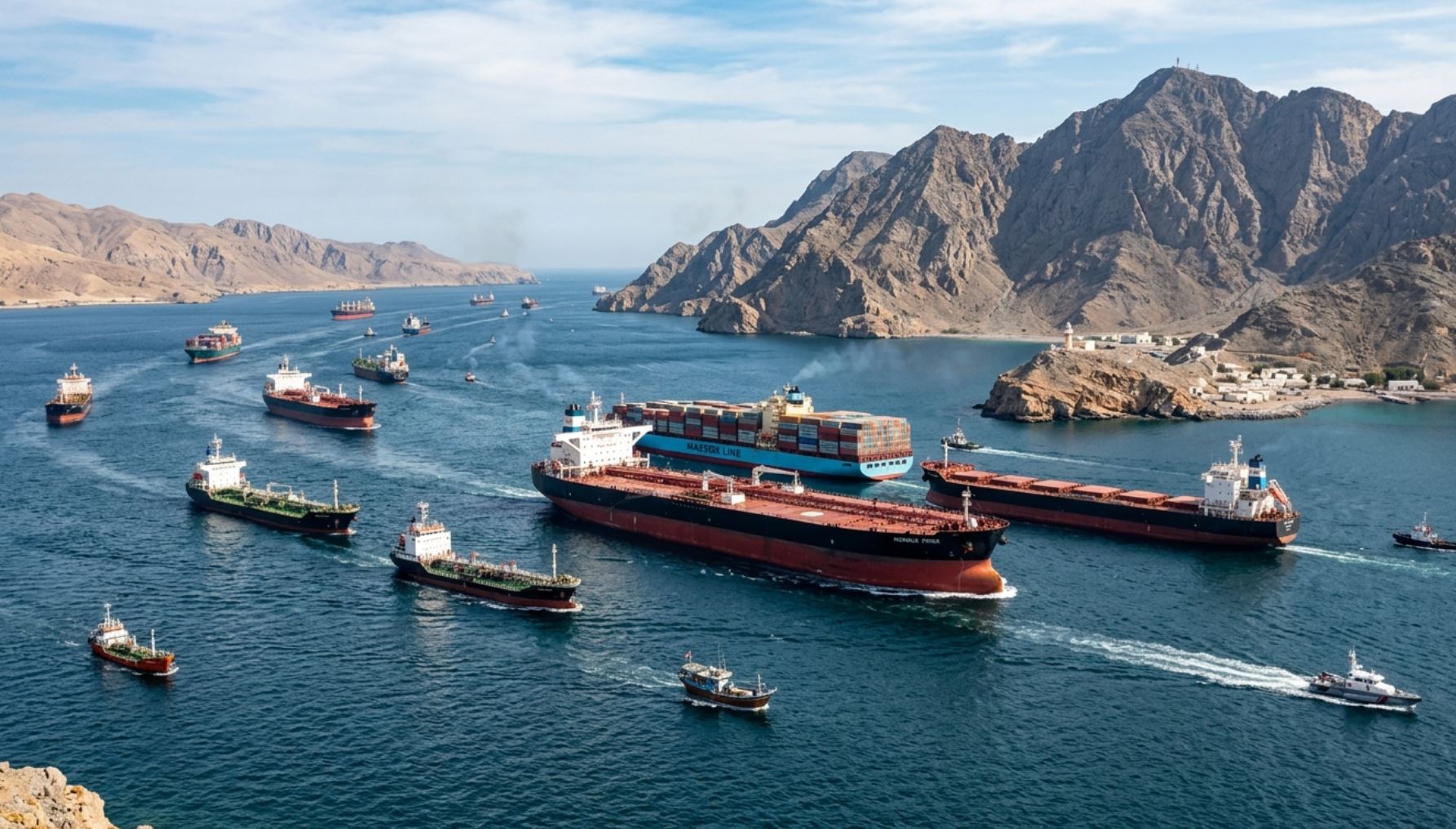
The war erupted on February 28, 2026, when coordinated U.S. and Israeli airstrikes targeted Iran. Within days, the conflict had engulfed the Strait of Hormuz—the world’s most critical energy artery. Roughly one-fifth of global oil and liquefied natural gas (LNG) transits this narrow waterway daily. When Iran closed the strait and began attacking energy infrastructure across the Persian Gulf, the global market faced an unprecedented supply crunch.
The damage has been severe and widespread. Over 40 major energy assets across nine countries have been damaged or destroyed. Qatar, the world’s third-largest LNG exporter, lost 17% of its export capacity in a single day of airstrikes. Iraq’s oil output dropped by nearly 70% because it could not move exports through the strait. Saudi Arabia shut refineries as a precaution. Brent crude spiked above $110 per barrel in early April, while European natural gas prices surged 70%.
The International Energy Agency (IEA) responded with the largest emergency oil stock release in history—400 million barrels—but markets remained volatile. Even after a temporary ceasefire pushed Brent back toward $90–$100 per barrel by late April, the underlying supply architecture remains fractured. Analysts estimate that repairing damaged facilities will take three to five years.
Why This Shock Is Different
At first glance, the parallels to the 1970s oil crises seem obvious. Yet the current disruption differs in three critical ways that shape its strategic implications for business leaders.
First, the price shock, while sharp, is not yet catastrophic. Oil prices have risen roughly 50% since the start of 2026—painful, but a far cry from the multiples seen in the 1970s. Second, the U.S. economy is structurally less vulnerable. America is now the world’s largest oil producer, and its growth engine has shifted toward technology and services, which are less energy-intensive than the manufacturing-heavy economy of fifty years ago. Third, financial markets have shown surprising resilience. After an initial correction, the S&P 500 has rebounded to new highs, suggesting investors are pricing in a swift resolution.
However, this resilience may be deceptive. The IMF explicitly warns that “markets have not fully priced more adverse scenarios.” If the conflict extends into 2027, or if cyberattacks on critical infrastructure escalate, the current optimism could unravel rapidly.
The Macroeconomic Fault Lines
Growth Forecasts in Free Fall
Major institutions have slashed their 2026 projections, and the downward revisions keep coming. The UN cut its global growth forecast to 2.5%, down from 2.7%. The IMF’s baseline of 3.1% already assumes a short-lived conflict with energy prices rising a “moderate” 19%. But IMF Chief Economist Pierre-Olivier Gourinchas has warned that the world is actively drifting toward the fund’s “adverse scenario”—2.5% growth with oil at $100 per barrel—or worse, the “severe scenario” of 2% growth with oil at $110 this year and $125 next.
Under the severe scenario, global growth would be reduced by 1.3 percentage points in 2026. Inflation would exceed 6%. Gourinchas called it a “central banker’s nightmare”: inflation up, activity down—the classic stagflationary trap.
Manufacturing and the Transatlantic Divide
PMI data reveals a stark divergence between the Atlantic economies. While the U.S. has shown pockets of steady business growth, Europe and parts of Asia have taken severe hits.
The Eurozone composite PMI fell to 48.6 in April 2026, firmly in contraction territory. Factory output growth nearly stalled, new orders dropped for the first time in months, and business confidence weakened to its lowest level since November 2024. Cost pressures intensified sharply, with input inflation hitting a 46-month high and output prices rising at the fastest rate in 39 months.
In Japan, operational expenses and logistical bottlenecks have forced companies to raise prices at the sharpest rate in nearly two decades. This is not merely a European problem—it is an advanced-economy problem, with the U.S. as the notable, and potentially temporary, exception.
Labour Markets Under Pressure
As business confidence fades, the labour market is showing early cracks. Job losses and payroll declines have surfaced across the U.S., France, Germany, the U.K., and Australia. The pattern is consistent: when energy costs spike, margins compress, and hiring freezes quickly turn into layoffs. For policymakers, this creates an impossible trilemma—supporting growth, controlling inflation, and maintaining employment—where only two objectives can be pursued at any given moment.
The Policy Trap
Central Banks Face an Unpalatable Choice
The standard playbook for an energy shock is well understood: central banks look through temporary inflation spikes to avoid choking off growth. But this shock is not temporary, and the inflation it generates is already embedding into wage expectations and supply chains.
Gourinchas has been explicit: “If medium- or long-term inflation expectations drift up as prices and wages pick up, restoring price stability must take precedence over near-term growth, with a swift tightening.” In other words, rate hikes are coming, even if they deepen the slowdown.
The IMF has also warned governments against the political temptation to subsidize fuel prices. Broad subsidies, while popular, distort price signals, encourage consumption, and strain already elevated sovereign debt levels. The fund recommends targeted transfers to vulnerable households instead—a fiscally disciplined approach that few governments appear willing to adopt in an election year.
The Debt Dimension
The global financial system enters this crisis with record leverage. The IMF’s Global Financial Stability Report notes that while markets have so far avoided acute liquidity stress, “this resilience should not be taken for granted.” Elevated public debt, expanding non-bank financial intermediaries, and the potential for abrupt tightening of financial conditions create a combustible environment. A prolonged conflict could force leveraged players into fire sales, amplifying market volatility.
Strategic Implications for Business Leaders
Energy Security Is Now a Boardroom Priority
The Hormuz crisis has shattered the illusion that energy security is a geopolitical abstraction best left to government officials. For multinational corporations, the immediate imperatives are clear:
– Diversify supply chains. Single-source dependencies on Middle Eastern energy or Asian manufacturing hubs are no longer tenable. Nearshoring and friend-shoring are accelerating, but they require years of capital investment.
– Hedge energy exposure. Volatility is the new baseline. Fixed-rate energy contracts, strategic reserves, and financial hedging instruments are essential tools for managing margin risk.
– Invest in operational efficiency. The companies that survive this shock with margins intact will be those that invested in energy efficiency, digital transformation, and flexible production systems before the crisis hit.
The Nordic Advantage—and Vulnerability
Nordic economies enter this period with notable strengths: robust fiscal positions, high renewable energy penetration, and strong institutional frameworks. Sweden, Norway, and Finland are less exposed to Middle Eastern oil than their southern European counterparts, and Norway’s position as a major energy exporter provides a natural hedge.
Yet vulnerabilities remain. The region’s export-oriented manufacturing sector is deeply integrated into European supply chains. A Eurozone recession would inevitably drag down Nordic growth. Moreover, the global shift toward protectionism and trade fragmentation threatens the open economic model that has underpinned Nordic prosperity for decades.
The Long View: What Comes Next
Three Scenarios for 2026–2027
Scenario 1: Swift Resolution (25% probability)
A durable ceasefire reopens the Strait of Hormuz within weeks. Oil prices retreat toward $70–$80 per barrel. Global growth stabilizes near 3%, and the 2026 slowdown proves shallow. Markets rally, but infrastructure damage in the Gulf keeps a risk premium on energy prices through 2027.
Scenario 2: Protracted Conflict (50% probability)
The current pattern of ceasefires, failed negotiations, and renewed hostilities continues. Oil averages $100 per barrel through 2026. Global growth slows to 2.5%, inflation exceeds 5%, and central banks tighten into a weakening economy. Europe slips into recession. Emerging markets face balance-of-payments crises as import bills surge.
Scenario 3: Escalation and Systemic Crisis (25% probability)
The conflict widens to include direct attacks on Saudi and UAE infrastructure, or cyberattacks cripple Western energy grids. Oil spikes above $140 per barrel. Global growth collapses toward 2%, triggering a full-blown recession. Financial markets experience acute stress, and the post-pandemic recovery is fully reversed.
The Structural Shift
Regardless of which scenario materializes, the Hormuz crisis has permanently altered the strategic landscape. Three long-term trends are now irreversible:
1. The end of cheap energy. Even in the best case, the era of sub-$60 oil is over. Energy will command a persistent geopolitical risk premium.
2. Accelerated decarbonisation. The shock has turbocharged investment in renewables, nuclear, and grid modernization. For Nordic clean-tech firms, this is a generational opportunity.
3. Fragmentation of global trade. The crisis has exposed the fragility of just-in-time supply chains and single-source dependencies. Regional trade blocs, reshoring, and strategic autonomy are the new organizing principles.
Conclusion: Leadership in an Age of Permacrisis
The global economy is not merely slowing—it is recalibrating to a world where geopolitical risk is a permanent feature of the business environment, not an exception. The Strait of Hormuz shock is the latest, and most severe, manifestation of this new reality.
For senior executives and investors, the imperative is clear: resilience must be engineered, not assumed. This means diversifying supply chains, hedging energy exposure, investing in digital and green infrastructure, and building organisational agility to pivot as scenarios evolve.
For Nordic business leaders, the crisis also presents a strategic opening. The region’s strengths in renewable energy, advanced manufacturing, and institutional stability position it to benefit from the global restructuring now underway. But capturing that advantage requires decisive action—before the next shock arrives.
The war in the Middle East will eventually end. The economic transformations it has set in motion will not.
The Nordic Business Journal provides analysis and insight for senior executives, investors, and policymakers navigating global markets. For subscription inquiries, visit our website.
Sources: IMF, Euronews, Yahoo Finance.