
A routine monitoring cruise in the Gulf of Finland has produced one of the most surprising Nordic climate stories of 2025. Swedish and Finnish scientists, looking for something else entirely, have discovered that large vessels steaming through shallow Baltic shipping lanes can trigger methane bursts twenty times larger than natural seepage from the same seabed. The gas is not coming from the ships’ exhaust stacks, but from the mud beneath their keels.
The accidental finding, published in July in the journal Communications Earth & Environment, is now driving a fast-expanding research programme that will sample waters outside the world’s biggest ports—including several in the Nordics—before the end of next year.
A pressure wave, not a smokestack
The project began in 2023 when Chalmers University of Technology and the Finnish Meteorological Institute set out to quantify natural methane leakage from the organic-rich, low-oxygen sediments of Neva Bay, the eastern extension of the Gulf of Finland. Instead, every time a deep-draught cargo ship passed their instruments, dissolved-methane readings spiked.
Lead author Dr Amanda Nylund, an oceanographer at Chalmers, explains the mechanism:
“A large propeller moving at cruising speed creates a low-pressure plume that reaches the seafloor in water depths of 10–15 m. That pressure drop is only a few percent of atmospheric pressure, but it is enough to ‘pull’ gas bubbles out of the sediment and accelerate their rise to the surface.”
The team calculates that a single 250 m bulk carrier can liberate 50–100 kg of methane during a single 10-kilometre transit of the bay. Multiplied across the 3,000–4,000 passages logged each month, the annual footprint equals the CO₂-equivalent emissions of 30,000 passenger cars.
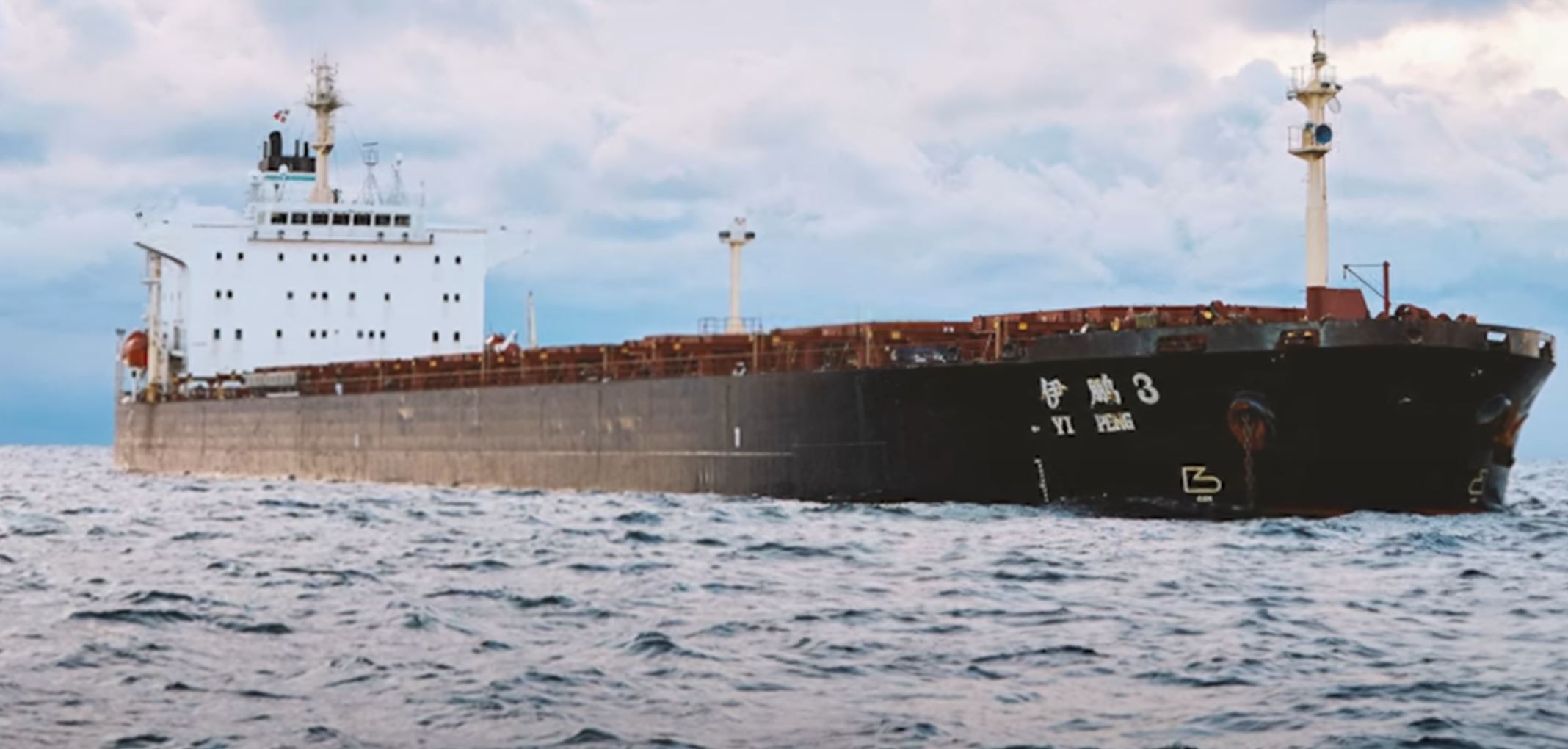
Why the Nordics matter
Although the discovery was made inside Finnish territorial waters, the Baltic’s sheltered, shallow basins make the entire region a natural laboratory for the phenomenon. Neva Bay averages 8 m in depth; the main shipping fairways into Stockholm, Gothenburg and the Port of Turku are often shallower.
“Our modelling suggests that similar amplification could occur anywhere the water column is thin enough for propeller wash to reach the bed,” says co-author Prof. Janne-Markus Rintala of the Finnish Meteorological Institute. “In practice, that means most Nordic ports built on post-glacial estuaries.”
Next steps: from curiosity to carbon accounting
The Swedish Transport Agency has already co-funded a follow-up cruise that will map methane plumes along the approaches to Gothenburg in September 2025. Meanwhile, the Port of Helsinki is providing AIS (Automatic Identification System) data so researchers can correlate individual vessel transits with real-time methane readings.
“We need to know whether this is a Baltic anomaly or a global blind spot,” says Nylund. “Preliminary talks with port authorities in Rotterdam and Busan indicate the same physics applies there, but no one has looked systematically.”
Business implications
For Nordic shipping lines, the finding adds a new layer to the ESG conversation. Methane has 27 times the warming power of CO₂ over a 100-year horizon, and regulators are sharpening their pencils. The EU’s forthcoming Methane Strategy revision (expected Q4 2025) may include maritime sources for the first time.
Maersk Tankers, which operates several MR tankers in the Baltic, told Nordic Business Magazine it is “reviewing whether minor speed or routing adjustments could mitigate the effect” without disrupting schedules.
On the logistics side, ports may need to weigh the cost of dredging deeper approach channels against the value of emissions saved. “It’s the first-time sediment disturbance has shown up in a carbon ledger,” notes Erik Svensson, sustainability director at the Port of Gothenburg.
A Nordic lead on a global problem
The research consortium has submitted a €4.2 million proposal to Horizon Europe that would place fixed methane monitors at the entrance to five shallow-draft ports—Gothenburg, Copenhagen-Malmö, Gdańsk, Klaipėda and Rotterdam—by 2027. If funded, the project would give Nordic stakeholders a head start in developing verification protocols before the IMO finalises its 2026 greenhouse-gas inventory guidelines.
Until then, the humble mud of the Baltic has become an unexpected protagonist in the race to net-zero shipping.