
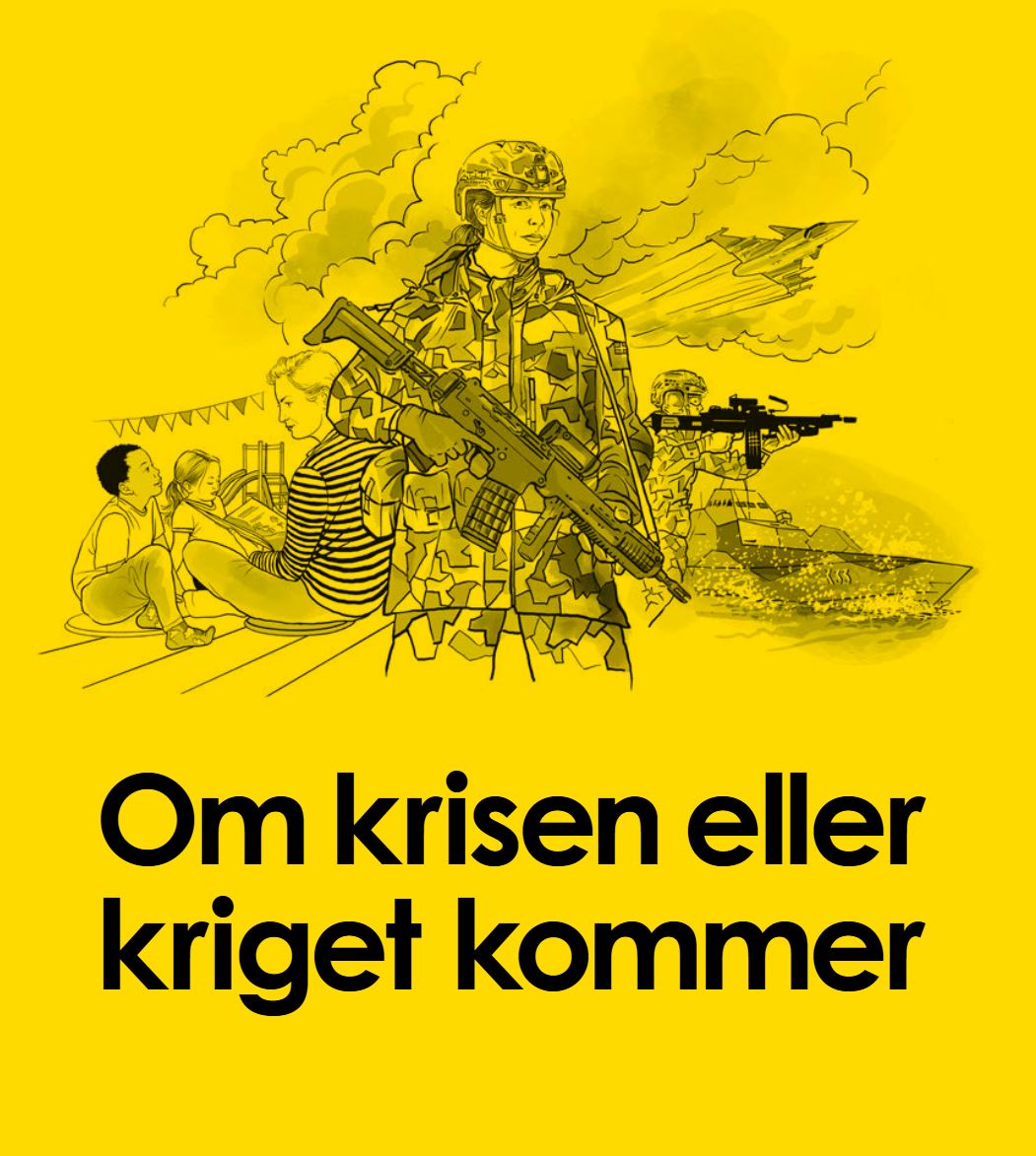
Sweden’s national emergency brochure, If Crisis or War Comes, has drawn significant international attention. Several countries are now developing their own versions—many inspired directly by Sweden’s approach.
Together with Norway, Sweden stands alone in Europe in having distributed a printed national preparedness brochure to every household twice in recent years. The Swedish Civil Contingencies Agency (MSB) has since been invited to multiple international security conferences, where the initiative is highlighted as an effective way to strengthen public resilience.
What impresses many observers is not only the reach—every Swedish home received the brochure—but the tone. It addresses war and crisis scenarios with unusual directness.
“Many countries are surprised by how openly we talk about war—what it means, what people should do, and the possible consequences,” says Christina Andersson, MSB’s project manager for the brochure. “For some governments, that level of transparency is unthinkable.”
A Model Born of Crisis
The idea’s renewed momentum comes against the backdrop of Russia’s full-scale invasion of Ukraine and Europe’s deteriorating security climate. Those events, combined with more frequent extreme weather—floods, wildfires, and power disruptions—have pushed many governments to reconsider how they communicate about national emergencies.
Some countries avoid speaking explicitly about war, Andersson notes. Instead, they frame preparedness around practical resilience: stockpiling essentials, understanding emergency alerts, and staying informed when systems fail.
“Communicating with an entire population is complex,” Andersson says. “We’ve shared what worked well for us—and what didn’t.”
No One-Size-Fits-All Approach
MSB stresses that the Swedish model cannot simply be copied. A national brochure must reflect each country’s context—its history, politics, institutions, and public mindset. “You can draw lessons and inspiration,” Andersson adds, “but every country needs its own foundation.”
Sweden’s history with this kind of communication runs deep. The first version, If War Comes, was issued in 1943 during the Second World War. The 2018 edition of If Crisis or War Comes marked the first nationwide distribution of such material in 57 years.
In 2024, the brochure was updated and sent to 5.2 million households—an unprecedented logistical effort.
A Surge in Public Interest
Following the invasion of Ukraine, public demand for the brochure surged. At the peak, MSB received between 4,000 and 5,000 individual requests per day. The agency responded by making the content available online in multiple languages and formats, emphasizing that preparedness is not only a government responsibility but a civic one.
Why It Matters
The Swedish approach underscores a shift in how democracies prepare their citizens for crisis: with openness rather than reassurance, and with responsibility shared between state and society. In an era of hybrid threats, disinformation, and environmental shocks, this model of clear, practical communication is increasingly seen as a strategic asset.
Countries across Europe—and beyond—are now watching how Sweden’s experiment in public preparedness evolves. The lesson is simple but powerful: resilience starts with informed citizens.