
Bitcoin (BTC) has plunged below its January 1, 2025, price level of approximately $43,200, trading near $41,500 as of early Monday morning — marking a year-to-date decline of roughly 4%. The sell-off occurred without a single, identifiable catalyst, underscoring a broader erosion of investor confidence in risk assets and the fragility of crypto market sentiment amid tightening global liquidity conditions.
Unlike previous corrections driven by regulatory crackdowns or macroeconomic shocks (e.g., Fed rate hikes or Terra/LUNA collapse), this downturn appears structural. Institutional demand has waned, with major U.S. ETFs reporting consecutive weeks of net outflows. Meanwhile, retail trading volumes on major exchanges have dropped to their lowest levels since mid-2023. Analysts point to three converging pressures:
1. Monetary Policy Divergence: The U.S. Federal Reserve has signalled a prolonged “higher for longer” interest rate stance, making dollar-denominated assets more attractive relative to speculative assets like Bitcoin.
2. Liquidity Drain: Global liquidity, as measured by the BIS’s Global Liquidity Index, has contracted for the fifth consecutive quarter, reducing speculative capital flows into crypto.
3. Regulatory Headwinds: The EU’s MiCA framework is now fully in force, and U.S. SEC enforcement actions against major crypto platforms have intensified, dampening market optimism.
The lack of a clear trigger highlights a deeper truth: Bitcoin is no longer a standalone macro asset but a highly sensitive proxy for global risk appetite. As investors retreat from volatility, Bitcoin — lacking intrinsic yield, state backing, or industrial utility — is being systematically repriced downward.
Nordic Currencies Outperform Global Peers Amid Safe-Haven Flows
In stark contrast to crypto’s malaise, Nordic currencies have emerged as the standout performers in the G10 currency basket this year — a testament to regional economic resilience, prudent policy, and structural advantages.
According to Bloomberg data as of November 17, 2025:
- Swedish Krona (SEK): +17.1% vs. USD (current rate: 9.45 SEK/USD)
- Norwegian Krone (NOK): +12.9% vs. USD
- Swiss Franc (CHF): +14.3% vs. USD
By comparison, the New Zealand Dollar (NZD) and Japanese Yen (JPY) have posted minimal gains of just 1.6% and 1.7%, respectively, reflecting commodity dependence and persistent monetary easing.
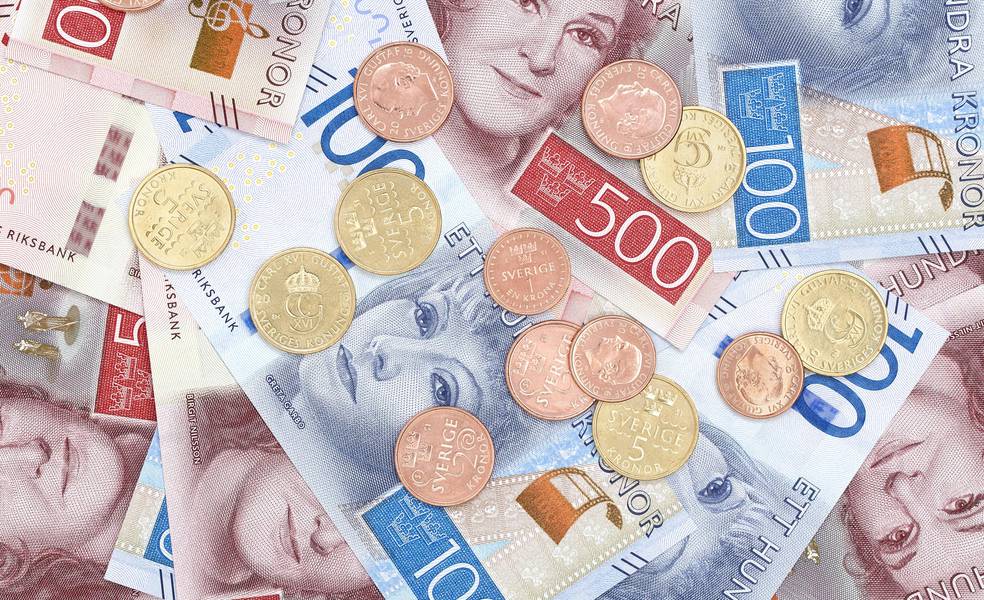
Why the Swedish Krona Is So Strong
Sweden’s currency strength is not an accident — it is the product of a unique confluence of macroeconomic and policy factors:
- Robust Current Account Surplus: Sweden’s net exports have surged, driven by strong demand for high-value industrial goods (e.g., Volvo, Ericsson, SSAB) and renewable energy technologies. The country recorded a trade surplus of 3.8% of GDP in Q3 2025 — the highest in the EU.
- Riksbank’s Cautious Monetary Policy: Unlike the ECB or Fed, the Riksbank maintained higher policy rates longer than peers, with the repo rate at 4.25% as of October — a full 100 bps above the ECB’s level. This differential has attracted carry trades and foreign capital.
- Low Public Debt & Fiscal Discipline: Sweden’s public debt-to-GDP ratio stands at 39%, among the lowest in the developed world. This, combined with a credible inflation-targeting framework, enhances investor confidence.
- Energy Security: Sweden’s near-total decarbonization of its power grid (95% renewable) has insulated it from energy price volatility that has plagued other European economies.
Will the SEK Continue to Appreciate?
The outlook remains favourable, but not without risks.
Bull Case:
– If the Fed begins cutting rates in Q2 2026 (as most market participants now expect), the SEK’s yield advantage could widen further, triggering additional inflows.
– Sweden’s election in September 2026 is unlikely to disrupt fiscal orthodoxy — the centre-right bloc, though narrowly leading, has pledged continuity on monetary and fiscal policy.
Bear Case:
– A sharp slowdown in Chinese demand for Swedish steel and machinery could pressure exports.
– A sudden surge in Eurozone inflation could force the ECB to tighten more aggressively, narrowing the policy gap.
Most analysts at Nordea and SEB project the SEK to trade between 9.2–9.6 against the USD through mid-2026.
Broader Implications: A New Paradigm for Nordic Markets
The divergence between crypto’s decline and Nordic currency strength reflects a broader reallocation of capital — from speculative, unbacked assets toward stable, export-driven economies with sound institutions.
For Nordic investors and businesses, this environment presents dual opportunities:
1. Exporters: A stronger SEK and NOK may pressure export margins, but companies with pricing power (e.g., SAS, H&M, Orsted) are hedging effectively and benefiting from higher real income.
2. Investors: The region’s currency strength makes Nordic equities and bonds more attractive to foreign portfolios — particularly as ESG and sovereign credit quality become paramount.
3. Policy Implications: The Riksbank may face growing pressure to intervene to curb excessive appreciation, though it has signalled reluctance to do so unless inflationary pressures emerge.
Conclusion: Crypto’s Reckoning, Nordic Resilience
Bitcoin’s fall below its January level is less a technical correction and more a symbolic milestone — the end of the “digital gold” narrative in an era of real yield and real economic strength. Meanwhile, the Swedish krona’s performance is not an anomaly, but a validation of the Nordic model: fiscal prudence, energy independence, and institutional credibility.
As global markets recalibrate toward safety and sustainability, the Nordics are not just weathering the storm — they are setting the standard.
Data Sources: Bloomberg, Riksbank, OECD, BIS Global Liquidity Index, IMF World Economic Outlook (October 2025), SEB and Nordea Research Reports.
Editor’s Note: This article has been updated to reflect the latest market data as of today. The Nordic Business Journal will publish a follow-up analysis next week on how Swedish fintech firms are adapting to the new currency and regulatory landscape.