
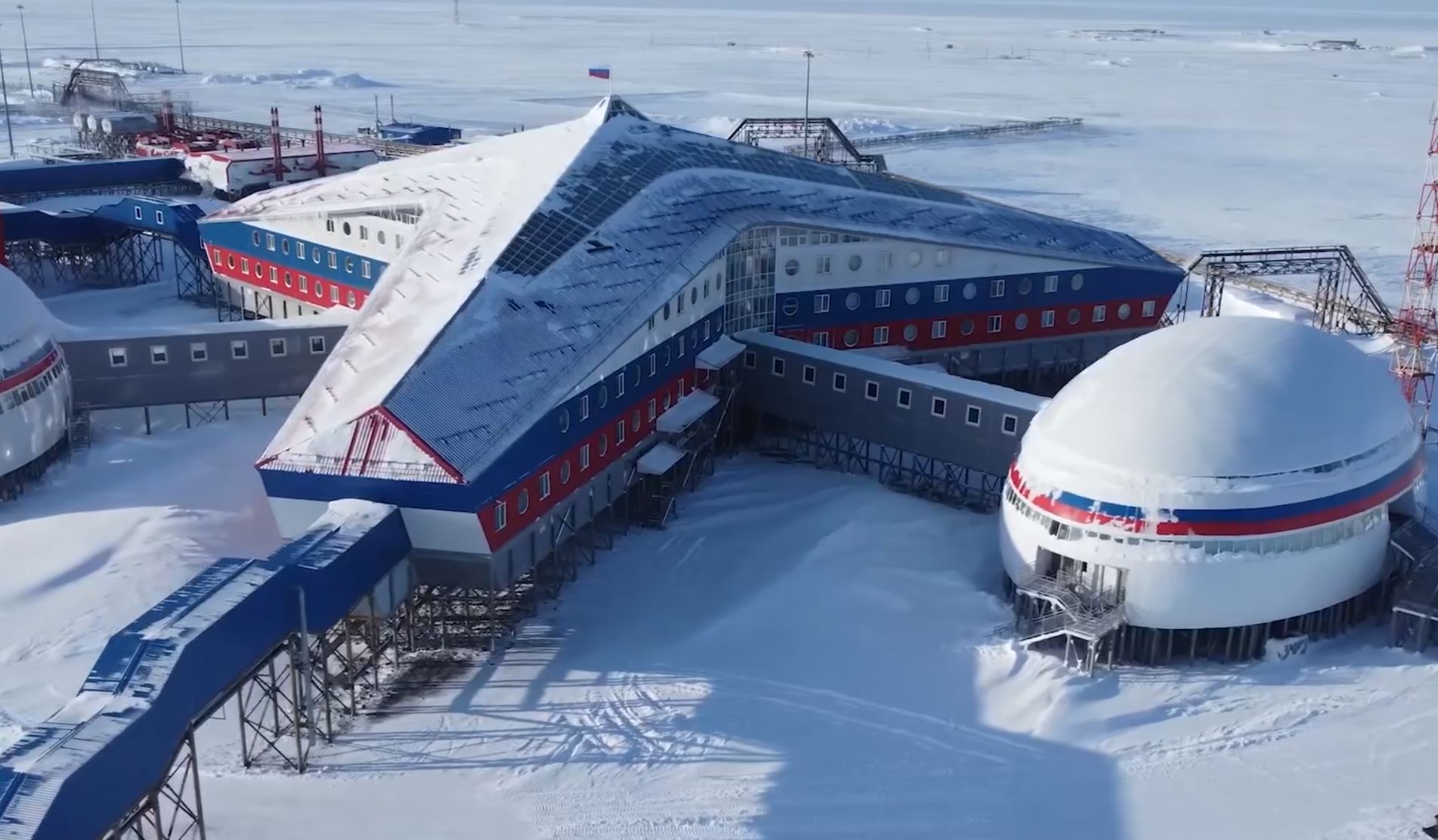
As tensions escalate between Russia and NATO, the Arctic is emerging as a crucial theatre for military influence and geopolitical manoeuvring. Recent satellite images, reviewed by SVT, reveal Russia’s ongoing fortification of its military presence in the Arctic. These pictures show upgraded airfields, newly installed radar systems, and strategically placed barracks capable of housing up to 150 soldiers each.
Despite the ongoing conflict in Ukraine and the impact of international sanctions, Russian President Vladimir Putin has made it clear that Arctic operations remain a top priority. This unflinching commitment to strengthening Russia’s military footprint in the region poses significant challenges not only to regional stability but to the broader security landscape of Europe.
A Strategic Military Hub in the Arctic
The Arctic is becoming a focal point in the military balance of power between Russia and NATO. As melting ice opens new shipping routes and the region’s vast natural resources beckon, control over Arctic territories is of increasing strategic importance. Russia, already possessing the most advanced military capabilities in the region, is making efforts to bolster its defence infrastructure, regardless of the economic sanctions imposed in other areas.
Björn Ottosson, a researcher at the Swedish Defence Research Agency (FOI), warns that Russia’s growing presence in the Arctic could have severe consequences for Europe’s security. “If Russia decides to take action in the near future, the Arctic could play a pivotal role in their military strategy,” Ottosson states. This growing power shift, he suggests, complicates NATO’s ability to project force into the region and makes Europe’s northern flank more vulnerable.
Europe’s Security Dilemma: A Call for Action
Experts agree that Europe is currently lagging behind in Arctic defence capabilities. According to Ottosson, Russia’s increasing militarisation in the Arctic effectively disrupts NATO’s logistics, particularly the ability to rapidly deploy forces from North America to Europe. This gap in defence capabilities creates a strategic disadvantage for NATO, one that Russia is actively exploiting by securing airfields, building radar systems, and enhancing its naval capabilities in the region.
In this context, the Arctic is no longer a backwater but a front-line battleground for influence. NATO must act decisively to counterbalance Russia’s dominance in the region. “The West must demonstrate to Russia that it cannot operate unchecked in the Arctic,” Ottosson argues. “That requires not only increased military presence but the long-term development of a robust defence strategy.”
Shifting Geopolitics: A Growing Arctic Presence
The role of the Arctic is being amplified by global powers beyond Russia. In addition to Russia’s assertive actions, the Arctic is also seeing increased interest from China, which views the region as crucial for its Belt and Road Initiative and resource extraction goals. NATO must now contend with both Russian and Chinese ambitions in the region, a challenge that will require enhanced cooperation among member states.
John Healey, UK Defence Secretary, echoes this sentiment, advocating for a bolstered NATO presence in the Arctic. “The growing threat from Russia and the increasing Chinese interest in the Arctic make it imperative for NATO to strengthen its security posture, particularly around Greenland and the surrounding regions,” Healey asserts. In the face of these external pressures, the question of Arctic security has never been more urgent.
A Satellite’s Eye on the Arctic
Recent satellite images reveal some of the key Russian military installations across the Arctic, including on the islands of Alexandra Land, Kotelny Lake, and Wrangel Island. These bases are part of a larger network of continuously manned military installations that provide Russia with an unparalleled ability to project power in the region. The data, drawn from satellite providers like Airbus/Google Earth and Planet Labs PBC, confirms that these bases are not merely symbolic—they are fully operational, with advanced surveillance and defence capabilities.
One report, conducted in 2024 by the Simons Foundation Canada, sheds light on Russia’s Arctic expansion. Senior researcher Ernie Regher stresses the relevance of this analysis, stating that the situation has not changed dramatically in the past year. Yet the definitions of what constitutes a “military base” vary, and the strategic importance of these outposts cannot be overstated. The report emphasises that while Russia’s presence in the Arctic is undeniably strong, it is not yet insurmountable for NATO, provided there is timely and coordinated action.
Looking Ahead: Arctic Security in 2026
As we move into 2026, the Arctic remains a critical frontier for geopolitical conflict. The ongoing competition for control over shipping lanes, energy resources, and strategic military positions will only intensify. For NATO, the challenge lies in not only fortifying its own Arctic capabilities but also in finding innovative ways to deter Russian aggression while balancing the interests of Arctic nations.
In our next article, we will examine the role of climate change in reshaping Arctic geopolitics, as rapidly shifting ice caps and new sea routes provide fresh opportunities and challenges for military and economic power players. We will also explore how new Arctic alliances are forming to counterbalance Russian influence and what role Nordic nations can play in shaping the future of Arctic security.
Connect with Us
For further updates on Arctic security and to join the conversation, follow us on social media or visit our website. Our editorial team is always keen to hear your thoughts and questions on these important issues. Stay tuned for more analysis on the rapidly evolving security landscape in the Arctic.