Faced with a fresh surge in energy costs linked to escalating conflict in Iran and renewed volatility in the Strait of Hormuz, the Swedish government is preparing an extraordinary amending budget aimed at two of the economy’s most exposed sectors: agriculture and aviation. Prime Minister Ulf Kristersson confirmed to Dagens Industri that the package, totalling SEK 17.5 billion, is designed as a targeted, temporary intervention to prevent short-term price shocks from inflicting lasting structural damage. The move underscores a broader Nordic shift toward strategic economic resilience, where fiscal tools are deployed not only to cushion households but to safeguard supply chains, food security, and critical transport infrastructure in an increasingly fragmented geopolitical landscape.
Energy Crisis Spillover: Why Agriculture and Aviation?
The government’s assessment singles out agriculture and aviation as disproportionately vulnerable to the current energy dislocation. For Swedish farmers, the immediate pressure point is fertilizer. Natural gas remains the primary feedstock for ammonia-based fertilizers, and with European gas benchmarks again under strain from Middle East instability, input costs have spiked.
“Fertilizer is becoming so extraordinarily expensive that it could jeopardise next year’s crop yields,” Kristersson told Dagens Industri. The risk is not merely seasonal. Reduced planting or lower nutrient application this year would carry through into 2027 harvests, tightening domestic grain supply and increasing Sweden’s exposure to volatile import markets — a scenario with implications for food inflation and national preparedness.
Aviation faces a parallel squeeze. Jet fuel prices, closely tied to Brent crude, have risen sharply as insurance and rerouting costs mount around the Strait of Hormuz, a chokepoint for nearly 20% of global oil flows. Unlike other transport modes, airlines operate on thin margins with limited ability to hedge against sudden geopolitical shocks. Without targeted relief, Kristersson warned, the sector could suffer “serious long-term problems due to short-term reasons,” including route cuts that undermine Sweden’s connectivity to key export and investment markets.
Inside the SEK 17.5 Billion Package: Scope and Rationale
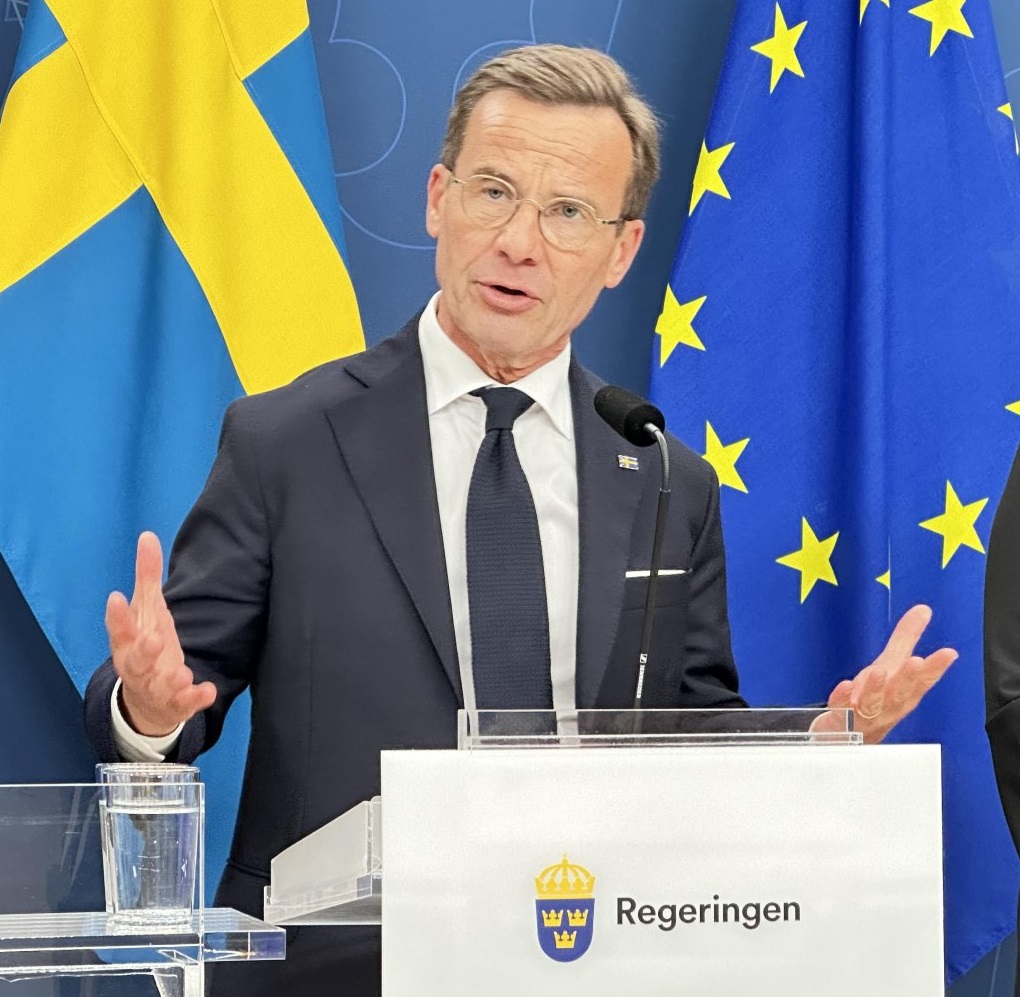
Finance Minister Elisabeth Svantesson told news agency TT that the SEK 17.5 billion in measures addresses both household resilience and sector-specific stress. While full details were scheduled for release at an 11:30 press conference with Energy Minister Ebba Busch (KD), Labor Minister Johan Britz (L), and Sweden Democrats’ Martin Kinnunen, the architecture is clear:
Temporary relief, not permanent subsidy: The government has emphasized that interventions are time-bound, intended to bridge a period of acute external volatility rather than distort long-run price signals.
Dual track for households and industry: Alongside support for aviation and agriculture, the package includes measures to limit the pass-through of energy costs to households, aiming to sustain consumer demand as Sweden’s post-pandemic recovery remains fragile.
Regulatory adjustment on fuel taxation: Parallel work is underway to lower fuel taxes below EU minimum levels, a politically sensitive but economically expedient lever to soften the immediate impact on transport-intensive industries.
The ambition, Kristersson noted, is parliamentary passage before the summer recess — a timeline that reflects both urgency and the government’s desire to avoid prolonged uncertainty for capital investment decisions.
Nordic and European Context: A Test of Fiscal Agility
Sweden’s move aligns with a pattern emerging across the Nordics, where export-oriented, energy-intensive economies are recalibrating crisis response. Finland and Denmark have similarly deployed targeted liquidity and cost-offset measures for agriculture in recent years, recognizing the sector’s role in strategic autonomy. Norway, shielded by hydrocarbon revenue, faces less fiscal strain but similar aviation exposure.
At the EU level, Stockholm’s proposal to cut fuel taxes below the bloc’s floor will test Brussels’ tolerance for fiscal divergence during crises. The precedent matters: if energy volatility persists, member states will seek greater flexibility to protect competitiveness without breaching state-aid rules. For investors, the key question is whether temporary measures evolve into structural industrial policy — particularly as the EU advances its Green Deal and carbon border adjustments reshape cost structures for both farming and aviation.
Risks, Opportunities, and Strategic Implications
Risks
1. Fiscal credibility: Repeated extraordinary budgets risk entrenching expectations of state backstops, complicating long-term budget discipline.
2. Green transition friction: Relief for aviation and fertilizer-intensive farming may slow decarbonization incentives unless paired with transition conditions.
3. Geopolitical dependence: The Strait of Hormuz episode highlights Sweden’s indirect exposure to Middle East energy flows, despite a domestic electricity mix dominated by hydro and nuclear.
Opportunities
1. Supply chain positioning: By stabilizing domestic food production, Sweden strengthens its role as a reliable partner in a Nordic-Baltic food security cluster.
2. Aviation network preservation: Maintaining air links to Stockholm, Gothenburg, and Malmö supports foreign direct investment and high-value services exports.
3. Innovation catalyst: Price pressure on fertilizers accelerates demand for precision agriculture, biogas, and circular nutrient models — areas where Swedish agtech firms already hold comparative advantage.
Why This Matters Now
The package is not only about SEK 17.5 billion. It signals how Nordic policymakers are internalizing a new reality: global shocks are no longer rare, exogenous events but recurring features of the operating environment. For executives, the message is to stress-test exposure to energy-linked inputs and transport corridors. For investors, it highlights the premium now placed on resilience and the potential repricing of sectors deemed strategically critical. For policymakers, it raises the bar on designing relief that protects the near term without compromising climate targets or fiscal sustainability.
Conclusion: From Crisis Response to Strategic Foresight
Sweden’s intervention buys time, but the structural drivers — geopolitical fragmentation, energy system transition, and climate-driven agricultural volatility — will persist beyond the current crisis. The long-term winners, in both public and private sectors, will be those who use this interval to accelerate efficiency, diversify supply, and embed resilience into business models.
The amending budget may be temporary. The shift it reflects — toward state capacity as a hedge against global disorder — is not. For Nordic business leaders, the strategic imperative is clear: treat resilience not as a cost centre, but as a source of competitive advantage in the decade ahead.