After billions in failed scale-up bets, Europe is rethinking how to compete in the global battery race — with a sharper focus on resilience, advanced materials, and technological sovereignty.
For much of the past decade, Europe’s battery strategy was driven by urgency bordering on panic.
As China consolidated dominance across the lithium-ion supply chain — from raw materials processing and cathode production to cell manufacturing and industrial machinery — European policymakers, automakers, and investors rushed to close what many industry executives privately described as a seven-to-ten-year technology and manufacturing gap.
The objective was strategically understandable. Batteries are no longer simply a component of electric vehicles; they are a foundational industrial capability with implications for automotive competitiveness, energy security, defence, advanced manufacturing, and geopolitical leverage.
Yet Europe’s attempt to rapidly construct a domestic battery ecosystem exposed a deeper structural problem: the continent tried to industrialize at hyperscale before mastering industrial execution.
The result has been a wave of financial distress, halted factory projects, delayed production ramps, and strategic reversals across several of Europe’s flagship battery ventures. What was initially framed as a green industrial revolution increasingly resembles a cautionary case study in industrial policy, capital allocation, and technological overreach.
At the same time, Europe is not abandoning the battery sector. Instead, it is pivoting toward a more selective and technologically differentiated strategy — one focused less on competing directly with China in commodity lithium-ion production and more on securing leadership in next-generation chemistries, advanced materials, sustainable manufacturing, and high-value industrial applications.
The question for Europe is no longer whether it can replicate Asia’s battery model. It is whether it can build a different one.
The Collapse of Europe’s First Battery Wave
Europe’s first generation of battery champions emerged during a period of exceptionally optimistic forecasts for electric vehicle adoption, battery pricing, and industrial policy support.
Governments viewed domestic battery manufacturing as strategically essential. Automakers feared dependence on Asian suppliers. Investors were drawn to the sector’s ESG narrative and the prospect of creating a European equivalent to the semiconductor or aerospace industries.
But the operational realities of battery manufacturing proved far harsher than many financial models anticipated.
Northvolt: Europe’s Flagship Failure
The most consequential collapse has been Sweden-based Northvolt, once celebrated as Europe’s best chance to establish a globally competitive battery champion.
Backed by major industrial and financial investors, Northvolt pursued an extraordinarily ambitious expansion strategy centred on vertically integrated gigafactories intended to supply Europe’s automotive industry. However, persistent production inefficiencies, quality-control issues, delayed output, and escalating capital requirements severely weakened the company’s position.
In March 2025, Northvolt filed for bankruptcy protection in Sweden after failing to secure sufficient financing for continued operations. The collapse represented a major setback not only for investors and suppliers, but also for Europe’s broader industrial sovereignty ambitions.
The underlying challenge was not simply insufficient funding. Battery manufacturing is one of the most operationally demanding industrial activities in modern manufacturing. Even minor process instability can produce catastrophic scrap rates, undermine margins, and delay commercial qualification with automotive customers.
Asian manufacturers spent decades refining these processes through incremental scaling, deep supplier integration, and relentless manufacturing optimization. Several European startups attempted to compress that learning curve into only a few years.
Morrow Batteries and the Limits of Scale
Norway’s Morrow Batteries faced a similar structural dilemma.
The company attracted significant public and private backing as part of Norway’s ambition to build a sustainable battery manufacturing ecosystem leveraging the country’s renewable energy advantages. Yet the economics of scaling from pilot production to multi-gigawatt manufacturing proved exceptionally difficult in an increasingly oversupplied global market.
In May 2026, Morrow Batteries announced bankruptcy proceedings after failing to secure additional financing despite recent commercial agreements and strategic restructuring efforts.
Its downfall reflected a broader industry reality: battery manufacturing rewards scale and operational maturity simultaneously. Companies lacking either face enormous pressure once pricing weakens.
ACC and the Recalibration of Automotive Demand
The difficulties were not limited to startups.
Automotive Cells Company (ACC) — backed by Stellantis, Mercedes-Benz, and TotalEnergies subsidiary Saft — was originally envisioned as a cornerstone of Europe’s battery independence strategy.
However, after weaker-than-expected electric vehicle demand growth and intensifying competition from lower-cost Asian producers, ACC suspended and later shelved several major gigafactory plans in Germany and Italy. The company also reassessed its technological roadmap, pivoting toward lower-cost battery chemistries better aligned with changing market realities.
The reversal highlighted a critical miscalculation across Europe’s battery sector: many projects were designed around optimistic assumptions regarding EV adoption speed, premium battery pricing, and stable regulatory conditions.
When those assumptions weakened, financing structures rapidly became unsustainable.
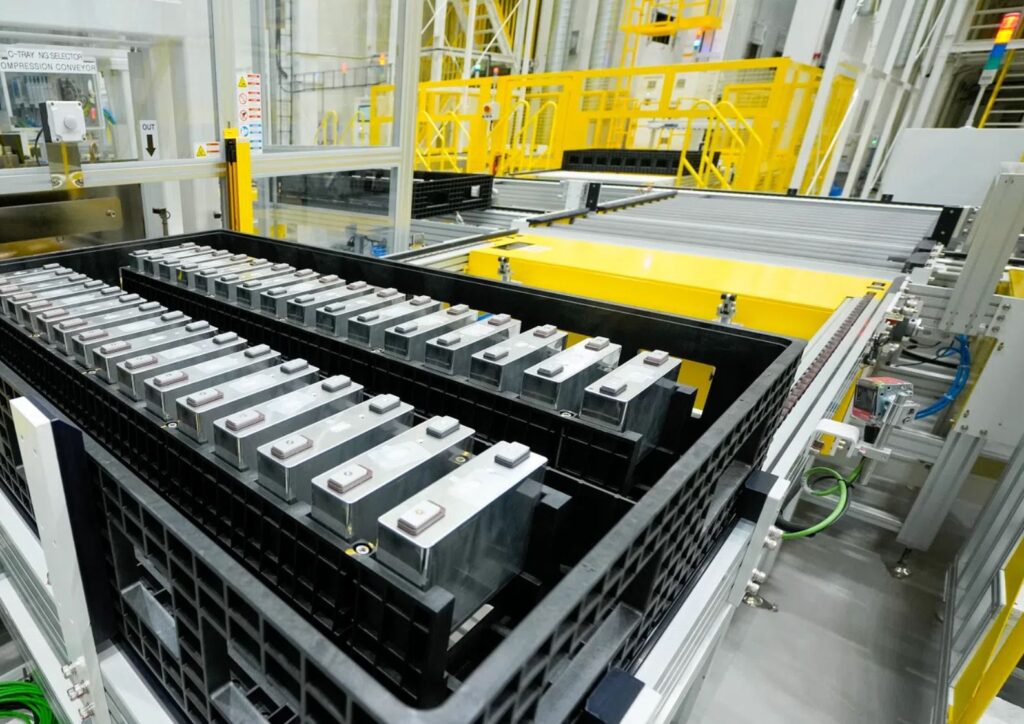
Why Europe’s Battery Strategy Failed to Scale
The difficulties facing Europe’s first battery wave were not the result of a single policy error or isolated management failure. They reflected a combination of industrial, financial, and geopolitical misjudgements.
Scaling Before Industrial Validation
Many European ventures pursued massive gigafactory construction before achieving stable pilot-scale production.
In advanced manufacturing sectors, scaling an unstable process does not solve inefficiency — it amplifies it. Several facilities encountered severe yield problems, production bottlenecks, equipment integration failures, and quality inconsistencies.
This created a destructive financial cycle:
Aggressive expansion → high scrap rates → delayed customer qualification → liquidity stress → emergency refinancing → strategic collapse.
Unlike software businesses, battery factories cannot iterate cheaply. Industrial errors become embedded in billions of euros of infrastructure.
Dependence on Imported Industrial Know-How
Europe also underestimated the depth of Asia’s operational advantage.
China, South Korea, and Japan dominate not only cell production but also the highly specialized ecosystem surrounding batteries: precision machinery, process engineering, manufacturing software, chemical refinement, workforce expertise, and supply-chain coordination.
Several European manufacturers remained dependent on imported machinery and external technical expertise while simultaneously attempting to build independent supply chains. This created operational vulnerabilities and delayed troubleshooting during critical production ramp phases.
The Economics of the Price War
Battery prices declined far faster than many European business models anticipated.
As Chinese manufacturers expanded aggressively and exported excess production capacity into global markets, battery cells increasingly became a cost-competitive commodity business. European producers, burdened by higher labour costs, expensive energy, fragmented supply chains, and lower manufacturing yields, struggled to compete.
The result was a brutal margin compression cycle that undermined investor confidence across the sector.
Overconcentration Around Automotive OEMs
Many European battery projects were structurally tied to a limited number of local automotive customers.
When automakers revised EV rollout timelines, reduced production forecasts, or diversified sourcing strategies, battery startups lost critical revenue visibility.
This dependency exposed a fundamental weakness in Europe’s industrial strategy: battery ecosystems cannot achieve resilience if they rely too heavily on a narrow domestic customer base.
The Political Economy Behind the Crisis
Europe’s battery push was also shaped by political dynamics that complicated rational industrial decision-making.
The convergence of climate policy, strategic autonomy concerns, ESG capital flows, and geopolitical anxiety created an environment in which ambitious narratives often received funding faster than proven manufacturing performance.
Public institutions prioritized the creation of “European champions,” while private investors competed to participate in what was widely viewed as a generational industrial transformation.
In practice, this sometimes-distorted incentives.
Large-scale funding frequently flowed toward infrastructure expansion and long-term capacity targets rather than operational milestones tied to manufacturing quality, yield stability, or commercial execution.
At the same time, Europe’s regulatory and state-aid frameworks often lacked the flexibility needed to support companies through the prolonged and capital-intensive production learning curve that defines advanced battery manufacturing.
The result was a mismatch between political ambition and industrial reality.
Europe’s Strategic Pivot: Competing Beyond Commodity Batteries
Europe is now recalibrating.
Rather than attempting to outscale China in conventional lithium-ion manufacturing, the continent is increasingly concentrating on next-generation battery architectures where intellectual property, sustainability, advanced materials, and industrial specialization may provide more defensible competitive advantages.
This strategic pivot centres on solid-state batteries, alternative chemistries, digitalized manufacturing systems, and circular supply chains.
The Race Toward Solid-State Batteries
Solid-state batteries are widely viewed as one of the most important next-generation technologies in energy storage.
By replacing liquid electrolytes with solid materials, manufacturers aim to improve thermal stability, reduce fire risks, enhance safety, and potentially increase energy density.
European research efforts are now heavily focused on several competing solid-electrolyte pathways.
Sulphide-Based Electrolytes
Sulphide electrolytes are attracting attention because of their high ionic conductivity and potential compatibility with high-performance battery systems.
In early 2026, Belgian chemicals group Syensqo and French industrial technology company Axens launched Argylium, a venture dedicated to scaling sulphide solid-electrolyte production in France. The initiative reflects Europe’s growing emphasis on controlling critical advanced-materials capabilities domestically.
Halide and Oxide Systems
Halide and oxide electrolytes are being explored for their chemical stability and resilience in industrial manufacturing environments.
Projects such as the EU-backed Hela initiative are attempting to solve one of the sector’s central commercialization challenges: enabling solid-state batteries to be manufactured at industrial scale without excessive sensitivity to humidity and contamination.
Polymer and Composite Platforms
European startups including Belgium-based SOLiTHOR are developing composite electrolyte platforms designed to combine flexibility, safety, and manufacturability.
These systems are particularly relevant for aerospace, maritime, and specialized transportation applications where weight, safety, and reliability are critical.
Beyond Lithium-Ion: Europe’s Generation 5 Bet
Europe is also investing heavily in alternative chemistries intended to reduce dependence on geopolitically concentrated raw materials.
Sodium-Ion Batteries
Sodium-ion technology has become increasingly attractive because sodium is abundant, inexpensive, and geographically diversified.
While sodium-ion batteries currently offer lower energy density than premium lithium-ion systems, they may become highly competitive for grid storage, low-cost mobility, and stationary energy applications.
For Europe, the strategic significance is substantial: sodium-ion systems could reduce dependence on lithium, cobalt, and nickel supply chains dominated by a small number of countries.
Lithium-Sulphur Applications
Lithium-sulphur batteries are another area of growing European interest.
Companies such as Germany’s theion are focusing on sulphur-based architectures for aviation, defence, and high-performance industrial applications where weight reduction offers significant economic advantages.
Rather than competing directly in mass-market automotive cells, these companies are targeting specialized markets where Europe retains strong engineering capabilities and where performance differentiation matters more than scale alone.
Brownfield Retrofitting Instead of Gigafactory Megaprojects
One of the clearest lessons from Europe’s first battery wave is that entirely new greenfield megaprojects carry enormous execution risk.
As a result, many European initiatives are now emphasizing brownfield retrofitting — upgrading existing industrial facilities rather than constructing entirely new factories from scratch.
Under Horizon Europe and related EU frameworks, funding increasingly supports precision tooling, advanced manufacturing software, digital process control, recycling integration, and adaptable production lines.
The strategic logic is straightforward: improving manufacturing flexibility and reducing capital intensity may ultimately prove more sustainable than repeating the hyperscale expansion strategies that undermined several earlier ventures.
What Europe Must Do Next
Europe’s battery ambitions are not dead. But they are entering a more realistic phase.
The continent still retains substantial strengths: world-class chemical engineering, advanced industrial research institutions, strong automotive manufacturing expertise, leading sustainability standards, and growing political consensus around industrial resilience.
However, long-term competitiveness will require structural adjustments.
First, Europe must recognize that manufacturing excellence cannot be accelerated purely through subsidies or political declarations. Industrial capability is cumulative, operational, and experience-driven.
Second, the continent will need a more disciplined investment framework that prioritizes technical execution, process validation, and flexible scaling over symbolic capacity announcements.
Third, Europe must avoid treating battery sovereignty as synonymous with complete autarky. Strategic resilience may depend less on fully replacing Asian supply chains and more on building selective areas of technological leadership where Europe can sustain competitive advantage.
Finally, the next phase of the battery industry is unlikely to be won solely through scale. It will increasingly depend on intellectual property, software integration, advanced materials science, recycling efficiency, energy optimization, and the ability to industrialize emerging chemistries profitably.
Conclusion: From Industrial Panic to Strategic Maturity
Europe’s battery sector is moving through a painful but necessary transition.
The first wave of gigafactory enthusiasm exposed the risks of compressing decades of industrial learning into politically accelerated timelines. Several flagship projects failed not because batteries lack strategic importance, but because the operational complexity and economic realities of manufacturing were underestimated.
Yet the broader strategic imperative remains intact.
As electrification expands across transportation, energy systems, aerospace, and defense, battery technologies will remain central to economic competitiveness and geopolitical influence.
Europe’s future role in that ecosystem will likely look different from the vision initially promoted during the peak of the gigafactory boom.
Rather than competing head-on in commoditized lithium-ion production, Europe increasingly appears positioned to specialize in advanced chemistries, sustainable industrial systems, circular manufacturing, and high-performance applications.
If the continent can combine technological depth with industrial discipline, the failures of the first battery wave may ultimately become less a story of decline than the foundation for a more credible and resilient long-term strategy.