Executive summary
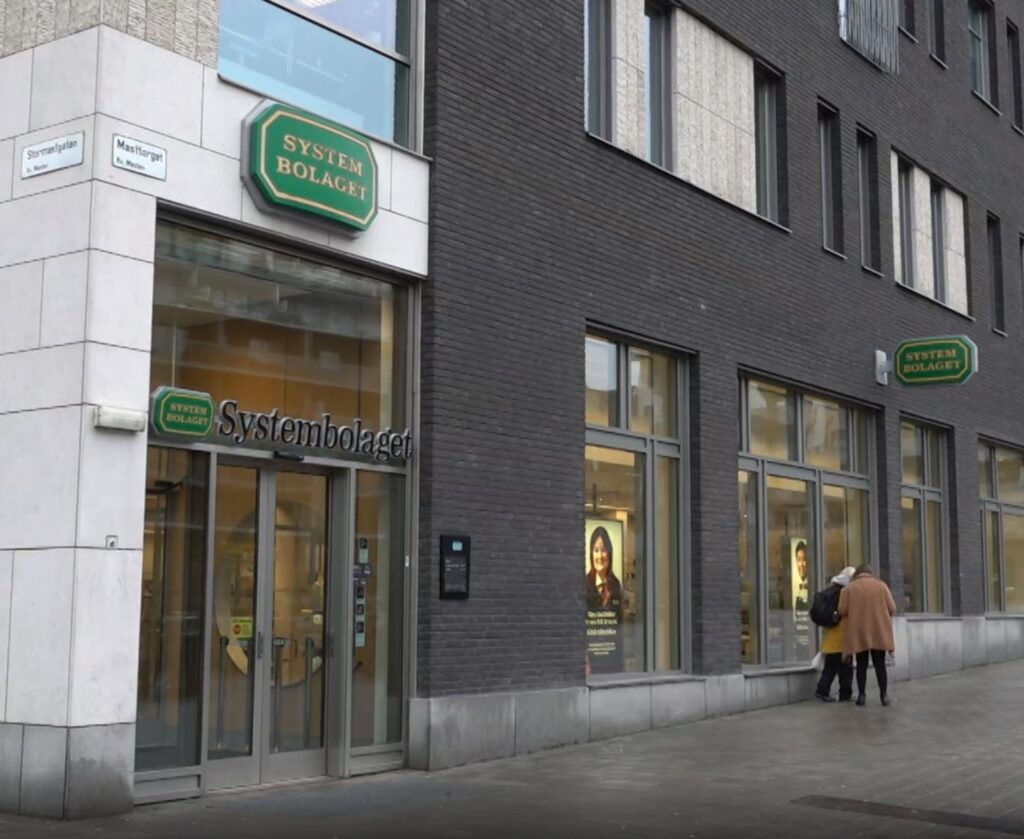
Jimmie Åkesson and the Sweden Democrats (SD) are proposing a modest but symbolically significant change to Sweden’s state alcohol retail model: permit Systembolaget to sell chilled beer, cider and wine and open stores on Sundays through the installation of central cold rooms rather than in-store refrigerated displays. Framed as a pragmatic step to preserve the monopoly’s legitimacy in the face of consumer expectations, the proposal exposes broader tensions at the intersection of public health policy, party politics within the Tidö coalition, market access for smaller producers, and the commercial realities of modern retail and tourism.
This briefing reframes the debate for senior executives, investors and policymakers by placing the proposal in Nordic and European context, assessing economic and regulatory implications, and outlining strategic considerations for businesses that will be affected if Sweden loosens elements of its retail monopoly.
Political context: why the proposal matters now
The Sweden Democrats’ push is not merely about weekend convenience. For SD, accommodating the demand for chilled drinks and Sunday service is a way to shore up the perceived legitimacy of Systembolaget — a state-owned retail monopoly defended on public-health grounds — by modernising it to reflect consumer behaviour and a more competitive retail landscape. The debate has been amplified by parallel reform proposals from other parties and by wider shifts in consumer expectations shaped by e-commerce, tourism and cross-border shopping.
The proposal also illuminates fault lines within the governing coalition. The Tidö agreement brought together parties with differing philosophies on alcohol policy: some favour liberalisation for consumer choice and business flexibility, while others prioritise strict public-health safeguards. That tension has slowed decisive action so far, even as discussions continue at the ministerial level.
The technical compromise: cold rooms versus fridges
Åkesson’s suggestion is deliberately narrow: permit “cold rooms” large enough to chill the full product range rather than small, brand-focused refrigerators that would spotlight selected labels. The distinction matters for several reasons:
- Fair access for suppliers: centralized cold storage preserves shelf neutrality and reduces the risk that visible in-store fridges favour large brands, disadvantaging craft breweries and small importers.
- Operational complexity: installing and operating central cold rooms at Systembolaget’s larger outlets is a different logistical and cost proposition than rolling out refrigerated displays at every store. It affects distribution, energy use and staffing patterns.
- Regulatory optics: limiting the change to chilled products and structured cold storage can be framed as a measured modernization that preserves the monopoly’s public-health purpose while responding to consumer demand.
Nordic and European comparisons
Sweden is not alone in balancing state control and market pressures. Across the Nordics:
- Norway’s Vinmonopolet and Finland’s Alko are state retail monopolies with their own rules on hours and product scope, and both have adapted in recent years with enhanced online services and selective opening hours.
- Denmark and Iceland have more liberal retail frameworks for alcohol, and their experiences highlight trade-offs between accessibility, tourism attractiveness and regulatory oversight.
Within the EU/EEA framework, member states retain room to justify monopolies on public-health grounds. Any Swedish reform would therefore be primarily domestic in scope, but it will be evaluated against best practices and the competitive dynamics of cross-border and online alcohol trade.
Market implications: winners, losers and business strategy
- Small and craft producers: The cold-room model proposed by SD is intentionally protective of smaller suppliers’ access. It reduces the risk that chilled product merchandising becomes a platform for large brands only. Still, greater convenience and modest increases in weekend availability would likely raise sales volumes, favouring producers with scale and efficient cold-chain distribution.
- Systembolaget operations: Opening on Sundays and introducing chilled product handling would raise operational costs (staffing, energy, logistics). The monopoly would need to demonstrate that such changes do not undermine its public-health remit.
- Retailers and grocery chains: If Sunday opening at Systembolaget reduces consumers’ incentive to buy alcohol in supermarkets (when allowed) or abroad, grocery chains may see only marginal effects. However, any broader liberalisation of scope or hours could change competitive dynamics.
- Tourism and hospitality: More flexible opening hours would improve the convenience economy, particularly for inbound tourism and weekend hospitality demand.
- Investors: The changes would not create a new private retail market overnight, but producers, logistics providers and cold-chain specialists should view the proposal as an incremental commercial opportunity. Regulatory uncertainty, however, elevates political risk.
Public health, regulation and reputational risk
Systembolaget’s monopoly is justified domestically as a public-health instrument aimed at reducing alcohol-related harm through limited availability and controlled sale environments. Any concession to opening hours must be measured against evidence on consumption patterns and harm. Policymakers will need to:
- Monitor consumption trends post-change (if implemented) with robust data collection;
- Protect vulnerable groups through unchanged age-verification and purchase limits;
- Consider reversibility and pilot programs to assess impact before nationwide rollout.
Political feasibility and timing
Although the Sweden Democrats have signalled intent to pursue this change if supported by voters, the ministerial stance in parts of the coalition has been cautious. As the issue heats up — driven by rival proposals from other parties and consumer sentiment — expect negotiation rather than abrupt reform. A phased approach or pilot in high-traffic stores may be the likeliest path to build political consensus.
Why this matters for decision-makers
- For executives and investors: the proposal signals modest commercial opportunities in refrigerated distribution, logistics and brand positioning — but not wholesale market liberalisation. Prepare for incremental demand shifts and evaluate cold-chain capabilities.
- For producers and entrepreneurs: this is a chance to gain better access to chilled segments if the policy avoids selective in-store refrigeration that favours incumbents.
- For policymakers and public-health leaders: any concession must be evidence-driven and accompanied by monitoring, to reconcile commercial modernisation with the monopoly’s health objectives.
- For international observers: Sweden’s handling of the issue will be watched as an example of how a welfare-state regulatory instrument can be modernised without eroding its core policy purpose.
Conclusion — strategic choice, calibrated reform
At its core, the debate over Sunday openings and chilled product policy at Systembolaget is a test of institutional legitimacy. Small, carefully designed reforms — such as permitting centrally managed cold rooms and limited Sunday service — could modernise the monopoly and reduce political pressure without abandoning the public-health goals that justify it. Yet the devil is in the detail: design choices around merchandising, supplier access, operating models and monitoring will determine whether change strengthens or weakens the system.
For business leaders and investors, the immediate takeaway is to view this as an incremental regulatory change with localized commercial implications — not a market revolution. For policymakers, it’s an opportunity to demonstrate adaptive governance: recalibrating long-standing institutions to reflect contemporary consumer behaviour while safeguarding public-health outcomes.