As jet fuel volatility exposes Europe’s transport vulnerabilities, Sweden’s SEK 500 million intervention reveals deeper tensions between short-term connectivity and long-term decarbonisation. For Nordic executives, the question isn’t whether to support aviation—but how to structure support that accelerates, rather than delays, the energy transition.
The Immediate Calculus: Why 500 Million Kronor Matters Now
Sweden’s coalition government has deployed a targeted SEK 500 million support package for aviation amid surging jet fuel prices. Finance Minister Elisabeth Svantesson (M) frames the intervention pragmatically: without support, flight cancellations risk disrupting business connectivity and regional access [[16]]. Infrastructure Minister Andreas Carlson (KD) adds that the package strengthens preparedness for prolonged market stress.
The package breaks into three targeted instruments:
– SEK 400 million offsets airport security and baggage handling fees, reducing passenger costs by an estimated SEK 46 per traveller through year-end.
– Contingency funding enables temporary public service obligations on critical domestic routes should commercial operators withdraw.
– SEK 20 million secures regional ambulance flight capacity—a non-negotiable element of Sweden’s healthcare infrastructure.
This intervention sits within the broader SEK 17.5 billion crisis framework announced earlier this year. Yet its strategic significance extends beyond fiscal arithmetic.
Beyond Subsidy: The Structural Vulnerability Exposed
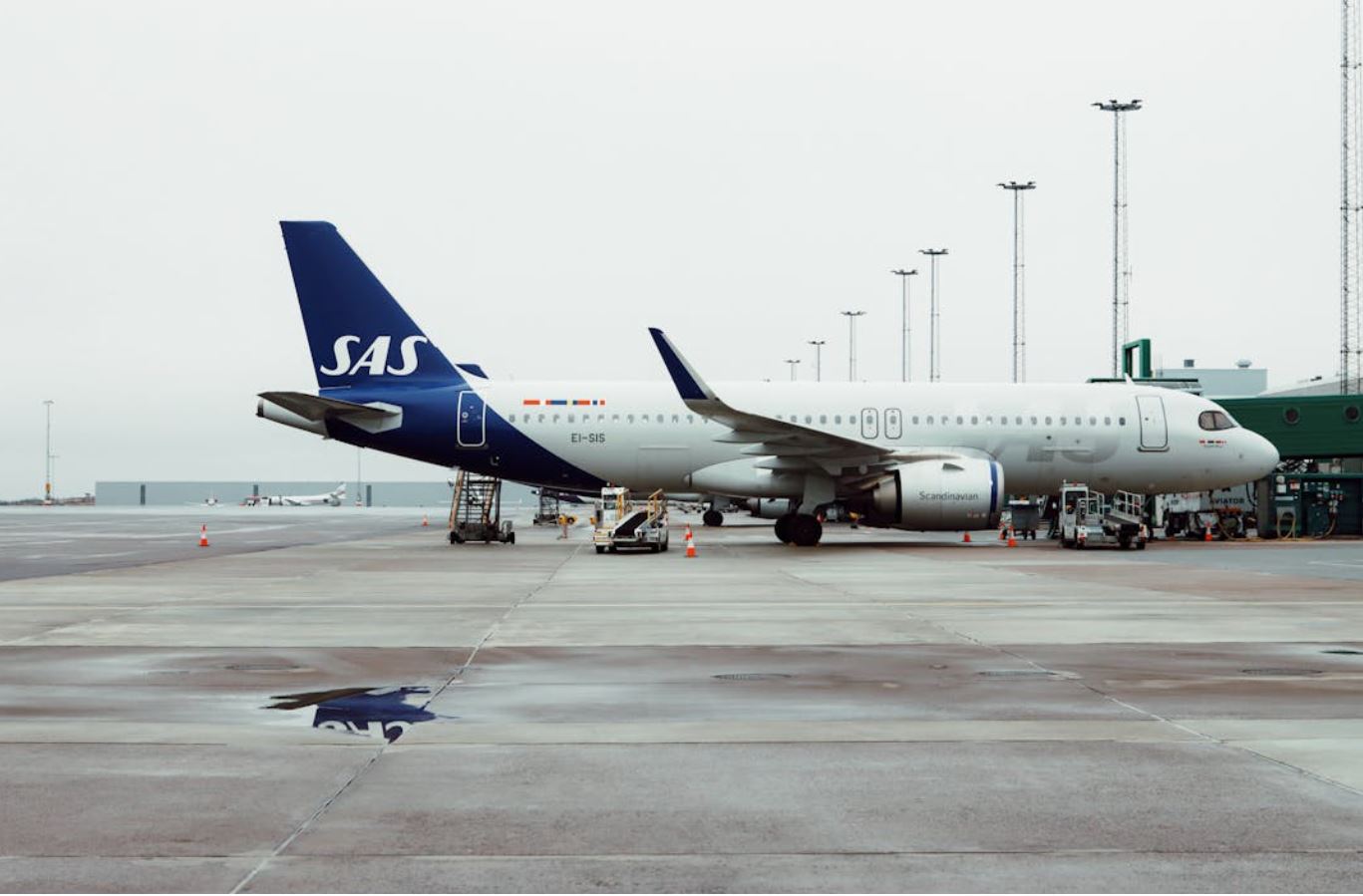
Jet fuel prices have surged on geopolitical tensions in the Middle East, triggering operational adjustments across European carriers. Scandinavian Airlines (SAS) recently cancelled approximately 1,000 flights in April 2026 alone, citing fuel cost pressures. Sweden’s warning of potential jet fuel shortages underscores a systemic exposure: European aviation remains critically dependent on globally traded fossil inputs.
Consequently, the support package functions less as industrial policy and more as risk mitigation for a sector caught between volatile input markets and rigid regulatory timelines. For executives, this signals two imperatives: first, stress-test supply chains against energy price shocks; second, evaluate how policy interventions may reshape competitive dynamics across Nordic aviation markets.
The Sustainability Paradox: Short-Term Relief vs. Long-Term Transition
Critics highlight a fundamental tension. The Green Party’s energy spokesperson, Linus Lakso, argues the package “showers money on the fossil fuel industry” and risks entrenching carbon dependency rather than accelerating clean alternatives. SVT’s economic commentator Alexander Norén questions whether the sums deployed will meaningfully alter either industry trajectory or consumer experience.
These concerns merit serious consideration. The European Union’s ReFuelEU Aviation regulation now mandates minimum sustainable aviation fuel (SAF) blending—starting at 2% in 2025 and rising steeply thereafter. Yet supply lags demand. SAS projects Scandinavia alone will require 36,000 tonnes of electro-SAF by 2030, scaling to 160,000 tonnes by 2035—a volume no European production facility is currently positioned to deliver.
Sweden recognises this gap. In May 2026, the government received a national action plan proposing R&D investment, green credit guarantees, and risk-sharing mechanisms to scale domestic SAF production. The strategic question for policymakers: how to design near-term support that complements, rather than crowds out, these longer-term industrial ambitions.
Nordic Positioning: Competitive Advantage in a Fragmented European Market
Sweden enters this transition with distinct assets. In 2024, sustainable fuels represented 5.09% of aviation fuel delivered to Swedish airports—eight times the EU average. This leadership stems from early blending mandates, voluntary industry partnerships, and abundant renewable electricity, biomass, and biogenic CO₂ feedstocks.
Moreover, Sweden participates in the Nordic Initiative for Sustainable Aviation (NISA), a regional platform coordinating policy, research, and investment across Scandinavian markets. For investors, this creates a compelling proposition: Sweden offers not just policy stability but integrated infrastructure for next-generation fuel production.
However, regulatory asymmetries complicate the picture. ReFuelEU Aviation permits low-carbon synthetic fuels produced with nuclear-derived electricity to count toward mandates, whereas FuelEU Maritime requires renewable-only sourcing for e-fuels. These divergences may influence siting decisions for capital-intensive production facilities. Executives evaluating Nordic expansion should model scenarios across both regulatory frameworks.
Strategic Implications for Decision-Makers
For investors: The SAF production gap represents a multi-billion-euro opportunity. Sweden’s proposed green credit guarantees and participation in the EU’s e-SAF Early Movers Coalition could de-risk first-mover projects. Yet regulatory uncertainty remains material; the upcoming reviews of EU ETS (July 2026) and ReFuelEU Aviation (January 2027) will shape long-term returns.
For airline executives: Near-term support may ease cash flow pressure, but strategic focus should shift to securing long-term offtake agreements for sustainable fuels. Airlines reluctant to commit beyond one- to two-year contracts face a collective action problem: without demand certainty, producers cannot finance scale-up.
For policymakers: The design of crisis interventions matters. Fee reductions deliver immediate relief but offer no transition signal. By contrast, support conditioned on SAF procurement or fleet modernisation could align short-term stability with long-term decarbonisation. Sweden’s consultation process on the national action plan offers a window to embed such conditionality.
For regional leaders: Ambulance and essential air service funding highlights aviation’s role in territorial cohesion. As climate policy tightens, Nordic regions should jointly assess which routes warrant public service obligations—and how to operate them sustainably.
The Road Ahead: Three Scenarios for Nordic Aviation
Looking to 2030, three pathways emerge:
1. Accelerated Transition: Sweden and Nordic partners deploy coordinated investment, R&D, and policy support to scale SAF production. Connectivity is maintained while emissions fall. Sweden emerges as a European hub for sustainable fuel innovation and export.
2. Managed Decline: Regulatory ambition softens amid cost pressures. Airlines reduce marginal routes; ticket prices rise for remaining services. Nordic connectivity erodes, with disproportionate impact on peripheral regions.
3. Strategic Dependency: Europe fails to scale domestic SAF production and relies on imports. Price volatility and geopolitical exposure persist, transferring value—and strategic leverage—outside the region.
Sweden’s current support package does not determine which scenario prevails. But it does reveal a critical insight: crisis management and transition strategy cannot be siloed. Every kronor deployed today shapes the options available tomorrow.
Conclusion: Support with Strategy
Sweden’s aviation intervention reflects prudent crisis response. Yet for Nordic business leaders, the deeper lesson lies in integration. Short-term liquidity support gains strategic value when explicitly linked to long-term decarbonisation pathways. Fee reductions become more defensible when paired with SAF procurement incentives. Contingency planning for route continuity aligns with investment in resilient, low-carbon infrastructure.
In an era of polycrisis—geopolitical tension, energy volatility, climate imperative—the most valuable policy interventions are those that solve today’s problem while advancing tomorrow’s transition. Sweden’s next move, as it consults on its national action plan for sustainable fuels, will signal whether it treats aviation support as isolated relief or as one instrument in a coherent industrial strategy.
For executives across the Nordic region, the message is clear: engage now. Shape the design of support mechanisms. Advocate for policy coherence. And position your organisation to thrive not despite the energy transition, but because of it.
- From the Travel & Stay Correspondent, Nordic Business Journal