Europe’s investment engine is stalling. Stockholm must act before the region falls further behind.
Foreign direct investment into Sweden fell by 19 percent in 2025, according to EY’s annual European Attractiveness Survey. The country now ranks 17th among European destinations for FDI projects, trailing not only France, the UK, and Germany but also Nordic peer Finland. The decline signals a deeper structural challenge. As global capital redirects toward artificial intelligence, defence, and clean energy, Sweden risks losing its edge in the competition for long-term, high-value investment.
Magnus Kuchler, EY’s Sweden managing partner, put the stakes plainly: “Sweden is lagging behind.” He argues that Stockholm must sharpen its value proposition through better access to specialized talent and more competitive conditions for companies seeking to establish operations. Without decisive action, the slide could accelerate.
The Nordic Split: Winners and Losers in a Tightening Market
The Nordic region presents a sharply divided picture. Finland attracted 91 FDI projects in 2025, up 14 percent year-on-year, while Sweden managed only 56. Denmark recorded 43 projects, a staggering 48 percent decline that pushed it to 20th place. Norway, though not featured in the EY top 20, has historically underperformed its Nordic neighbours in FDI attraction, hampered by an economy still heavily weighted toward oil and gas.
This divergence matters. FDI is not merely a scorecard of national prestige. It drives job creation, technology transfer, and integration into global value chains. Finland’s success suggests that targeted industrial policy, a strong digital infrastructure, and a focus on R&D can offset broader European headwinds. Sweden’s decline, by contrast, raises questions about whether its regulatory environment, energy costs, and talent pipeline remain aligned with investor expectations.
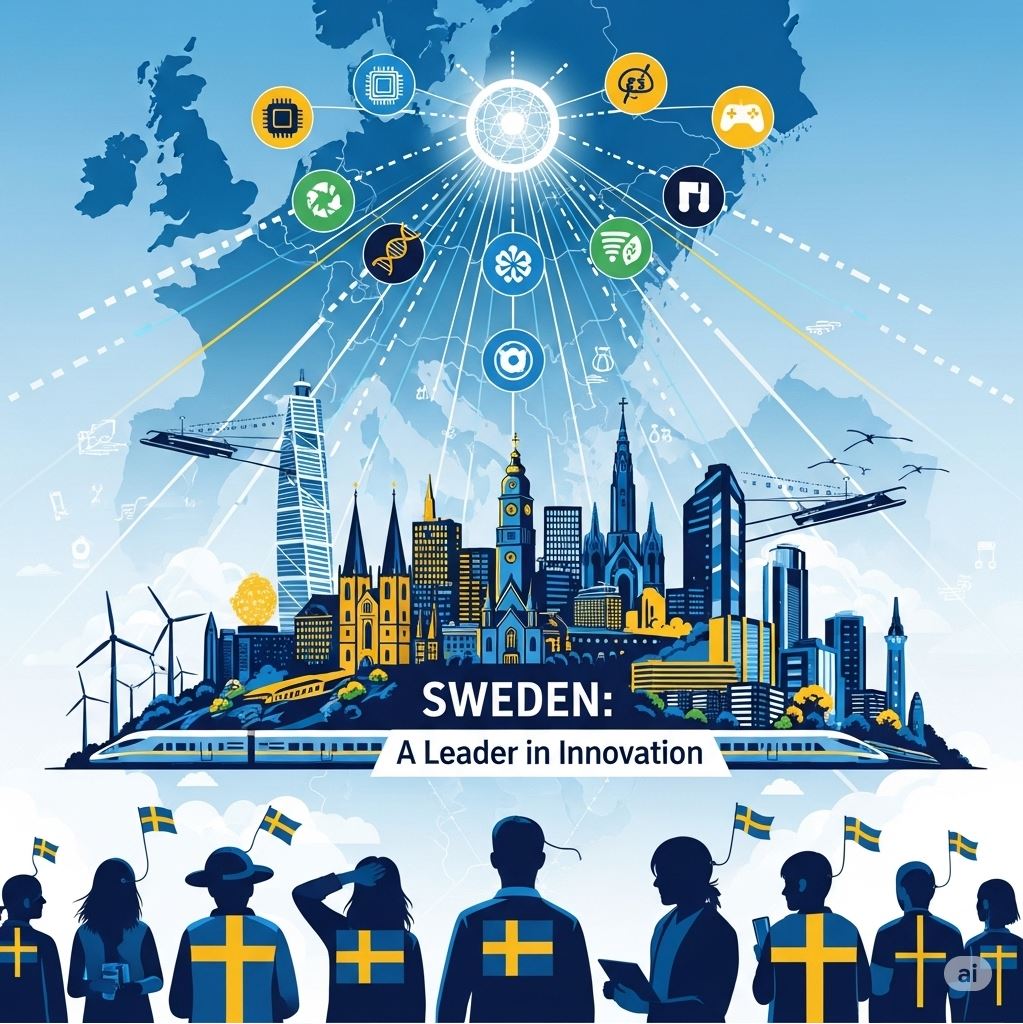
Europe’s Investment Climate: Geopolitics, Energy, and AI
The continent-wide context is sobering. Total European FDI fell 7 percent in 2025, with the 47-country tally reaching 5,026 projects. France, the UK, and Germany retained the top three spots but each suffered double-digit declines. Only a handful of markets bucked the trend. Turkey surged 20 percent, Greece climbed 34 percent, and Poland and Romania posted gains of 10 percent and 16 percent respectively. These figures suggest that capital is increasingly seeking growth corridors outside the traditional core.
Three forces are reshaping where money flows.
- First, geopolitical tension has become the primary risk factor for European attractiveness. The war in Ukraine, transatlantic trade friction, and concerns over US policy unpredictability have made executives cautious. Thirty-seven percent of surveyed companies scaled back or postponed European investment plans in the past year.
- Second, energy costs remain a critical vulnerability. European electricity prices are roughly 2.5 times higher than in the US, and natural gas prices nearly five times higher. For energy-intensive industries, this gap alone can determine location decisions.
- Third, the technological frontier is shifting. AI, semiconductors, and defence technology now dominate investor interest. Europe has strengths in sustainability regulation and industrial policy, but it trails the US and China in applied AI development and R&D intensity. Public and private R&D spending in Europe totalled 2.2 percent of GDP in 2023, compared with 3.6 percent in the US and 3.4 percent in Japan.
Sweden’s Strategic Challenge: Talent, Regulation, and Industrial Policy
Sweden’s specific weaknesses align with these broader European fault lines. The country has built a reputation for innovation, yet investors now rank access to skilled talent and regulatory simplicity as decisive factors. Sweden’s labour market, while flexible by European standards, faces shortages in AI, semiconductor engineering, and advanced manufacturing. Meanwhile, the EU’s regulatory burden, amplified by 13,000 legislative acts between 2019 and 2024, creates compliance costs that disproportionately affect mid-sized enterprises.
The defence sector offers a case study in missed opportunity. As Europe rearms, with EU member states increasing defence expenditure by over 30 percent between 2019 and 2024, Sweden possesses two of the continent’s largest defence industrial champions. Yet the country has not fully capitalised on this momentum. Kuchler notes that Swedish actors could seize a larger role in growing European value chains, but doing so requires faster permitting, stronger public-private coordination, and a clearer industrial strategy.
The Sustainability Paradox
Sweden’s green credentials, long a competitive advantage, now face a paradox. Europe’s sustainability policies rank among its top three attractions for global investors, and 66 percent of surveyed businesses say these policies have enhanced the continent’s appeal. However, the same executives prioritize cutting energy costs and accelerating the low-carbon transition over maintaining stringent reporting requirements. The EU’s recent push to streamline sustainability regulation, including a 25 percent reduction in reporting burdens, reflects this tension.
For Sweden, the message is clear: green leadership must translate into cost-competitive, scalable solutions. Investors want access to renewable energy and circular-economy technologies, but they will not pay an indefinite premium for them.
What Comes Next: A Call for Strategic Clarity
The path forward requires three shifts. First, Sweden must treat talent as infrastructure. This means expanding university-industry partnerships, streamlining work visas for high-skill migrants, and retraining programs focused on AI and clean-tech applications.
Second, Stockholm should align its industrial policy with Europe’s strategic priorities. The EU’s €500 billion defence investment gap over the next decade, combined with the push for semiconductor sovereignty and AI deployment, creates a narrow window for Swedish firms to anchor themselves in these supply chains.
Third, policymakers must address the cost competitiveness gap. Energy price reduction, tax predictability, and regulatory harmonization are not abstract reforms. They are the practical conditions under which investment decisions are made.
The 19 percent drop in Swedish FDI is not a statistical blip. It is a warning signal in a European investment market that is simultaneously contracting and reorienting toward strategic sectors. Finland’s gains prove that Nordic countries can still attract capital in this environment. Sweden’s challenge is to match that performance while leveraging its unique industrial assets.
For executives, investors, and policymakers, the implication is direct: competitiveness is no longer a given. It must be rebuilt, sector by sector, reform by reform. The next EY survey will reveal whether Sweden has begun that work.