Why one of Europe’s most stable economies continues to outperform despite energy shocks, geopolitical tensions, and rising global fragmentation
Denmark’s economy has once again demonstrated an ability that many advanced economies continue to struggle with: maintaining stability and growth in the face of overlapping global crises.
From renewed instability in the Middle East and elevated energy prices to mounting trade tensions and persistent geopolitical uncertainty, the international economic environment has become markedly more volatile. Yet Denmark — a small, highly open economy deeply integrated into global trade flows — continues to post comparatively solid growth, resilient employment levels, and moderate inflationary pressures.
The latest assessments from Danish economic advisers and policymakers suggest that while risks remain substantial, the country enters this period of turbulence from a position of unusual structural strength. Strong public finances, a competitive export sector, disciplined institutions, and long-term investments in energy diversification and industrial innovation have provided buffers that were notably weaker during previous crises.
The broader significance extends beyond Denmark itself. At a time when European economies are once again confronting questions about energy security, inflation resilience, supply-chain exposure, and strategic competitiveness, Denmark increasingly offers a case study in how smaller advanced economies can navigate external shocks without sacrificing long-term stability.
Resilience in an Unstable Global Economy
Economic disruptions that would once have triggered severe recessionary concerns have, so far, produced a more limited macroeconomic impact across much of Northern Europe.
According to Carl-Johan Dalgaard, professor of economics at the University of Copenhagen and senior adviser to Denmark’s Economic Council, the global economy has remained unexpectedly resilient despite the cumulative effects of war, supply uncertainty, inflationary pressures, and trade frictions.
That resilience is particularly notable given the sharp increase in oil prices associated with tensions in the Middle East and fears surrounding potential disruptions to global shipping routes and energy supply chains.
Historically, oil shocks have carried severe economic consequences for Europe. Yet the current environment differs materially from previous crises.
Several structural shifts now work in Denmark’s favour:
- Reduced dependence on imported fossil fuels
- Expanded renewable energy capacity across the Nordic region
- More diversified energy sourcing following Europe’s post-Ukraine energy transition
- Stronger household and corporate balance sheets than during earlier crises
- More disciplined fiscal frameworks across Northern Europe
These factors have helped prevent energy price increases from cascading into the kind of broad inflationary spiral experienced during the post-pandemic recovery and the early stages of Russia’s invasion of Ukraine.
For Denmark specifically, the combination of robust labour markets, high employment participation, and globally competitive export industries has supported continued economic momentum even as uncertainty intensifies.
The Strength — and Vulnerability — of an Open Economy
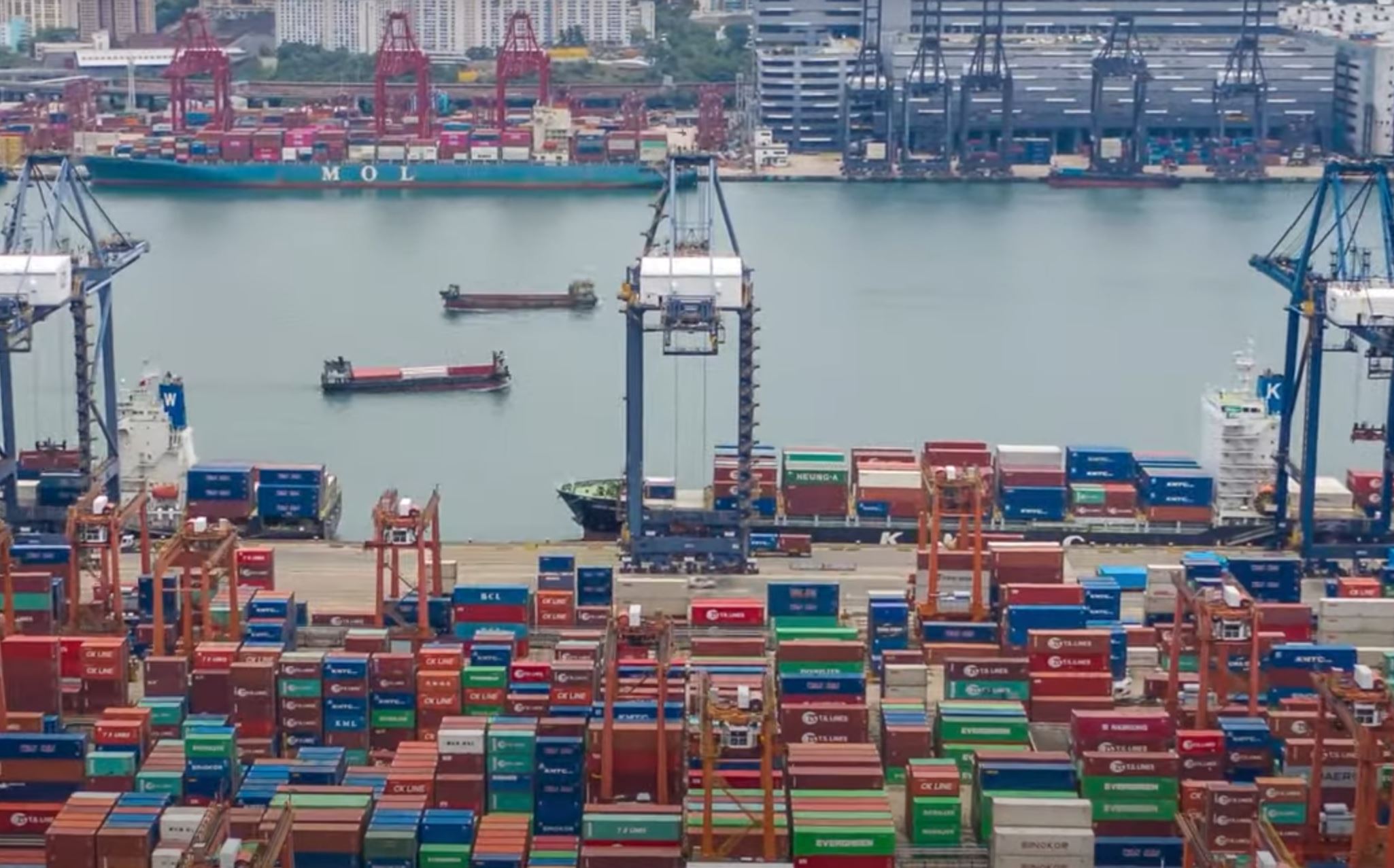
Denmark’s economic model remains heavily dependent on international trade.
Its globally integrated pharmaceutical, shipping, industrial technology, food production, and renewable energy sectors have allowed the country to benefit disproportionately from global demand. Danish firms continue to hold strong positions in industries linked to healthcare innovation, logistics, offshore wind, energy efficiency, and advanced manufacturing.
At the same time, this openness creates vulnerabilities.
A prolonged deterioration in global trade conditions, renewed supply-chain fragmentation, or a sustained escalation in geopolitical conflict would inevitably affect Danish exports and investment activity. The country’s economic outlook remains closely tied to broader European and global demand.
This interdependence is particularly important at a moment when geopolitical fragmentation is reshaping the international business environment. The return of industrial policy, strategic trade restrictions, and economic nationalism across major economies has introduced a more uncertain framework for globally exposed export nations.
For Nordic economies, the challenge increasingly lies in balancing openness with resilience.
Denmark has responded by accelerating investment in strategic sectors including renewable energy infrastructure, life sciences, digitalisation, defence-related industrial capacity, and supply-chain security. Policymakers are also placing greater emphasis on competitiveness, labour productivity, and technological adaptation as Europe confronts slower long-term growth prospects.
Why the Energy Shock Has Been More Manageable Than in 2022
One of the central economic questions facing Europe is why current energy disruptions have not generated the same level of economic instability seen during the 2022 inflation crisis.
The answer lies partly in structural adaptation.
Since the Ukraine war exposed Europe’s vulnerability to imported energy dependence, governments and businesses across the continent have accelerated diversification efforts. Denmark, along with several Nordic neighbours, entered this period with comparatively advanced renewable energy systems and stronger institutional coordination around energy policy.
The Nordic region’s investment in offshore wind, district heating systems, electrification, and energy efficiency has helped reduce exposure to sudden spikes in imported fuel costs.
Equally important, food-price pressures and supply disruptions — major contributors to the inflation surge in 2022 — have so far remained more contained.
This does not mean risks have disappeared.
Should conflict in the Middle East escalate further or major shipping chokepoints remain disrupted for an extended period, the inflation outlook could deteriorate rapidly. A sustained oil price shock above psychologically important thresholds would place renewed pressure on European consumers, industrial costs, transportation networks, and central bank policy.
However, most economists currently view the probability of a severe stagflationary spiral as lower than during the earlier post-pandemic period.
Denmark’s Growth Outlook Remains Positive — But Uneven
The Danish economy is still expected to expand over the coming years, though the quality and distribution of that growth deserve closer scrutiny.
A significant share of recent Danish economic strength has been concentrated in globally competitive export sectors, particularly pharmaceuticals and high-value industrial industries. This has created what several international observers have described as a “two-speed economy” in which export-oriented firms outperform while parts of the domestic economy remain comparatively subdued.
Higher interest rates, weaker consumer confidence, and slower investment activity have continued to weigh on portions of the broader domestic market.
Nevertheless, Denmark retains several advantages that continue to attract international investor confidence:
- Strong public finances and comparatively low sovereign debt
- High institutional trust and regulatory predictability
- A flexible labour market combined with robust social protections
- Advanced digital infrastructure and strong innovation ecosystems
- Leadership positions in sustainability and green technology
- Consistent political support for long-term industrial transition
These characteristics have become increasingly valuable in an era defined by volatility.
For global investors and multinational companies, Denmark represents not only a stable operating environment but also a strategic entry point into broader Nordic and European markets.
Denmark Economic Forecast
Comprehensive visualization of the Economic Council’s projections for 2026-2027, comparing baseline expectations against harsh risk scenarios.
Baseline Scenario
Stable GrowthCurrent world outlook with moderate oil price decline and steady employment growth.
Harsh Risk Scenario
High RiskAdverse global conditions with rising oil prices and significant employment contraction in 2027.
Oil Price Projections
USD per barrel
GDP Growth Rate
Year-over-year percentage change
Employment Change
Thousands of persons
Inflation Rate
Annual percentage
Detailed Forecast Data
| Metric | Scenario | 2026 | 2027 | Trend |
|---|---|---|---|---|
| Oil Price | Baseline | $85/barrel | $76/barrel | ↓ Declining |
| Harsh | $110/barrel | $125/barrel | ↑ Rising | |
| GDP Growth | Baseline | 1.9% | 1.3% | → Moderate |
| Harsh | 1.4% | 0.7% | ↓ Slowing | |
| Employment | Baseline | +14,000 | +1,000 | ↑ Growth |
| Harsh | +1,000 | -14,000 | ↓ Contraction | |
| Inflation | Baseline | 2.0% | 2.0% | → Stable |
| Harsh | 3.1% | 4.7% | ↑ Accelerating |
Critical Divergence
The employment outlook shows the most dramatic divergence between scenarios, with a 15,000 person swing from +1,000 to -14,000 in 2027 under harsh conditions.
Inflation Risk
Harsh scenario inflation (4.7% in 2027) more than doubles the baseline (2.0%), driven by oil prices rising to $125/barrel vs. declining to $76.
GDP Resilience
Despite adverse conditions, Denmark’s GDP maintains positive growth in both scenarios, though harsh conditions show significant deceleration (0.7% vs 1.3%).
The Nordic Dimension: Stability as a Competitive Asset
The Danish outlook also reflects a broader Nordic economic pattern.
Across Northern Europe, governments have generally maintained stronger fiscal discipline, higher institutional credibility, and more coordinated industrial strategies than many larger economies. While growth rates may not always match faster-expanding regions, the Nordic model increasingly appeals to investors seeking long-term predictability rather than short-term expansion.
This matters in the current geopolitical environment.
As businesses reassess supply chains, energy sourcing, political risk exposure, and regulatory reliability, stable Northern European economies are gaining strategic importance.
The Nordic region’s strengths in clean energy, maritime infrastructure, digital governance, healthcare innovation, and advanced industrial technology position it favourably for the next phase of European economic restructuring.
Denmark, in particular, has strengthened its international reputation through leadership in green transition industries, life sciences, and shipping logistics — sectors likely to remain strategically significant regardless of broader economic cycles.
Inflation Risks Have Not Disappeared
Despite the relatively constructive outlook, policymakers remain cautious.
Inflationary pressures linked to energy markets remain a major risk scenario, particularly if geopolitical tensions intensify or if disruptions to oil and gas transport routes become prolonged.
In such a scenario, Denmark would likely experience slower growth and renewed upward pressure on prices. Interest rates could remain elevated for longer, reducing investment appetite and weakening consumer demand across Europe.
Businesses are also confronting additional structural challenges beyond energy markets:
- Rising defence spending across Europe
- Increased regulatory complexity
- Global trade fragmentation
- Labour shortages in advanced economies
- Slower productivity growth in parts of Europe
- Intensifying competition for industrial investment and technological leadership
The long-term question is no longer simply whether European economies can withstand short-term shocks.
It is whether they can maintain competitiveness in an international system increasingly shaped by strategic rivalry, industrial subsidies, technological competition, and climate-transition pressures.
A Strategic Test for Europe’s Economic Model
Denmark’s current resilience should not be mistaken for immunity.
The country’s economic outlook ultimately depends on the trajectory of global trade, European industrial competitiveness, geopolitical stability, and energy markets. Yet Denmark enters this period with structural advantages that many larger economies continue to lack.
The country’s experience also highlights a broader lesson for Europe.
Economic resilience is no longer determined solely by GDP growth rates or fiscal balances. Increasingly, resilience depends on energy diversification, institutional credibility, industrial adaptability, technological capacity, and geopolitical preparedness.
For Nordic economies, this may become a defining competitive advantage.
As Europe navigates a more fragmented and uncertain global economy, Denmark’s combination of openness, institutional stability, innovation capacity, and strategic long-term planning positions it as one of the region’s more resilient economic actors.
The coming years will test whether that resilience can be sustained as global pressures intensify.
Editorial Outlook
Future Feature Proposal: “The Nordic Resilience Model: Can Northern Europe Become the EU’s Strategic Economic Core?”
A follow-up feature could examine how Denmark, Sweden, Norway, and Finland are repositioning themselves amid geopolitical fragmentation, industrial policy competition, defence expansion, and the accelerating green transition.
Potential areas of analysis include:
- The rise of Nordic energy and infrastructure leadership
- Europe’s strategic dependence on Nordic technology and raw materials
- Defence industrial growth following NATO expansion
- The role of pharmaceuticals and life sciences in Nordic competitiveness
- Whether the Nordic governance model offers a template for economic resilience in an era of global instability
- How international investors are reassessing Northern Europe as a long-term strategic region
Source: OECD, DR, Det Økonomiske Råd.
Connect With Nordic Business Journal
Nordic Business Journal delivers strategic reporting and analysis for globally minded executives, investors, policymakers, and entrepreneurs focused on the Nordic region and the future of international business.
For editorial partnerships, investment dialogue, executive interviews, and institutional collaboration opportunities, connect with Nordic Business Journal to continue the conversation shaping the next era of Nordic and European economic leadership.