Stockholm’s decision to halve public transport pass prices reflects more than short-term voter relief — it highlights how energy security, household resilience, and mobility policy are becoming increasingly intertwined across Europe.
Sweden’s government has announced a temporary 50 percent reduction in monthly public transport pass prices nationwide from July 1 through the end of 2026, framing the measure as part of a broader economic response to the energy and inflationary pressures triggered by geopolitical instability in the Middle East.
The initiative, estimated to cost approximately SEK 6.5 billion, comes amid continued disruption to global energy markets linked to tensions surrounding the Strait of Hormuz — one of the world’s most strategically important oil transit routes. The Swedish government argues that the policy is designed to ease pressure on household finances while simultaneously encouraging greater use of public transport during a period of elevated fuel costs.
Yet the announcement also arrives only months before Sweden’s parliamentary elections in September, adding an unavoidable political dimension to the measure. For business leaders, investors, and policymakers across the Nordic region, the decision offers insight into how European governments are recalibrating economic policy in an era where energy security, consumer confidence, and transport infrastructure are increasingly interconnected.
A Cost-of-Living Intervention With Strategic Implications
The fare reduction applies to monthly commuter passes across Sweden’s regional public transport systems, while single-journey tickets remain excluded from the subsidy. The structure of the policy suggests the government is targeting regular commuters and workforce mobility rather than occasional travel demand.
Prime Minister Ulf Kristersson has linked the measure directly to the economic consequences of instability in the Persian Gulf and the resulting pressure on energy markets.
Even though Sweden is less directly dependent on fossil fuel imports than many European economies, the country remains highly exposed to secondary inflationary effects through transport, logistics, industrial supply chains, and broader European energy pricing mechanisms. The disruption of shipping flows through the Strait of Hormuz has intensified concerns over fuel prices, freight costs, and inflation persistence across Europe.
The transport subsidy forms part of a wider package of temporary relief measures introduced by Stockholm in recent months, including reductions in fuel taxes, electricity support for households, and temporary VAT adjustments aimed at easing consumer pressure.
For employers and labour-intensive industries, the reduction in commuting costs may also provide limited but tangible support for workforce participation at a time when many Nordic economies continue to face structural labour shortages, rising wage expectations, and uneven post-inflation consumer recovery.
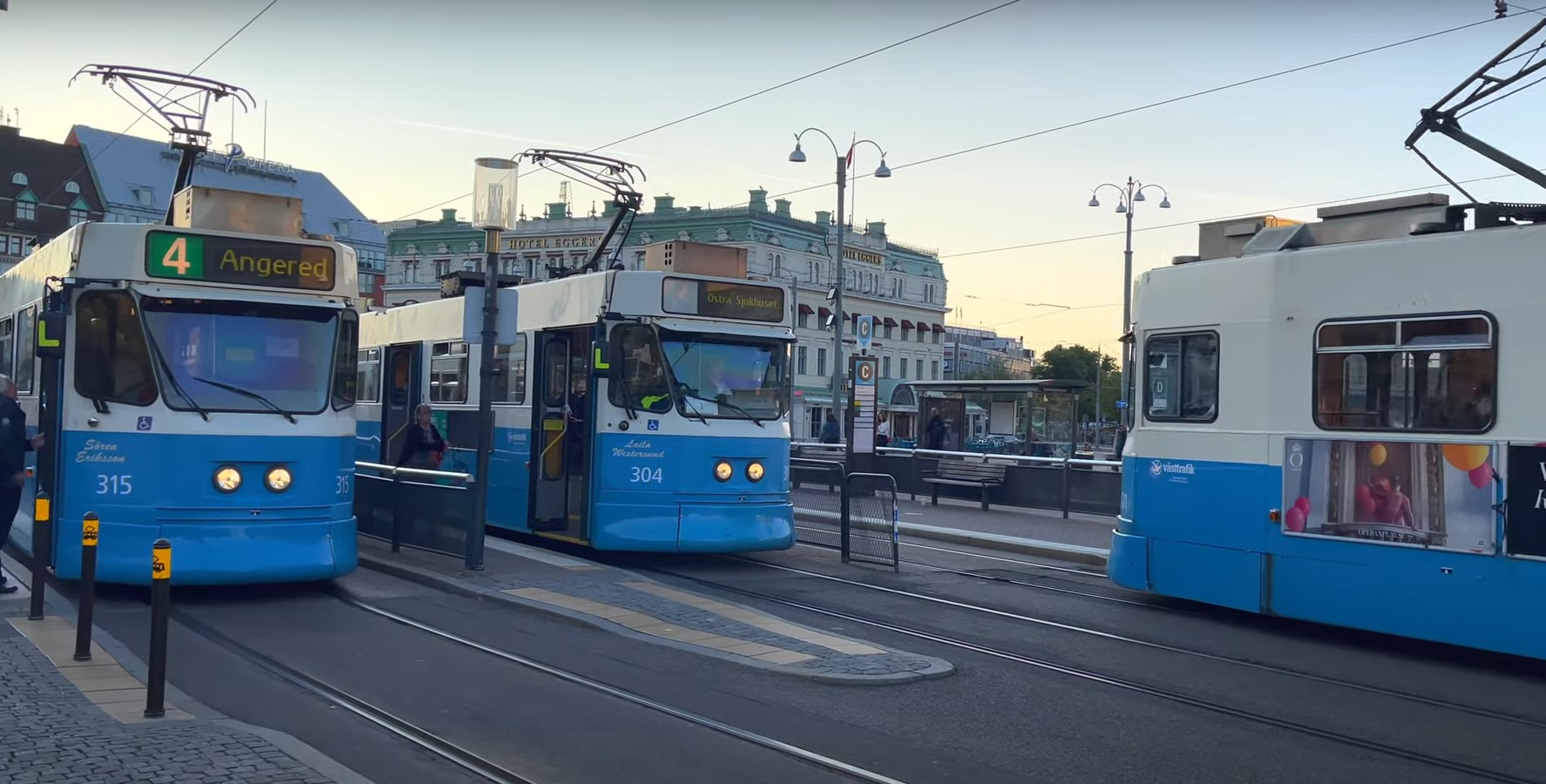
Public Transport Moves to the Centre of Economic Policy
The Swedish announcement reflects a broader European trend in which public transport policy is increasingly being treated not merely as environmental infrastructure, but as a tool of economic resilience.
Over the past several years, governments across Europe have experimented with subsidised or discounted transit programmes in response to inflation, energy volatility, and sustainability targets. Germany’s widely discussed €49 Deutschlandticket, France’s expanded rail investment initiatives, and Luxembourg’s fully free public transport system have all demonstrated growing political willingness to treat mobility access as part of social and economic policy rather than a purely commercial public service.
Sweden’s approach, however, is distinct in both timing and framing.
Rather than presenting the fare reduction primarily as a climate initiative, Stockholm is positioning public transport affordability as part of crisis management and household stabilisation. This reflects a subtle but important shift in European policymaking: sustainability measures increasingly gain political durability when linked to economic security and cost-of-living concerns.
For Nordic infrastructure operators and regional transit authorities, the temporary subsidy may also provide valuable data on commuter elasticity — particularly whether lower prices materially increase ridership or simply reduce costs for existing users. The outcome could influence future debates around long-term transport financing models in Sweden and elsewhere.
Energy Security Is Now a Domestic Economic Issue
The deeper significance of the policy lies in how rapidly geopolitical instability is now translating into domestic economic intervention.
The Strait of Hormuz handles a substantial share of global oil and liquefied natural gas shipments, making it one of the most strategically sensitive chokepoints in global trade. Disruptions in the region have already contributed to higher freight insurance costs, shipping delays, fuel price volatility, and renewed concerns about supply chain fragility.
For export-oriented Nordic economies, these developments matter far beyond energy markets alone.
Sweden’s manufacturing sector — including automotive, industrial technology, forestry products, mining equipment, and advanced engineering — remains deeply integrated into global logistics systems. Prolonged instability in maritime trade routes can ripple through transportation costs, procurement timelines, industrial margins, and consumer pricing.
The government’s decision therefore illustrates a growing recognition across Europe that geopolitical shocks increasingly require domestic economic cushioning mechanisms.
This represents a broader evolution in state intervention. In the past, transport subsidies may have been viewed primarily through the lens of environmental policy or regional planning. Today, they are increasingly tied to strategic resilience, inflation management, and political stability.
The Political Calculation Ahead of Elections
The timing of the announcement inevitably raises political questions.
Sweden’s parliamentary election is scheduled for September, and opposition parties are expected to scrutinise whether the subsidy represents a necessary economic intervention or a short-term electoral measure designed to improve household sentiment before voters go to the polls.
The Kristersson government — supported in parliament by the Sweden Democrats — faces mounting pressure from both sides of the political spectrum. On one side are calls for stronger social protections and broader affordability measures; on the other are concerns over public borrowing, inflationary spending, and long-term fiscal discipline.
Opposition parties are Sceptical
Opposition parties have responded with cautious criticism, characterizing the measure as an election-year tactic ahead of the September vote rather than a substantive solution to rising living costs. While acknowledging the immediate relief for commuters, critics—including the Social Democrats, Left Party, Greens, and Centre Party—argue that the temporary, year-end expiry of the subsidy fails to address structural inequalities, neglects rural areas with limited transit infrastructure, and is funded on overly optimistic fiscal forecasts. Social Democratic economic spokesperson Mikael Damberg accused the Tidö coalition of “wasting the good times” on short-term subsidies designed to buy political capital rather than deliver lasting change. Both the Centre Party and the Social Democrats have questioned the Finance Ministry’s economic projections, warning that overly optimistic growth forecasts are being used to justify temporary spending that could strain public finances down the line.
Instead, opposition parties are calling for permanent, progressive reforms: targeted support for vulnerable households funded by taxes on wealth and finance, and a long-term “Sweden Card” model to cap transit costs, aligned with climate goals rather than undermined by concurrent aviation subsidies and fossil fuel tax cuts.
Nevertheless, the policy may prove politically effective because it targets an issue with unusually broad visibility. Public transport costs affect urban professionals, industrial workers, students, and middle-income households simultaneously — giving the measure both economic and symbolic weight.
Implications for Business and Investors
For investors and corporate leaders, Sweden’s move underscores several longer-term trends likely to shape European markets over the next decade.
First, transport and energy policy are becoming increasingly integrated. Governments are no longer treating mobility, climate transition, energy security, and consumer protection as separate policy domains.
Second, periods of geopolitical instability are accelerating state involvement in economic stabilisation measures. While Nordic economies traditionally favour market-oriented frameworks, recent years have demonstrated greater political acceptance of temporary intervention during periods of external shock.
Third, public transport infrastructure may become a more strategically important investment category across Europe. As governments seek to reduce exposure to fossil fuel volatility while supporting labour mobility and emissions targets, rail, urban transit, electrification, and digital mobility systems are likely to attract sustained policy attention.
This could create longer-term opportunities across sectors including rolling stock manufacturing, smart mobility software, battery technology, energy-efficient infrastructure, and integrated payment systems.
However, investors will also watch whether temporary subsidies evolve into structurally higher public spending commitments. Persistent intervention without corresponding productivity gains could place pressure on already constrained European fiscal frameworks.
A Nordic Model Under Adaptation
The Swedish response reflects a wider transformation underway across the Nordic region.
Historically, Nordic economic models have balanced market competitiveness with strong public infrastructure and social cohesion. But the combination of geopolitical fragmentation, energy transition costs, inflation volatility, and technological disruption is forcing governments to rethink how resilience is maintained.
In that context, the transport fare reduction is not simply a commuter subsidy.
It is part of a broader European adjustment in which governments are increasingly expected to shield households and strategic sectors from global instability while continuing to pursue climate transition goals and fiscal credibility.
The long-term challenge will be determining whether temporary interventions can evolve into financially sustainable models that strengthen competitiveness rather than merely soften short-term shocks.
Conclusion
Sweden’s decision to temporarily halve public transport fares may appear, at first glance, to be a targeted consumer relief measure tied to elevated fuel prices and election-year politics.
In reality, it signals something larger.
Across Europe, transport systems are becoming instruments of economic resilience, geopolitical risk management, and industrial strategy. Governments are increasingly using mobility policy not only to support climate ambitions, but also to protect household purchasing power, stabilise labour markets, and reduce vulnerability to global energy disruptions.
For business leaders and investors, the Swedish initiative offers a timely illustration of how economic policy in the Nordic region is evolving under pressure from a more volatile global environment.
The key question now is whether these temporary measures become isolated responses to crisis — or early indicators of a more permanent restructuring of Europe’s economic and mobility model.
Editorial Outlook
Suggested Follow-Up Feature:
“The New Economics of Mobility: How Europe’s Energy Crisis Is Reshaping Public Transport Investment”
A future Nordic Business Journal analysis could examine how governments and investors across Europe are repositioning public transport as strategic infrastructure amid rising geopolitical fragmentation, decarbonisation targets, and industrial competitiveness concerns.
Potential angles include:
- The long-term financial sustainability of subsidised mobility models
- Nordic leadership in electrified transport infrastructure
- The investment outlook for rail, battery systems, and smart mobility platforms
- The role of AI and digital ticketing in future commuter ecosystems
- How urbanisation and remote work are reshaping transport demand patterns
- Whether Europe can reduce exposure to energy-related geopolitical shocks through mobility transformation
Reader Engagement
Nordic Business Journal welcomes perspectives from executives, policymakers, investors, founders, economists, and industry leaders shaping the future of the Nordic and global economy.
To continue the conversation, explore partnership opportunities, or contribute insights on energy, infrastructure, mobility, and economic transformation across the Nordic region, connect with Nordic Business Journal’s editorial and research network.
For further analysis, strategic commentary, and cross-border business intelligence, follow Nordic Business Journal’s continuing coverage of the forces redefining Northern Europe’s economic landscape.