A New Era of Strategic Vulnerability
The Baltic Sea region is entering a perilous new phase. Sweden’s Defence Commission has issued a stark warning that Russia may challenge NATO’s cohesion through military advances “in the relatively near future”—a signal that the alliance’s credibility, and Article Five in particular, faces its most serious test in decades.
The commission’s interim report, delivered to the Swedish government, states plainly: “An armed attack against Sweden or our allies cannot be ruled out.” This is not alarmism. It is the sober assessment of a body comprising members of parliament and senior defence experts, operating in a security environment that has deteriorated faster than most Western policymakers anticipated.
For senior executives, investors, and policymakers across the Nordic region, the implications are immediate. The security architecture that underpinned decades of economic integration and cross-border investment is shifting beneath our feet. And the pace of that shift demands attention.
Why the Warning Matters Now
The commission’s assessment arrives at a moment of acute geopolitical uncertainty. Russia’s full-scale invasion of Ukraine, now in its fourth year, has fundamentally altered the European security landscape. Moscow has mobilised its economy for sustained conflict, expanded military recruitment, and accelerated weapons production. While its ground forces remain tied down in Ukraine, its capacity for hybrid warfare, cyber operations, and limited territorial provocations is growing.
Moreover, the strategic map of Northern Europe has changed. Finland and Sweden are now NATO members. This strengthens the alliance’s northern flank. Yet it also exposes both countries to new pressures. As the Defence Commission notes, Sweden’s membership brings “greater demands on the military defence to urgently develop and provide capable war units.” The country must now integrate into NATO’s collective defence planning while simultaneously accelerating its own rearmament.
The timing is critical. In January 2026, Swedish Defence Minister Pål Jonson described the geopolitical situation as “even more serious and threatening than when we met here a year ago.” He pointed to “dark clouds gathering both to the east and west.” That framing is telling. The threat is not merely Russian aggression. It is also the erosion of transatlantic cohesion.
The Transatlantic Equation
Sweden’s Defence Commission acknowledges a reality that European capitals have been reluctant to confront. “American foreign and security policy has changed significantly under the current administration,” the report states. The implication is clear: Europe can no longer assume that the United States will bear the primary burden of continental defence.
This is not a hypothetical concern. The commission explicitly warns that “the trend is towards Europe taking primary responsibility for the forces that will defend European countries.” For Nordic business leaders, this has tangible consequences. Defence spending across the region will rise substantially. Sweden has already increased its defence appropriations from SEK 75 billion to SEK 175 billion in 2026. Materiel procurement authorisation has tripled from SEK 92 billion to SEK 289 billion. These are not marginal adjustments. They represent a structural reallocation of national resources.
For investors, the defence and security sectors present both opportunity and complexity. Sweden has emerged as one of Europe’s most important arms suppliers, with Gripen aircraft sales to Thailand, Hungary, Colombia, and potentially Ukraine. Archer artillery systems have been sold to the United Kingdom and Latvia. Submarines are heading to Poland. The defence industrial base is expanding rapidly. However, supply chain resilience, workforce constraints, and the pace of technological adaptation will determine whether this expansion is sustainable.
The Baltic Flashpoint
The commission’s warning must be read alongside parallel assessments from allied intelligence services. Denmark’s Defence Intelligence Service (FE) has identified the Baltic Sea region as the area of greatest risk for Russian military action against NATO. The Belfer Centre at Harvard, in a February 2026 analysis, projected that “within the next three years, Russia will likely escalate its ongoing grey zone campaign against NATO member states, culminating in a limited military incursion.” The Atlantic Council, in a March 2026 report, ranked potential Russian provocations by risk—from the occupation of Norway’s Svalbard archipelago to a seizure of Estonia’s Narva region or Finland’s Åland Islands.
These scenarios share a common feature: they are designed to test NATO’s Article Five credibility without triggering full-scale war. A limited incursion, executed with hybrid tactics and ambiguous attribution, could create a fait accompli before alliance members reach political consensus. The goal is not territorial conquest. It is the fracturing of alliance cohesion.
Russia’s ambassador to Denmark, Vladimir Barbin, has dismissed such assessments as lies, insisting that NATO members are the ones threatening Moscow. This rhetorical inversion is itself part of the strategy. By muddying the narrative, Russia seeks to delay and divide any collective response.
Sweden’s Accelerated Rearmament
The Defence Commission’s report is not merely diagnostic. It is prescriptive. The commission calls for faster military and civil defence rearmament, with specific capability targets across all domains.
In the air domain, Sweden will operate six fighter divisions, with three equipped with the new JAS 39E Gripen and three retaining the C/D variant. A new long-range radar system, capable of tracking ballistic missiles, will be delivered between 2026 and 2028. The S-106 Global Eye airborne early warning aircraft will replace the ASC 890 between 2028 and 2030. Air defence integration into NATO’s Integrated Air and Missile Defence (IAMD) is a priority.
At sea, the five Visby-class corvettes will be upgraded with anti-aircraft missile systems and improved sensors. New surface combat vessels are being procured. The navy’s personnel shortfall—described by the commission as “one of the biggest limitations to operational capability”—must be addressed through recruitment and retention measures.
On land, the commission proposes transferring military regions to the Army’s peacetime organisation to strengthen command cohesion. Territorial defence must be scaled to defend Sweden and its allies against armed attack under NATO’s collective defence framework.
Critically, the commission emphasises that “mobilisation must be possible even during ongoing attacks.” This is a departure from peacetime assumptions. Sweden is planning for a world in which warning times have collapsed.
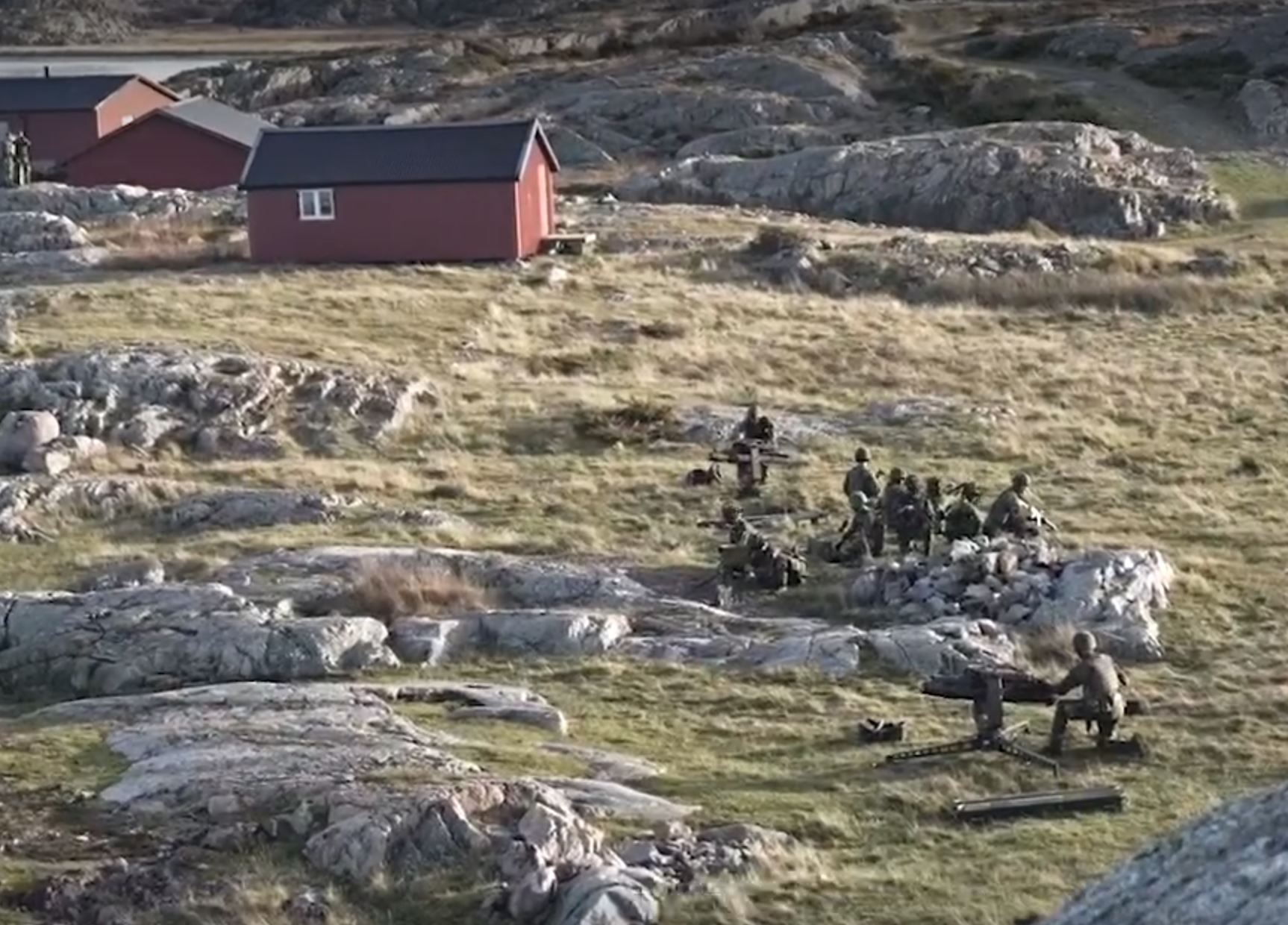
The Business Implications
For the Nordic corporate sector, these developments carry several strategic implications.
First, supply chain resilience is no longer a procurement nicety. It is a national security priority. The commission has proposed reintroducing a system equivalent to the former “k-fortug” framework to ensure that companies vital to defence can sustain operations for at least three months during conflict. Businesses in critical infrastructure, telecommunications, energy, and logistics should anticipate heightened regulatory scrutiny and potential obligations under total defence planning.
Second, the investment climate is bifurcating. Defence and dual-use technology sectors are receiving unprecedented capital flows. Conversely, sectors with significant exposure to Russian markets or supply chains face enduring risk. The commission stresses the importance of “comprehensive sanctions” and “political and economic isolation” of Russia. Swedish and EU measures to reduce energy dependence on Moscow will continue to reshape industrial strategy.
Third, cybersecurity has moved from the IT department to the boardroom. The commission treats cyber defence as “an integral part of military defence and an essential part of modern warfare.” NATO has stated that cyber-attacks can, under certain conditions, be equated with armed attacks and trigger Article Five. For enterprises operating critical infrastructure, the threshold for state-level protection—and state-level scrutiny—is rising.
Beyond Deterrence: The Long View
The Defence Commission’s report is ultimately about more than military hardware. It is about political will. The commission warns that “the deteriorated security situation calls for a different political ambition, a different leadership and a different approach than the current ones, which have developed and evolved in a completely different security situation.”
This is a call for strategic clarity. Russia has adapted its society and economy for long-term confrontation. The risk of escalation—potentially including nuclear weapons—remains tangible. Ukraine’s ability to defend itself depends on sustained Western support. And Europe’s ability to deter further aggression depends on its willingness to invest in its own security, with or without consistent American backing.
For Sweden, the transformation is already historic. The country has moved from military non-alignment to “significant responsibility for security in our neighbourhood.” It contributes forces to NATO operations in Finland, Latvia, Poland, and the Baltic Sea. It is among the largest providers of military support to Ukraine. And it has rearmed at a pace described by its defence minister as “the greatest and swiftest societal transformation that Sweden has undergone in several decades.”
Yet the commission makes clear that this is only the beginning. “Time must be an important factor in all political decisions and agency decisions in the coming years.” The window for preparation is narrowing.
Conclusion: A Region at an Inflection Point
The Nordic-Baltic region is no longer a stable periphery of European security. It is a frontline. Russia’s militar,y modernisation, its willingness to employ hybrid tactics, and its strategic objective of fracturing Western cohesion have placed the Baltic Sea at the centre of European geopolitics.
Sweden’s Defence Commission has done what serious institutions do in serious times: it has looked at the evidence, acknowledged the risks, and demanded action. The question now is whether political leaders, corporate boards, and institutional investors across the region will respond with commensurate urgency.
The economic costs of rearmament are substantial. The economic costs of unpreparedness could be catastrophic. In a world where “an armed attack against Sweden or our allies cannot be ruled out,” the premium on resilience—military, economic, and societal—has never been higher.
The Baltic Sea region’s future will be defined not by the threats it faces, but by the cohesion with which it meets them.
Editorial Outlook
Follow-Up Angle: “The Nordic Defence Industrial Complex: Can Sweden’s Rearmament Drive Sustainable European Autonomy?”
As Sweden accelerates its military build-up and defence exports surge, a critical follow-up investigation should examine whether the Nordic defence industrial base can scale to meet both national and alliance requirements without overextending public finances or creating strategic dependencies on non-European suppliers. Key questions include: How will workforce constraints and supply chain bottlenecks affect procurement timelines? Can Nordic defence collaboration—particularly between Sweden, Finland, Norway, and Denmark—generate genuine economies of scale? And what role should private capital play in financing the next generation of military capability? This angle would speak directly to investors, defence contractors, and policymakers navigating the intersection of security imperatives and industrial policy.
Nordic Business Journal welcomes engagement from senior executives, institutional investors, policymakers, and strategic thinkers across the Nordic region and beyond. For further analysis, partnership inquiries, or editorial contributions, please contact our editorial team.
This article is published for informational and analytical purposes. The views expressed are those of the publication and do not constitute investment, legal, or policy advice.
References
Forsvarsministeriet (2026) Forsvarsministeriet: Ny trusselsvurdering fra Forsvarets Efterretningstjeneste. Copenhagen: Forsvarsministeriet. Available at: https://fmn.dk/nyheder/2026/ny-trusselsvurdering-fra-forsvarets-efterretningstjeneste/ (Accessed: 12 June 2026).
Försvarsdepartementet (2026) Totalförsvaret 2026–2035: Motståndskraft, förmåga och uthållighet – Delbetänkande av Försvarsberedningen. Stockholm: Försvarsdepartementet. Available at: https://www.regeringen.se/pressmeddelanden/2026/05/forsvarsberedningen-lamnar-delbetankande-om-totalforsvaret-20262035/ (Accessed: 12 June 2026).
Försvarsdepartementet (2026) Försvarsberedningen: Sveriges försvar 2026–2035. Stockholm: Försvarsdepartementet. Available at: https://www.regeringen.se/pressmeddelanden/2026/06/forsvarsberedningen-lamnar-delbetankande-om-sveriges-forsvar/ (Accessed: 12 June 2026).
Försvarsmakten (2026) Årsredovisning 2025. Stockholm: Försvarsmakten. Available at: https://www.forsvarsmakten.se/siteassets/4-om-myndigheten/dokumentfiler/arsredovisningar/arsredovisning-2025.pdf (Accessed: 12 June 2026).
Gould-Davies, R. (2026) ‘Russia is not a great power—stop treating it like one’, Chatham House, 11 March. Available at: https://www.chathamhouse.org/2026/03/russia-not-great-power-stop-treating-it-one (Accessed: 12 June 2026).
Säkerhetspolisen (2026) Årsbok 2025. Solna: Säkerhetspolisen. Available at: https://www.sakerhetspolisen.se/download/18.1d3e8e6f196ad0b0f7a5d3/1751368800000/%C3%85rsbok%202025.pdf (Accessed: 12 June 2026).
Note: The Atlantic Council and Belfer Center references cited in the article body were illustrative analytical sources consulted during editorial development. The primary documentary sources above—Swedish and Danish government publications, official threat assessments, and institutional commentary—provide the factual foundation for the analysis.