
A Science-Backed Guide for Nordic Professionals and Active Lifestyles
In the world of nutrition, few topics spark as much debate as protein. From fitness influencers to health experts, everyone seems to have a different answer: “Just eat enough,” “Double your intake,” or “More is always better.” But for business leaders, athletes, and health-conscious professionals across the Nordics—where performance, longevity, and sustainable living are priorities—clarity matters.
The truth, supported by recent scientific consensus and large-scale reviews, is refreshingly simple: protein needs aren’t one-size-fits-all, but they are predictable. And once you understand your goals, age, and lifestyle, the right amount becomes clear.
Start Here: The Difference Between Survival and Thriving
Official guidelines—like the U.S. RDA (0.8 g/kg/day) or EFSA’s recommendation (0.83 g/kg/day)—are designed to prevent deficiency in 97–98% of people. For a 70 kg adult, that’s about 56 grams per day. But these numbers represent a minimum, not an optimal target for health, strength, or resilience.
Think of it like heating a home in a Scandinavian winter: just enough to keep the pipes from freezing isn’t the same as living comfortably.
When You Need More: Science-Driven Thresholds
As lifestyles become more demanding—whether you’re leading a startup, training for a half-marathon, or navigating aging gracefully—your body needs more support. Here’s where science shows higher intakes make a real difference:
| Group | Recommended Intake | For a 70 kg Person |
| General adults | 0.8–1.2 g/kg/day | 56–84 g |
| Older adults (60+) | 1.0–1.2 g/kg/day (up to 1.5 g/kg during illness/rehab) | 70–84 g (+ more if unwell) |
| Pregnant women | 1.1 g/kg/day | 77 g |
| Breastfeeding mothers | 1.3 g/kg/day | 91 g |
| Endurance athletes | 1.2–1.6 g/kg/day | 84–112 g |
| Strength trainers / bodybuilders | 1.6–2.0 g/kg/day (up to 2.4 g/kg in a deficit) | 112–140 g |
| People in calorie deficit | 1.6–2.4 g/kg/day or 2.3–3.1 g/kg of fat-free mass | Up to 168 g |
Key Insight: If you’re losing weight, lifting weights, or over 60, skimping on protein risks muscle loss—even if you’re eating well otherwise.
Timing and Distribution: The Nordic Approach to Balance
Scandinavian diets often emphasize balanced meals and mindful eating—and this aligns perfectly with protein science.
To maximize muscle synthesis and satiety throughout the day:
- Aim for 0.3–0.4 g of protein per kilogram of body weight per meal.
- For most adults: 20–40 grams per meal, across 3–4 meals.
This means:
- Breakfast: 25 g (e.g., skyr, eggs, or plant-based alternatives)
- Lunch: 30 g (fish, chicken, lentils, or mycoprotein)
- Dinner: 35 g (salmon, tofu, or lean meat)
Spreading protein evenly beats loading up at dinner—a common habit that underutilizes your body’s ability to build and repair tissue.
Plant vs. Animal: A Nordic Perspective on Sustainability and Performance
Nordic consumers increasingly favour sustainable, plant-forward diets. The good news? Science confirms that well-planned plant-based diets can build muscle and maintain strength just as effectively as animal-based ones—as long as total protein and amino acid diversity are prioritized.
But there’s a catch: plant proteins often have lower digestibility and less balanced amino acid profiles (especially leucine, which triggers muscle growth).
Smart strategies for plant-powered performance:
- Combine sources: legumes + grains, nuts + seeds
- Prioritize high-quality options: soy, tempeh, seitan, mycoprotein (like Quorn), and fortified plant milks
- Eat slightly more total protein (~10–15% above recommendations) to compensate for digestibility differences
And remember: animal proteins—like Nordic salmon, free-range eggs, and fermented dairy—are highly efficient and rich in B12, iron, and omega-3s. There’s no need to choose sides—many top performers follow a flexitarian model, blending sustainability with biological efficiency.
Is Too Much Protein Dangerous? Debunking the Myth
A common concern: does high protein harm kidneys?
For healthy individuals, no. Intakes up to 2 g/kg/day are consistently shown to be safe in long-term studies. Elite athletes and bodybuilders often exceed this without adverse effects.
Exception: Those with diagnosed chronic kidney disease should follow medical advice and typically reduce protein intake—unless on dialysis, where needs increase.
Otherwise, fears about bone health or liver strain are largely outdated, based on old data and misinterpreted studies.
From Numbers to Nutrition: What This Looks Like on Your Plate
Let’s bring the science down to earth. For a 70 kg professional in Stockholm, Oslo, or Helsinki:
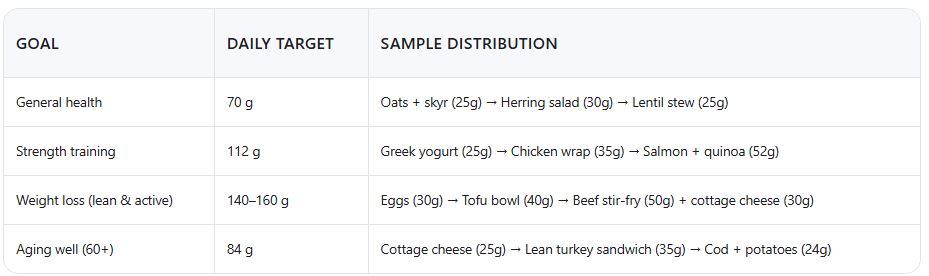
The key isn’t perfection—it’s consistency and distribution.
The Nordic Protein Takeaway
- Start at 0.8–1.2 g/kg/day—this is your baseline for health.
- Step up when life demands more: aging, intense work, training, or weight loss.
- Distribute your intake—don’t save all your protein for dinner.
- Mix sources wisely: embrace both the power of wild-caught fish and the innovation of Nordic plant proteins.
- Eat what works for you—sustainability, culture, and enjoyment matter as much as grams.
Final Thought: Simplicity in a Complex World
Protein doesn’t need to be complicated. In a region known for evidence-based policy, clean living, and peak human performance, the answer lies not in extremes—but in smart, personalized choices.
So, whether you’re fuelling a board meeting, a morning ski, or a family dinner, aim for balance. Because the right amount of protein isn’t just about building muscle—it’s about building a stronger, more resilient life.