
Structural vulnerabilities in the cooperative model exposed as cost pressures mount and discounters gain ground
A comprehensive review by Swedish trade publication Dagligvarunytt has revealed that 152 of ICA’s 1,220 retailer-owned stores—representing 12.5% of the network—posted losses in their latest 2024/2025 financial statements. The findings expose deepening fissures in Sweden’s largest grocery cooperative at a time when the sector faces unprecedented margin compression.
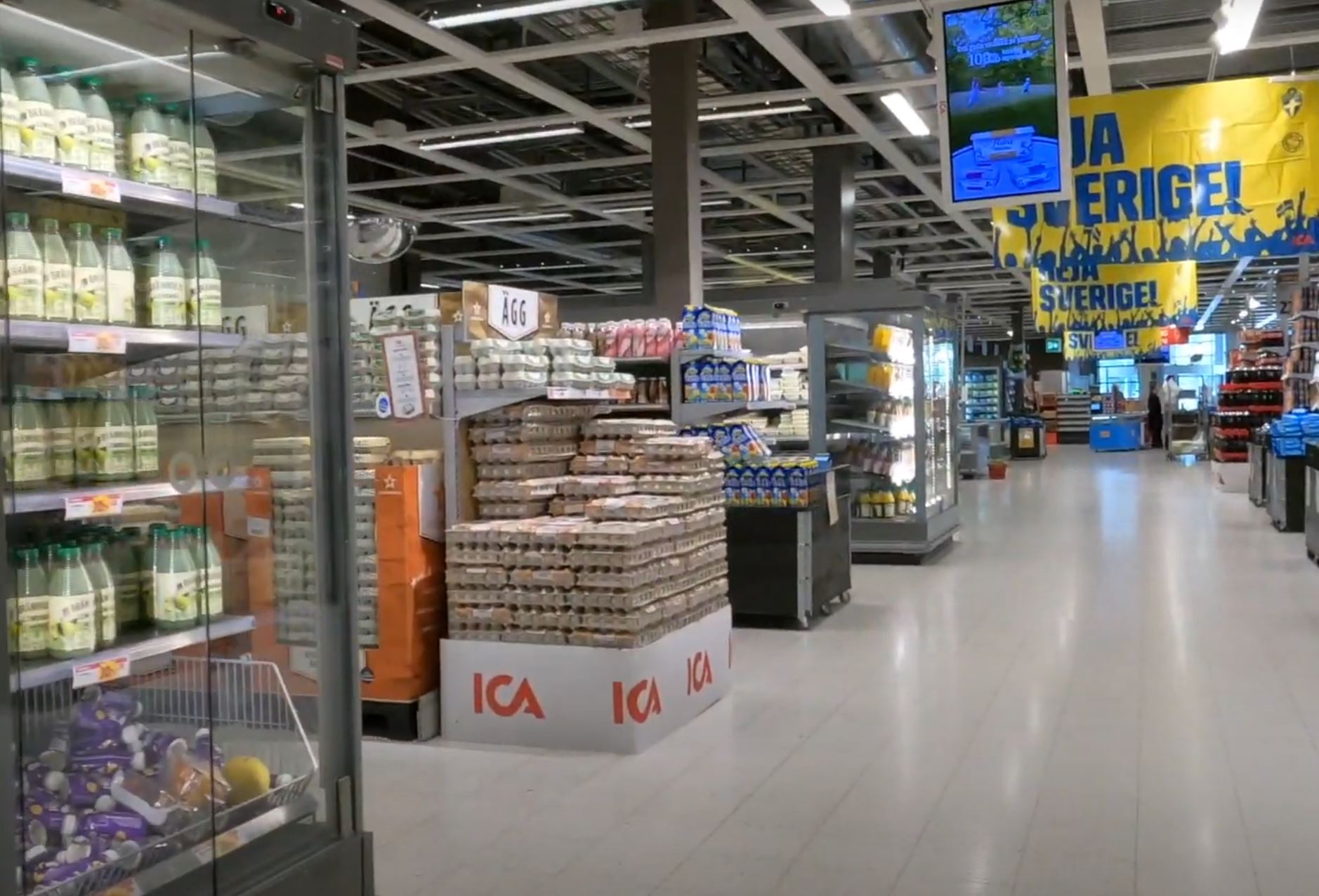
The data, published as ICA Gruppen prepares to implement Sweden’s temporary VAT reduction on food from April 2026, suggests that profitability challenges are particularly acute among ICA Kvantum hypermarkets. These larger-format stores, historically positioned as destination shopping locations, now appear disproportionately exposed to shifting consumer behaviours and fixed-cost inflation.
The Squeeze: A Two-Front Battle
ICA retailers are confronting what William Lindquist of Swedish trade analysis firm HUI Research describes as a “perfect storm” of operational challenges. “Grocery retailers have been pressured from two directions simultaneously,” Lindquist notes. “On one hand, it has become more expensive to run a store—due to increased energy prices and rents, among other things. On the other hand, customers have been tighter with their wallets.”
This analysis aligns with broader market data. Food prices in Sweden rose 3.7% year-on-year as of December 2025, according to Statistics Sweden, while overall CPI inflation moderated to just 0.3%. The divergence highlights a persistent challenge: even as general inflation cools, food cost pressures remain stubbornly elevated, particularly for commodities like coffee, cocoa, dairy, and beef—which drove much of the 4.3% food price inflation recorded for full-year 2025.
For ICA’s independent retailers—who operate under a cooperative franchise model where they own their stores but purchase goods through ICA’s wholesale arm—the margin squeeze is structural. Unlike vertically integrated competitors, these retailers bear full exposure to property costs, energy volatility, and local labour market pressures while competing against increasingly sophisticated discount operators.
Market Context: The Discounter Challenge
ICA’s profitability crisis unfolds against a backdrop of intensifying competition. Axfood—operator of Willys, Hemköp, and City Gross—has gained market share for eleven consecutive years, with retail sales growing 8.7% in Q4 2025 (5.3% excluding the City Gross acquisition) against market growth of 4.5%. Willys alone grew 5.4% in the final quarter, cementing its position as Sweden’s value-perception leader with a 33.1 net Value score in YouGov’s 2025 rankings.
Meanwhile, German discounter Lidl has surpassed 6% market share and continues expanding through a disciplined private-label strategy. The discount segment now accounts for over 20% of the Swedish market and has grown at an 11% annual rate since 2018—more than double the overall market’s 5% growth.
ICA Gruppen’s response has been aggressive price investment. The group reduced prices by over SEK 3 billion in 2025 and continues preparing for the April 2026 VAT reduction. Yet these measures have compressed margins at the wholesale level—ICA Sweden’s operating margin declined to 3.3% in 2025 from 3.6% the previous year, and fell as low as 2.3% in the first four months of 2025 during intensive promotional periods.
The Cooperative Conundrum
The ICA model—where independent retailers own approximately 1,300 of Sweden’s roughly 1,600 ICA-branded stores—creates unique governance challenges. While this structure enables local entrepreneurship and market responsiveness, it also fragments capital allocation and strategic decision-making. The 152 loss-making stores represent not just financial underperformance but potential contagion risk: struggling retailers may cut service levels, reduce inventory investment, or delay maintenance—further eroding competitiveness.
ICA Kvantum’s particular vulnerability reflects format-specific pressures. These larger stores (typically 3,000–5,000 sqm) carry higher fixed costs—rent, energy, staffing—while facing competition from both premium formats and hard discounters. As Swedish consumers have become increasingly price-sensitive since 2023, many have traded down to discount banners like Willys for staples while reserving premium purchases for specialised retailers or online channels.
Strategic Implications and Forward Outlook
For ICA Gruppen, the retailer loss data presents strategic dilemmas. The group has already divested its Baltic operations (Rimi Baltic, sold to Salling Group for SEK 9.4 billion in 2025) to focus resources on the Swedish market. It has invested SEK 6.6 billion in property acquisitions through ICA Real Estate and is constructing automated logistics infrastructure including a new freezer warehouse in Västerås.
Yet the fundamental challenge remains: how to support struggling franchisees without subsidizing inefficiency, while maintaining price competitiveness against Axfood and Lidl. The group’s Stammis loyalty program—recently enhanced with double bonus offers—has driven customer retention but added cost pressure.
The April 2026 VAT reduction (from 12% to 0% on food) offers temporary relief, but history suggests retailers will largely pass these savings to consumers rather than retaining margin. ICA’s preparation for this transition indicates awareness that competitive dynamics, not tax policy, will determine long-term profitability.
Investment and Risk Considerations
For stakeholders in Nordic retail, ICA’s retailer distress signals several trends:
1. Format rationalization: The hypermarket model faces structural decline across Europe; ICA Kvantum’s struggles may accelerate format consolidation toward smaller, more efficient store concepts.
2. Property exposure: With ICA Real Estate owning or controlling significant retail property portfolios, retailer financial stress could eventually impact lease sustainability—though current occupancy rates remain high at 98.3%.
3. Regulatory scrutiny: The Swedish Competition Authority’s ongoing investigation into ICA’s contractual practices adds governance risk, with potential operational mandates or fines that could alter competitive positioning.
4. Margin normalization: ICA Gruppen’s operating margin of 3.4% (excluding IFRS 16) remains below its 4.0% target, suggesting continued pressure on capital returns despite strong market share (approximately 45% of Swedish grocery sales).
What’s Next: Follow the Money
he critical question for Nordic Business Journal readers is whether ICA’s cooperative model can adapt to an era of permanent price investment. Our follow-up coverage will examine:
– The VAT reduction impact: Will April 2026’s tax cut provide sustainable relief for struggling retailers, or simply intensify price wars?
– Axfood’s expansion trajectory: With SEK 2.2–2.3 billion in 2026 capex allocated for 10–15 new stores and automated logistics, how is Axfood capturing share from ICA’s vulnerable network?
– The digital frontier: E-commerce represents just 4.2% of Swedish grocery sales but grew 6.6% in 2025 . Which players are positioned to capture this high-margin channel?
– Property restructuring: As retailer profitability diverges, will ICA Real Estate’s property portfolio require strategic repositioning?
Connect with Nordic Business Journal for ongoing analysis of Nordic retail transformation. Subscribe to our retail intelligence briefing or contact our editorial team to discuss how these trends impact your investment or operational decisions.
For questions, analysis requests, or stakeholder commentary, reach our retail desk at www.nordicbusinessjournal.com/contact.
About the Analysis: This article synthesizes financial reporting from ICA Gruppen, Axfood, and Swedish statistical agencies with proprietary market intelligence. Data on retailer losses derives from Dagligvarunytt’s comprehensive review of Swedish Companies Registration Office filings.