
In early May 2026 the U.S. administration raised import duties on cars and light trucks from the European Union to 25%—up from the 15% cap agreed under the July 2025 “Turnberry Agreement”—citing insufficient EU compliance. The move amplifies pain already felt across the European auto sector: roughly $35.4 billion in cumulative tariff costs since early 2025, steep earnings hits for legacy OEMs and intensifying pressure on suppliers and niche manufacturers. For Nordic entrepreneurs and suppliers trading with or investing in the U.S., the decision crystallises a new cost-and-risk environment that requires rapid strategic adaptation.
This analysis for senior executives, investors and policymakers unpacks the market impact, explains how ostensibly U.S.-based production can still be penalized, weighs likely policy responses, and sets out pragmatic strategic options and scenarios for business leaders navigating the transatlantic auto-market shock.
Immediate market fallout: the numbers that matter
Cumulative impact: European automakers have absorbed an estimated $35.4 billion in tariffs since early 2025.
Incremental impact: Broker estimates indicate the 25% rate could impose an additional industry cost of about €3.5 billion ($4.1 billion) in the remainder of 2026 and €5.7 billion in 2027.
Company-level hits: In 2025 Volkswagen Group, BMW and Mercedes‑Benz recorded combined earnings hit near $6 billion; Volkswagen alone reportedly absorbed roughly €2.9 billion over nine months of 2025.
Export and price effects: EU unit exports to the U.S. fell about 13.5% in 2025 under the 15% duty. Independently, S&P Global analysts warn a 25% duty could add more than $6,000 to the retail price of a $25,000 vehicle—enough to reshape demand dynamics in key U.S. segments.
National exposure: Germany, the bloc’s largest auto producer and export engine, faces potential annual output losses of up to €15 billion due to the tariff shock and related demand effects.
Why this matters now
Industrial-policy signal: The tariff hike is not only about short-term protection—it is an explicit lever to accelerate on‑shoring of auto production and alter investment calculus for global OEMs and suppliers.
Timing amid structural change: The auto industry is transitioning to electrification, new software-driven value chains and localised battery manufacturing. Tariffs increase the cost of cross‑border platform strategies just as OEMs decide where to build next‑generation EVs and battery facilities.
Geopolitics and competitive pressure: At a time when Chinese EV brands are scaling outside China and supply‑chain resilience is a priority for many governments, the tariff move increases the risk of broader fragmentation in the global auto market.
How companies feel the pain: more than finished-vehicle tariffs
The headline 25% duty targets imported cars and trucks, but the practical impact can be wider:
Rules of origin and components: Tariffs may apply to imported components and modules. Even a vehicle assembled in the U.S. can be cost‑penalised if key parts, powertrains or electronics originate in the EU and fail thresholds for regional value content.
Classification and volume effects: Smaller producers and startups often import specialized parts or fully built small-volume models that do not meet exemption thresholds or benefit from economies of scale—making them disproportionately vulnerable.
Price elasticity and product mix: Luxury and high-margin models are a focal point for current tariffs; these models generate large per‑unit duties and can shift OEM product strategies toward local production or revised product portfolios.
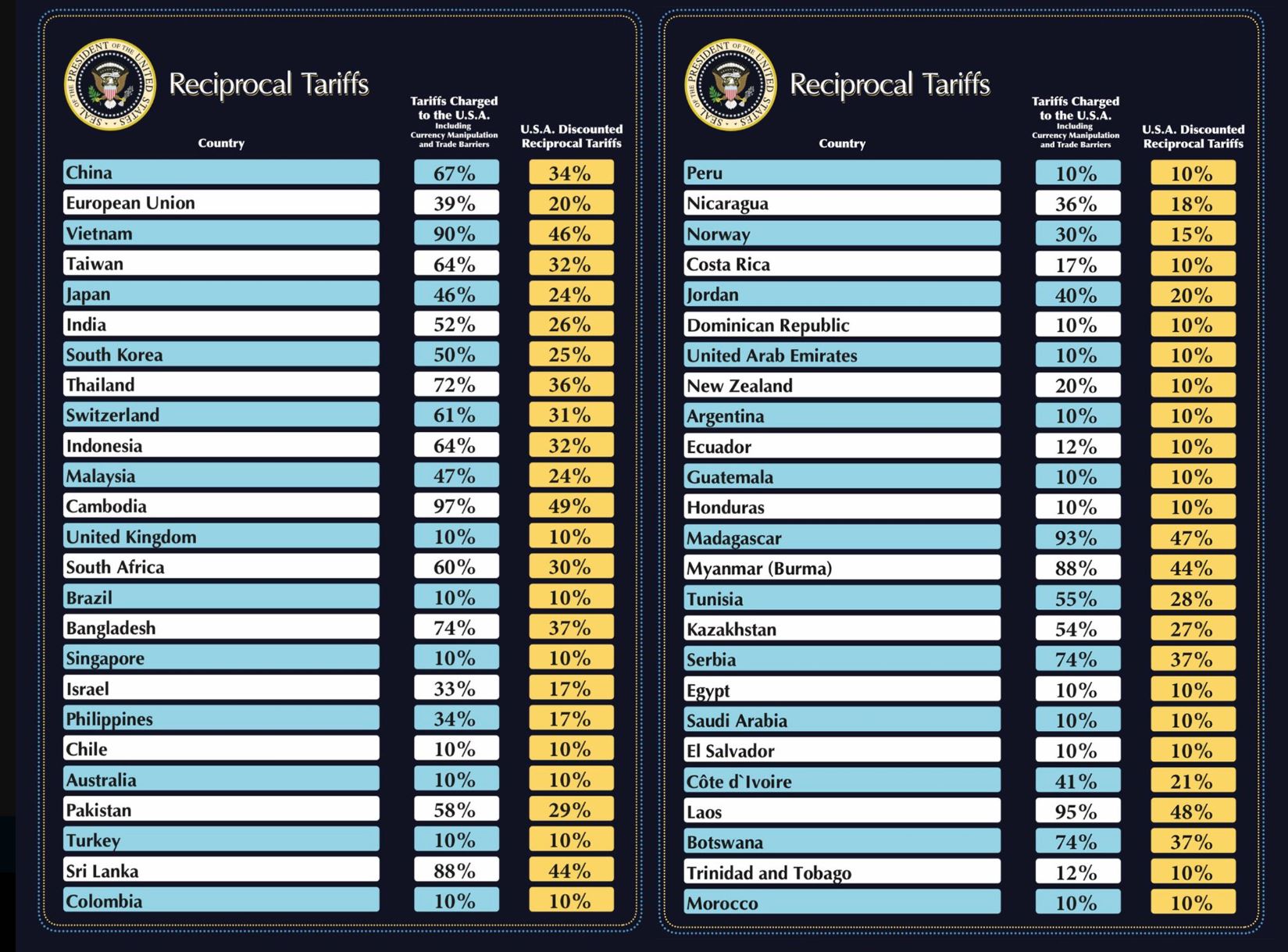
Nordic perspective: innovation, startups and supply‑chain exposure
The tariff escalation reverberates across the Nordics in differentiated ways:
Startups and micro-manufacturers: The case of Tarform—an electric motorcycle company with U.S. production footprint—illustrates the paradox: despite building vehicles in the U.S., thin margins and cross-border component sourcing can mean tariffs bite. Small-volume makers lack leverage to resume localisation quickly or to absorb sudden cost increases.
Suppliers and component makers: Nordic suppliers that specialise in high-value components (software, power electronics, sensors, lightweight materials) will see strategic demand shifts. Buyers may demand local content, accelerating nearshoring or prompting joint ventures in North America.
Established OEM links: Nordic suppliers integrated in European OEM value chains must re-evaluate customer exposures, reprice contracts, and assess the capital requirements for North American presence.
Opportunities: The policy shock also opens opportunities for Nordic technology and services firms—software, charging infrastructure, battery‑system engineering—to partner with U.S. OEMs or Tier-1s seeking to de‑risk European dependence.
Policy and diplomatic dynamics: possible EU responses and risks
EU options: The European Commission has rejected non‑compliance claims and is preparing countermeasures. Responses could range from targeted retaliatory tariffs, WTO action, to coordinated industrial incentives to accelerate domestic capacity.
Legal complexity: A WTO challenge is possible but protracted; faster but riskier is targeted retaliation to maximize political cost on U.S. constituencies.
Political spillovers: The escalation could complicate cooperation on climate, industrial standards, subsidies rules and strategic technology governance between the EU and U.S.
Strategic leverage: The EU can use State aid, recovery funds, and regulatory incentives to accelerate battery value chains, EV manufacturing and supplier resilience—turning protection into a competitive industrial strategy.
Business implications and strategic choices
For corporate leaders and investors, the options fall into three pragmatic pillars:
1) Reassess exposure and scenario‑plan
– Map product-level exposure to U.S. duties and component origin rules.
– Stress-test scenarios: de‑escalation via negotiation; protracted tit‑for‑tat escalation; gradual re‑sourcing and localisation.
– Model cash flow and margin impacts under each scenario, incorporating potential currency moves and demand elasticity.
2) Accelerate localisation selectively and smartly
– Prioritise investments where unit economics and market size justify new U.S. facilities (e.g., high-volume EV platforms, battery packs).
– For smaller volumes, pursue contract manufacturing, strategic alliances or licensing to limit capital outlays.
– Redesign products for modular, regionally sourced architectures to reduce tariff exposure.
3) Leverage policy engagement and competitive repositioning
– Engage actively with EU and national authorities to secure incentives for reshoring and to seek carve‑outs where economic harm is disproportionate (e.g., specialized equipment, low-volume artisanal production).
– Explore M&A and JV opportunities in North America to secure market access without full greenfield investment.
– Invest in digitalisation and automation to offset higher labour and capital costs in new production footprints.
Risks to monitor
Policy escalation: broader tariffs or countermeasures that spread beyond autos.
Supply-chain fragmentation: fractured standards, certification regimes and duplicated capital spend.
Demand contraction: higher retail prices in the U.S. could shift buyers toward domestic or lower-cost competitors, including Chinese imports where permitted.
Financial volatility: margin compression, credit pressure on suppliers, and increased capital expenditure needs.
Opportunities to capture
First‑mover advantage for firms that execute a measured and capital‑efficient U.S. manufacturing strategy.
Strategic consolidation: acquisition of Tier‑1 suppliers with U.S. footprints or of niche technology companies to accelerate local product development.
Policy-anchored growth: tapping EU and national funds aimed at strengthening battery and EV ecosystems.
Conclusion — strategic priorities for the next 12–24 months
The 2026 tariff escalation forces a fundamental reassessment of transatlantic automotive strategy. For Nordic firms and European players the immediate priorities are surgical: quantify exposure, accelerate modular product design and regionalise supply chains where economically justified, while also engaging policymakers to avoid unnecessary fragmentation.
This is not simply a cost problem; it is a strategic reallocation of where value is captured in the auto ecosystem. Companies that combine disciplined scenario planning, targeted localization, and proactive policy engagement can both mitigate downside risks and position to win share in a more regionalized, yet technologically intensive, global auto market.
Checklist for executives and investors
– Conduct a product‑by‑product tariff exposure audit within 30–60 days.
– Prioritise capex and partnership options for U.S. localisation by product margin and volume.
– Reassess supplier contracts and origin rules; negotiate flexibility clauses for tariffs and trade shocks.
– Engage EU and national policymakers to align incentives, and prepare coordinated industry responses.
– Explore M&A or JV routes to gain market access without disproportionate greenfield risk.
– Monitor geopolitical and regulatory developments weekly; update scenarios quarterly.
The Tarform lesson is instructive: local assembly alone may not be enough. The new trade reality rewards firms that redesign value chains, lean on strategic partnerships and convert regulatory disruption into investment in resilient, high‑value operations.