As global competition intensifies in the High North, a quiet diplomatic battle is unfolding between Washington and Copenhagen. Recent revelations of confidential negotiations over new U.S. military installations in Greenland—potentially designated as American sovereign territory—signal a pivotal moment for Arctic security, transatlantic relations, and Nordic defence strategy.
For senior executives, investors, and policymakers, the stakes extend far beyond military logistics. Control over this strategic corridor touches on critical mineral supply chains, emerging Arctic shipping routes, and the very architecture of NATO alliance cohesion in an era of renewed great-power rivalry.
Beyond Pituffik: Washington’s Expanding Arctic Footprint
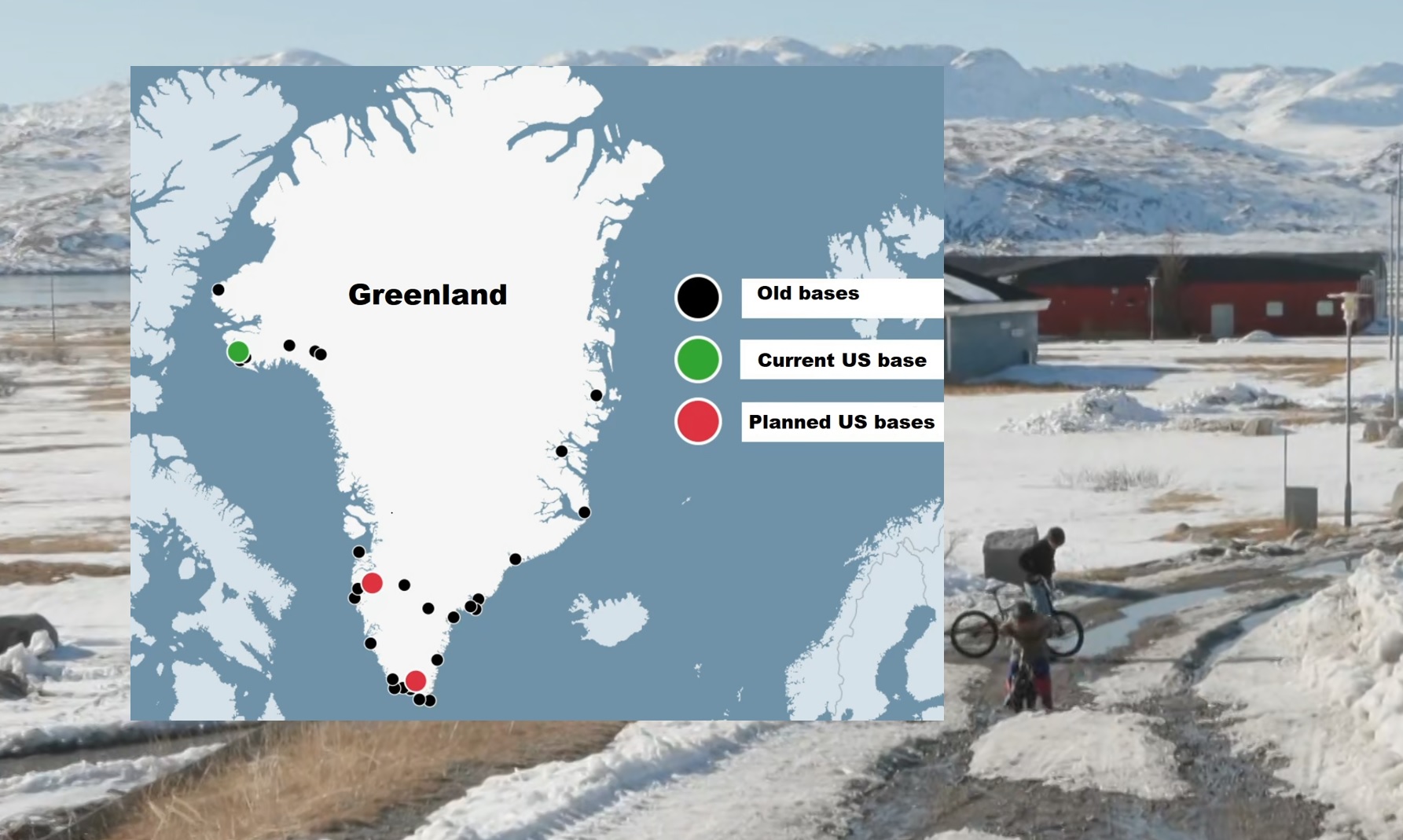
The United States currently operates Pituffik Space Base (formerly Thule Air Base) in northwestern Greenland, a critical node for ballistic missile early warning and space surveillance under the North American Aerospace Defence Command (NORAD). But this single installation, manned by approximately 200 personnel, offers limited capacity for fighter and tanker operations.
Now, according to sources familiar with the discussions, Washington is seeking to establish three additional military facilities in southern Greenland, potentially at sites with existing infrastructure such as Narsarsuaq—home to a former US base with a small airport. The expansion would mark the first significant enlargement of America’s physical military footprint on the island in decades.
Air Force General Gregory Guillot, Commander of Northern Command, articulated the strategic imperative in Senate testimony, citing the need for:
– Enhanced space systems to support the proposed Golden Dome missile defence architecture
– Fighter and tanker capacity as a “first line of defence” against Arctic-launched cruise missiles
– Port access for special operations forces and naval deployments
The push is anchored in a 1951 defence agreement between the US and Denmark, which grants Washington broad operational authority to construct installations and station troops—subject to Danish approval.
The Sovereignty Clause: A Novel Legal Framework
Perhaps the most provocative aspect of the reported US proposal is the suggestion that the three new bases be formally designated as American sovereign territory—an arrangement without clear precedent under the existing bilateral framework.
The move would effectively carve out enclaves on Greenlandic soil beyond Danish legal jurisdiction, raising fundamental questions about territorial integrity, host-nation consent, and the limits of alliance burden-sharing.
While American officials have reportedly not raised outright annexation of the entire island during these talks, the January diplomatic crisis—sparked by President Trump’s declaration that US national security required Greenland “one way or the other”—has left a lingering chill in Copenhagen and Nuuk alike.
Danish Foreign Minister Lars Løkke Rasmussen has described a “fundamental disagreement” persisting between the two NATO allies, while explicitly ruling out solutions that would violate the Kingdom’s territorial integrity or the Greenlandic people’s right to self-determination.
The GIUK Gap: Why Southern Greenland Matters
The locations under discussion lie within the Greenland-Iceland-United Kingdom (GIUK) Gap—a maritime chokepoint of enduring strategic significance. During the Cold War, NATO used the Gap to monitor Soviet naval movements between the Arctic and Atlantic. Today, the same waters are seeing renewed Russian submarine activity and growing Chinese interest in Arctic access.
New bases in southern Greenland would enable persistent surveillance of Russian and Chinese maritime operations in the North Atlantic, closing a capability gap that current northern-focused assets cannot address.
For Nordic business leaders, this has direct implications: sea lines of communication connecting North American and European markets pass through these waters. Any disruption—whether military or weather-related tied to accelerated Arctic ice melt—would affect transatlantic trade flows, insurance costs, and supply chain resilience.
Resources, Routes, and Great-Power Competition
Beyond military calculus, Greenland’s endowment of rare earth elements (REEs)—critical for everything from F-35 fighter jets to wind turbines and electric vehicle batteries—has drawn sustained US interest. Washington has grown increasingly concerned about dependence on Chinese supply chains for these strategic minerals.
However, investors should temper expectations. As a recent delegation to Nuuk documented, logistical realities remain formidable: no roads connect Greenland’s towns; the longest stretch is just 25 kilometres. Permafrost, extreme seasonal conditions, and lack of deep-water port infrastructure mean large-scale extraction remains years—if not decades—away.
Similarly, while Arctic shipping volumes are rising as ice retreats, the pace is gradual. The Northern Sea Route and Northwest Passage remain hazardous and ice-dependent for much of the year.
Diplomatic Friction Within NATO
The political fallout in Greenland has been acute. During the peak of tensions in January, residents were quietly advised to stockpile essentials; some families explored relocation options. In Nuuk, a capital of just 20,000 people, the sight of a massive US presidential aircraft on the tarmac underscored the power asymmetry.
Local sentiment has hardened. One boutique in Nuuk reportedly sold caps reading “Make America Go Away” —a pointed rejoinder to Trump’s MAGA imagery. Some American experts were disinvited from high-level meetings during the Nordic delegation’s visit.
For NATO, the episode has been destabilising. The alliance’s credibility rests on predictability and the resolution of disputes within shared institutions, not bilateral pressure tactics. An ally threatening another ally’s territorial integrity—even as Russia expands its Arctic military posture and China asserts itself as a “near-Arctic state”—creates dangerous precedents.
What Comes Next: Scenarios for Decision-Makers
1. Negotiated Expansion (Most Likely)
Both sides have strong incentives to reach a compromise. Washington secures enhanced Arctic capabilities without rupturing NATO unity; Copenhagen and Nuuk gain security commitments, infrastructure investment, and potentially new economic activity. The high-level working group established in January—despite initial disagreements over its mandate—provides a channel for technical discussions. Investment in Pituffik continues, with a $25 million airfield upgrade already solicited.
2. Sovereign Enclaves (Contested)
The proposal to classify new bases as US sovereign territory faces stiff headwinds. Danish and Greenlandic red lines on territorial integrity appear firm. However, in an era where Arctic security concerns are mounting, some modification to the 1951 agreement’s operational terms remains possible.
3. Stalemate (Short-Term Risk)
If public rhetoric escalates or force is threatened again, Copenhagen may slow-walk approvals. Greenland’s fragile economy—heavily dependent on Danish block grants and EU partnership funding—could be destabilised. For investors, prolonged uncertainty would deter capital deployment in Arctic infrastructure and resource extraction.
Strategic Takeaways for Nordic and International Leaders
For Executives and Investors: Monitor the working group’s outcomes closely. Any expanded US military presence will likely accelerate infrastructure development (ports, airports, energy) in southern Greenland, creating ancillary business opportunities in logistics, construction, and services. Conversely, geopolitical volatility raises risk premiums for Arctic projects.
For Policymakers: The episode underscores the need for a coherent NATO Arctic strategy that balances US security demands with allied sovereignty and local self-determination. Denmark and Greenland would benefit from articulating clear “red lines” while identifying areas of mutual interest—such as environmental monitoring, search-and-rescue, and critical mineral cooperation under transparent frameworks.
For Entrepreneurs: Greenland’s digital infrastructure gap, renewable energy potential, and sustainable tourism sector remain underserved. A stable security environment is prerequisite for scale; niche operators with local partnerships may find first-mover advantage.
A Defining Test for the Nordic Model
The coming months will determine whether this moment becomes a catalyst for strengthened transatlantic cooperation in the Arctic—or a fracture point in the alliance. For Nordic business leaders, the outcome matters not only for portfolio exposure but for the broader climate of predictability, rule of law, and collaborative security on which regional prosperity depends.
As one Greenlandic official observed: “Geopolitics have been our reality for 80 years. What is new is the global spotlight”. How Copenhagen, Nuuk, and Washington manage that spotlight will send a powerful signal to markets and allies alike about the future of Arctic governance—and the resilience of the transatlantic partnership in an era of renewed competition.
This analysis was prepared for Nordic Business Journal subscribers. Sources include BBC reporting, statements from US Northern Command, Danish and Greenlandic officials, and on-the-ground observations from Nuuk in March 2026.