New research into mosquito behaviour is shaping public health strategy, biotechnology innovation, and climate resilience planning across Europe and beyond.
For many people, warmer weather signals longer evenings outdoors, crowded terraces, and the return of summer travel. It also marks the arrival of one of the world’s most persistent biological irritants: mosquitoes.
Yet what appears to be a simple seasonal nuisance is increasingly attracting the attention of scientists, public health authorities, biotechnology companies, and climate policymakers. As mosquito-borne diseases expand into new geographic regions — including parts of Europe previously considered low risk — understanding how mosquitoes identify human targets has become more than a matter of comfort. It is emerging as a strategic public health and environmental issue.
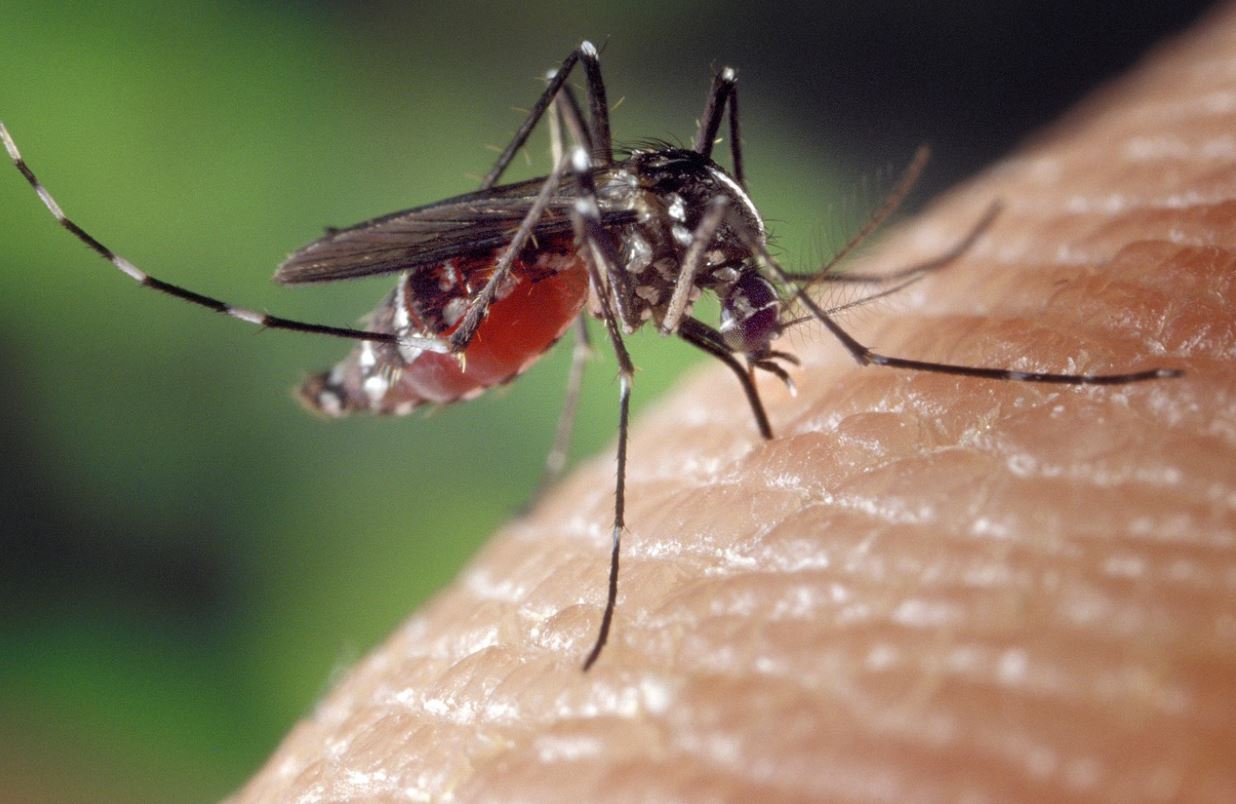
Recent research from European and international scientists has deepened understanding of the sensory mechanisms mosquitoes use to locate humans. The findings confirm that female mosquitoes — the only mosquitoes that bite humans because they require blood to develop eggs — are guided by a sophisticated combination of carbon dioxide, body odour, heat, and volatile organic compounds emitted through human skin.
The science may appear highly specialized, but the implications extend into disease surveillance, consumer health technologies, urban resilience, and vector-control innovation.
The Three Signals Mosquitoes Prioritise
Researchers have long known that carbon dioxide plays a central role in mosquito behaviour. Humans exhale CO2 continuously, effectively creating a detectable chemical trail.
According to Rickard Ignell, professor at the Swedish University of Agricultural Sciences, scientists have understood for more than a century that mosquitoes are strongly attracted to the carbon dioxide humans breathe out. Recent studies suggest mosquitoes can detect these signals from distances exceeding ten meters under favourable conditions.
Once mosquitoes move closer to a potential host, additional biological cues become more important.
Body heat helps them identify blood-rich areas close to the skin’s surface, while body odour — a highly individualised chemical signature shaped by genetics, skin microbiota, hormones, diet, and environmental exposure — influences which individuals mosquitoes prefer.
Frederic Simard, insect researcher at the French research institute IRD, notes that odour profiles appear significantly more influential than previously believed. Modern chemical analysis of skin-emitted compounds is helping researchers understand why some individuals are consistently more attractive to mosquitoes than others.
A growing body of evidence points toward specific compounds, including octenol and certain carboxylic acids, as important drivers of mosquito attraction. Octenol, often described as having a mushroom-like odour, is naturally released through human and animal skin and is now widely used in mosquito traps and monitoring systems.
From Academic Research to Commercial Application
The commercial implications of mosquito-attraction research are becoming increasingly significant.
Across Europe and North America, biotechnology firms, public health agencies, and pest-control companies are investing in next-generation mosquito monitoring and suppression technologies. These include AI-assisted surveillance systems, odour-baited smart traps, synthetic attractants, and genetically targeted vector-control programs.
In Denmark, researchers monitoring mosquito populations already use traps that combine carbon dioxide, heat, and octenol to mimic human presence. Such systems are becoming increasingly important as European authorities strengthen preparedness against vector-borne illnesses including West Nile virus, dengue, chikungunya, and malaria-related risks linked to climate-driven migration of mosquito species.
For Nordic countries in particular, the issue is gaining relevance due to rising temperatures and changing ecosystems. Historically, colder climates limited mosquito-borne disease transmission across much of Northern Europe. However, warmer summers, increased precipitation variability, and expanding insect habitats are altering that risk profile.
The European Centre for Disease Prevention and Control has repeatedly warned that climate change is contributing to the northward expansion of disease-carrying mosquito species, including Aedes albopictus, commonly known as the Asian tiger mosquito.
This creates new opportunities for Nordic life sciences companies, environmental technology firms, and public health innovators focused on monitoring, prevention, and ecological resilience.
Why Some People Are More Attractive to Mosquitoes
One of the most commercially and scientifically interesting questions remains why mosquitoes consistently prefer certain individuals.
Contrary to popular belief, blood type appears to play a smaller role than often assumed. Researchers increasingly point instead toward differences in skin chemistry and metabolic output.
Studies conducted in recent years indicate that pregnant women may attract mosquitoes more strongly due to elevated body temperature, increased respiration, and changes in skin oils and volatile compounds. Some research has also suggested that alcohol consumption — particularly beer — can modestly increase mosquito attraction by altering body temperature and skin-emitted odours.
Certain mosquito species are also highly specialised in the scents they prefer.
Researchers studying malaria mosquitoes in Africa found that odours associated with feet and skin bacteria were particularly attractive to some species. In one widely discussed example, Limburger cheese — known for its pungent aroma — demonstrated similarities to compounds associated with human foot odour and proved highly effective in attracting mosquitoes in experimental settings.
The broader scientific conclusion is increasingly clear: mosquito attraction is not random. It is the result of complex biochemical interactions between humans and insects that evolved over millions of years.
The Climate and Public Health Dimension
The business relevance of mosquito research extends well beyond consumer repellents and outdoor comfort.
Mosquitoes remain among the deadliest animals globally due to their role in transmitting infectious diseases. According to the World Health Organization, mosquito-borne illnesses continue to affect hundreds of millions of people annually.
As global temperatures rise, health systems are preparing for a future in which vector-borne diseases become more geographically widespread and less seasonally predictable.
This shift is already influencing infrastructure planning, insurance risk assessments, tourism management, and agricultural operations in climate-sensitive regions.
For governments and institutional investors, mosquito-control technologies are increasingly viewed through the broader lens of resilience infrastructure — comparable to water management, wildfire prevention, or air-quality systems.
The market for vector-control solutions is also evolving rapidly. Traditional chemical insecticides face growing regulatory scrutiny due to ecological concerns and insect resistance. In response, investment is shifting toward more targeted and environmentally adaptive approaches, including pheromone disruption, biological control systems, precision monitoring, and low-toxicity attractant technologies.
This transition aligns closely with broader Nordic sustainability priorities, where environmental protection, biodiversity concerns, and public health outcomes increasingly intersect.
Innovation, Data, and the Future of Mosquito Control
One of the most promising developments lies in the intersection of biology and digital technology.
Researchers are now using machine learning, infrared motion tracking, and predictive behavioural modelling to better understand how mosquitoes respond to visual, chemical, and thermal signals. These insights could enable more effective urban mosquito-management systems and smarter disease surveillance networks.
The implications extend into smart-city infrastructure and public health analytics.
Future mosquito-control systems may eventually operate similarly to environmental sensor networks — continuously monitoring insect activity, predicting outbreak risks, and deploying targeted interventions automatically.
For companies operating in medtech, environmental data, biotechnology, or climate adaptation, the field represents a growing area of interdisciplinary innovation.
A Small Insect With Large Strategic Implications
Mosquitoes may remain an unavoidable part of summer life, but the science behind how they find humans is becoming increasingly consequential.
What once appeared to be a niche area of entomology now sits at the intersection of climate adaptation, public health preparedness, biotechnology investment, and environmental innovation.
For business leaders and policymakers, the lesson is broader than mosquito behaviour itself. Small biological systems often reveal larger structural vulnerabilities — and increasingly, the ability to anticipate and manage those risks is becoming a competitive and societal advantage.
As Europe confronts a future shaped by climate volatility, demographic change, and evolving health threats, mosquito research offers a reminder that resilience is no longer only about major infrastructure projects or macroeconomic policy. It is also about understanding the subtle biological dynamics that shape human environments, economic stability, and public well-being.