Executive summary
A Danish court has dismissed damages claims against the Danish Maritime Authority related to the 1990 Scandinavian Star ferry fire that killed 159 people. While the ruling relieves the state of legal liability, it leaves unresolved questions for regulators, investors and operators about how to prevent similar catastrophes, manage cross‑border oversight and restore trust in maritime governance. For executives and policymakers, the verdict underscores the importance of robust, timely inspection regimes, transparent investigations, and investment in technology and training to reduce systemic risk in passenger shipping.
Background: the disaster and the litigation
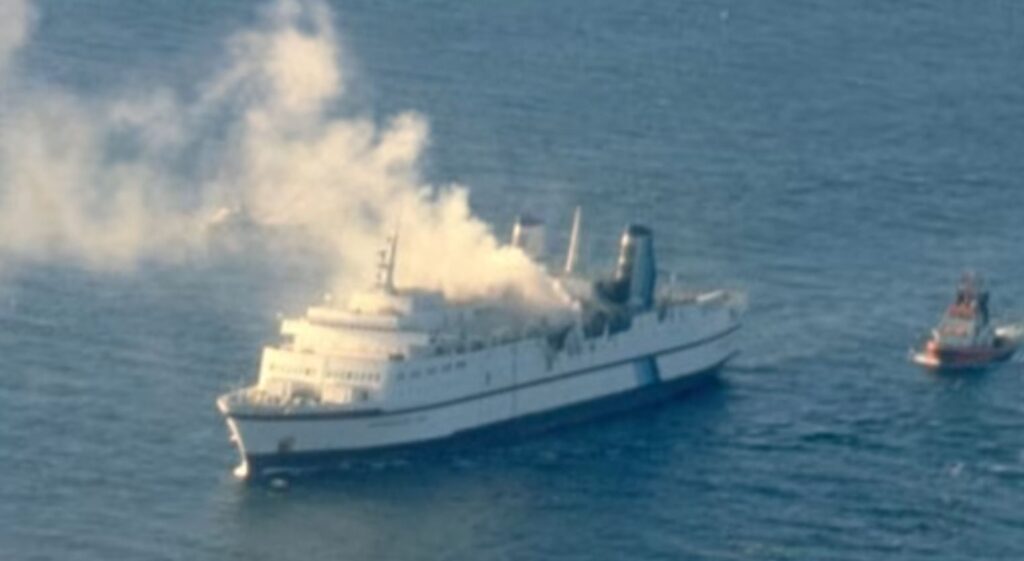
On 7 April 1990, a fire aboard the passenger ferry Scandinavian Star en route between Oslo and Frederikshavn claimed 159 lives, most of them Norwegian. Over the following decades the tragedy became emblematic of wider failings in safety, oversight and investigation. Survivors and relatives have repeatedly sought answers and compensation, alleging that regulatory shortcomings and lapses in supervision contributed to the scale of the loss.
In 2026—36 years after the incident—a group of survivors and relatives brought claims in a Danish court seeking SEK 600,000 in damages, arguing the Danish Maritime Authority had not fulfilled supervisory duties prior to the disaster. The court in Næstved has acquitted the authority, finding no legal basis to hold the state liable for the claimed damages. The ruling follows earlier politically appointed inquiries which concluded that better action on identified on‑board deficiencies might have limited the catastrophe.
What the verdict means — legal closure, limited policy change
The court’s decision provides a degree of legal closure for the Danish state, but it should not be mistaken for a broader vindication of past practices. Judicial determinations on state liability hinge on standards of proof, causation and statutes of limitation—criteria that are often difficult to meet in historical cases. The acquittal therefore clarifies the legal threshold for damages but does not overturn the substantive findings of earlier investigations about operational and safety shortfalls.
For families seeking accountability, the verdict will be cold comfort. For regulators and industry, it is a reminder that legal exoneration does not automatically translate to public trust or policy immunity. High‑profile maritime disasters leave lasting reputational, regulatory and political consequences that persist long after courts have decided.
Regulatory and industry implications
Oversight and cross‑border complexity: Passenger ferries routinely operate in international waters and under varied flags of convenience. Effective supervision requires seamless cooperation among flag states, port states and coastal authorities. The Scandinavian Star case exposes the difficulties of coordinating inspections and enforcement across jurisdictions—an ongoing headache for regulators and corporate risk managers.
Evolution of safety standards: The 1990s and 2000s saw significant global regulatory responses to ferry disasters—tightened SOLAS (Safety of Life at Sea) rules, the ISM (International Safety Management) Code and strengthened port state control regimes such as the Paris MoU. These tools have improved baseline safety, but gaps remain—particularly around ro‑ro ferry fire prevention, human factors, and emergency evacuation procedures.
Crew competence and corporate governance: The court record emphasised operational failings such as the absence of a fire drill by a newly hired crew. For owners and operators, this points to ongoing investments needed in training, operational oversight and safety culture—areas where governance failures translate directly into lives at risk and balance‑sheet exposure.
Financial and insurance consequences: Insurers and investors must account for legacy liabilities and worst‑case operational risks. The Scandinavian Star disaster underscores the value of rigorous due diligence on ownership structures, maintenance records and compliance histories—especially when acquiring older tonnage or vessels that will enter new markets.
Innovation and digitalisation as part of the solution
A practical path to risk reduction lies in integrating modern technology into safety and oversight:
Continuous monitoring: Smoke, heat and structural sensors, integrated with shipboard and shore‑based monitoring, can detect outbreaks far earlier than manual patrols. Remote condition‑based monitoring reduces reliance on periodic inspections alone.
Digital recordkeeping and transparency: Immutable digital logs for maintenance, certification and crew training make it easier for port state control and insurers to verify compliance in real time.
Simulation and human factors: Advanced bridge and emergency response simulators improve crew preparedness for rare but catastrophic scenarios. Investment in human‑centred system design reduces error rates under stress.
Why this matters now
Maritime traffic and the commercial importance of short‑sea passenger services remain significant in the Nordics. The sector is also at an inflection point: fleets are ageing in some segments, climate change is altering routing and demand patterns, and regulators are wrestling with new risks from digitalisation and autonomous systems. High‑impact historical cases like Scandinavian Star shape public expectations and policy priorities; they also inform investor appetite for shipping assets whose safety and compliance practices are uncertain.
Risks, opportunities and what decision‑makers should do
Risks
– Reputational and regulatory escalation for operators with poor safety records.
– Legal and financial exposure from legacy incidents, especially in cross‑border litigation.
– Operational vulnerabilities from undertrained crews and patchy maintenance.
Opportunities
– Competitive differentiation for operators that demonstrate superior safety, transparency and training.
– Cost efficiencies and risk reduction through predictive maintenance and integrated monitoring.
– Public‑private innovation partnerships to upgrade maritime safety infrastructure across the Nordic region.
Recommended actions
For regulators: strengthen cross‑border data sharing, standardise digital certification and mandate more frequent, risk‑based inspections for passenger ro‑ro vessels.
For operators and investors: prioritise due diligence on safety management systems, crew competence and compliance culture; invest in digital monitoring and emergency response training.
For policymakers: codify independent, transparent inquiry mechanisms for maritime disasters and ensure victims’ family rights to information and compensation are preserved.
Conclusion: legal end, policy work continues
The Næstved court’s acquittal of the Danish Maritime Authority resolves a specific legal claim stemming from one of the worst peacetime maritime disasters in Nordic history. But it does not free the industry or public authorities from the broader obligation to learn, adapt and invest. For business leaders, investors and policymakers, the enduring lesson is that accountability, transparency and technological investment are not just moral imperatives—they are commercial necessities in a sector where failure can be catastrophic and consequences reverberate across borders and generations.