From Industrial Heritage to Industrial Transition
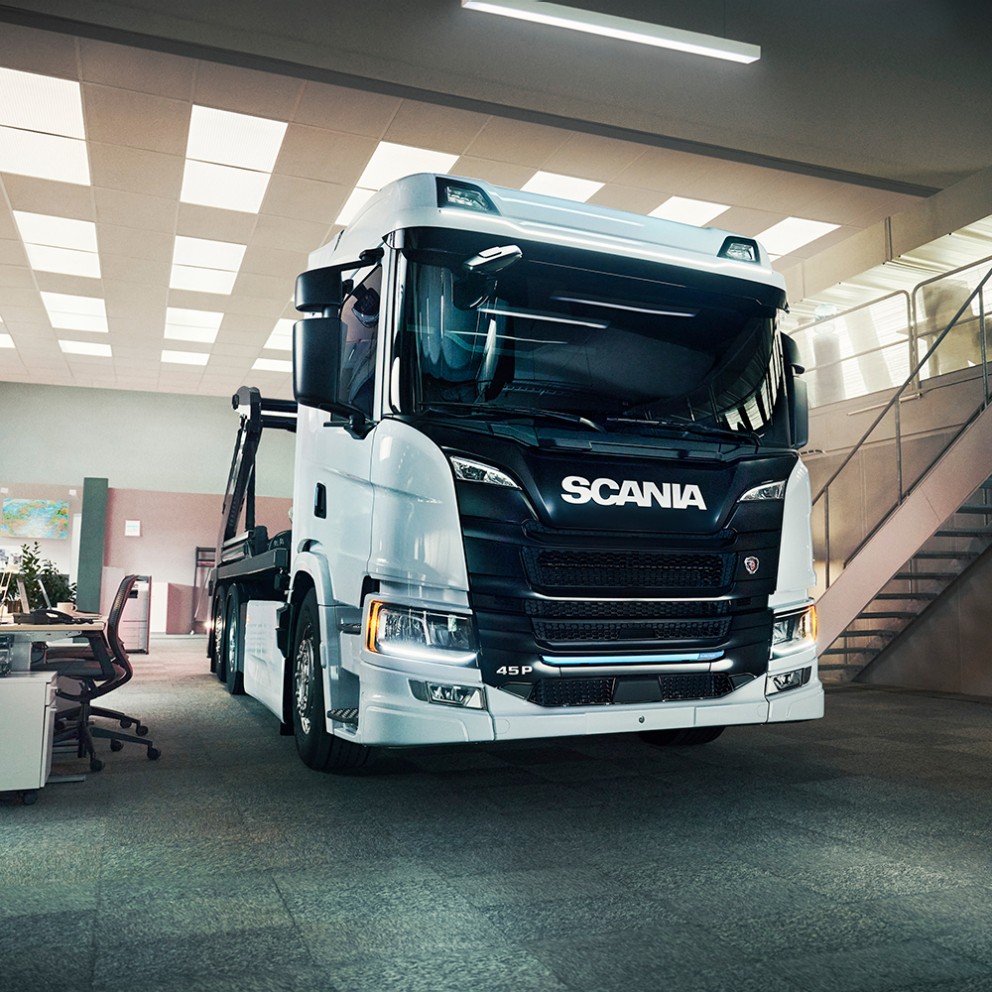
In the global race to decarbonise road freight, one nation has quietly established a commanding lead. Sweden—long celebrated for its engineering pedigree and export-oriented industrial base—has emerged not merely as a participant in Europe’s heavy-duty electric truck transition, but as its dominant architect. Through the strategic foresight of Volvo Trucks and Scania, the country has positioned itself at the centre of the continent’s most consequential logistics transformation since the containerisation era.
This is not a story of subsidised pilot programmes or municipal vanity projects. It is a story of hard-nosed commercial mathematics: Total Cost of Ownership (TCO) models, integrated service ecosystems, and industrial-scale deployment that is reshaping European supply chains in real time.
The Data That Matters
The European heavy-duty electric truck market is accelerating at pace. In 2025, zero-emission heavy trucks (above 12 tonnes) captured a 1.9% share of EU registrations—up from 1.2% in 2024—with Q4 2025 alone reaching 2.7%. While these percentages may appear modest, the trajectory is unmistakable: sales of electric heavy-duty trucks across the EU surged by more than 70% year-on-year to nearly 13,000 units in 2025. The European electric truck market is projected to expand from USD 1.76 billion in 2025 to USD 12.13 billion by 2031, representing a compound annual growth rate of nearly 38%.
Within this expanding market, Swedish manufacturers hold a disproportionate strategic position. Volvo Trucks alone commands an estimated 35% of the European electric truck market share, with the top five manufacturers—including Scania (Traton Group)—collectively holding 65%. This concentration reflects a fundamental competitive reality: Swedish firms achieved true series production ahead of Central European and American rivals, converting first-mover advantage into market architecture.
The technological evolution has been equally rapid. Early heavy electric models offered operational ranges of approximately 300 kilometres. Today, Volvo and Scania are deploying next-generation platforms pushing past 450–500 km on a single charge, with 700-km long-haul models on the immediate horizon. The 201–400 km range band currently dominates the market, accounting for 49.22% of European electric truck sales in 2025, but the above-400 km segment is projected to grow at a 41.6% CAGR through 2031. See data details:
The Deals Reshaping European Logistics
The Scania-Wibax Milestone
The recent finalisation of Scania’s sale of 105 electric bulk-transport trucks to Wibax, the Piteå-based chemical supplier, represents a watershed moment. Bulk transport is notoriously difficult to electrify due to weight constraints and energy density demands; this deal signals that the technology has matured beyond municipal distribution into the industrial heartland of European logistics. It is a shift from small-scale municipal “pilot projects” to massive, high-tonnage industrial solutions that operate on strict commercial terms.
Volvo’s Holcim Partnership: 1,000 Trucks by 2030
In May 2023, Volvo Trucks signed what remains one of the largest commercial letters of intent for electric trucks globally: an agreement with Swiss building materials giant Holcim to deploy up to 1,000 electric heavy-duty trucks across European operations by 2030. The rollout commenced with 130 heavy FH and FM Electric models delivered to France, Germany, Switzerland, and the UK during 2023–2024. The scale is instructive: replacing 1,000 diesel equivalents with electric models using green electricity would save up to 50,000 tonnes of CO₂ annually. This is not merely a vehicle sale; it is a decarbonisation infrastructure partnership.
DSV’s Pan-European Expansion: 300 Units and Counting
Global logistics powerhouse DSV signed a cooperation agreement with Volvo Trucks in August 2024 for 300 heavy electric trucks, including the aerodynamic Volvo FH Aero Electric, to be delivered between 2024 and 2026. Because DSV manages tens of thousands of global transport routes, this agreement functions as a blueprint for high-volume, cross-border European freight logistics. DSV has already established charging infrastructure powered by solar panels at distribution centres in Sweden and Denmark, and aims to operate 2,000 electric trucks by 2030. The partnership also includes 500 highly fuel-efficient diesel and gas trucks, reflecting a pragmatic transitional strategy.
DFDS: Building Europe’s Largest Corporate Zero-Emission Fleet
Northern European shipping and logistics giant DFDS has repeatedly returned to Sweden to build out its fleet. Following an initial groundbreaking order, the company expanded with additional Volvo electric HGVs, bringing its total Swedish-made electric fleet to 225 trucks—creating one of Europe’s largest corporate zero-emission heavy-duty fleets.
The Strategic Advantage: From Hardware to Ecosystem
What distinguishes Swedish manufacturers from competitors is not merely vehicle engineering, but a fundamental reimagining of the commercial relationship. Scania and Volvo are no longer selling chassis and cabs; they are selling integrated transport ecosystems.
| Attribute | How Swedish Firms Are Leading |
|---|---|
| Turnkey Infrastructure | Bundled charging hardware, grid-connection analysis, and Megawatt Charging System (MCS) readiness |
| Data-Driven Operations | Advanced telemetry software analysing real-time energy consumption, topography, and battery degradation to optimise routes |
| Green Supply Chains | Closed-loop logistics—DFDS, for instance, uses its electric Volvo trucks to haul components directly to and from Volvo’s own assembly plants in Gothenburg |
By treating electromobility as a data-and-infrastructure service rather than a discrete product sale, Swedish manufacturers have positioned themselves as the architects of Europe’s industrial transport future. This ecosystem approach directly addresses the primary barriers to fleet electrification: capital risk, operational uncertainty, and infrastructure complexity.
Why This Matters Now
The timing is not coincidental. The EU’s CO₂ reduction targets for heavy-duty vehicles—mandating 45% cuts by 2030, 65% by 2035, and 90% by 2040 against 2019 baselines—have transformed voluntary adoption into regulatory imperative. The first tightening phase, requiring 15% CO₂ reductions for trucks registered between Q3 2025 and Q2 2026, has already accelerated market activity.
Simultaneously, the economics are approaching an inflection point. Battery-electric trucks are projected to reach Total Cost of Ownership parity with diesel in the late 2020s across main European transport corridors, with some dedicated applications—overnight depot charging, fixed schedules, return-to-base transport—already approaching competitiveness. Operating costs for electric trucks are estimated to be 30% lower than diesel equivalents, with maintenance costs reduced by 25–40%.
However, challenges persist. The European market remains geographically concentrated: Germany, the Netherlands, and France accounted for roughly two-thirds of all electric truck sales in 2025, while fourteen EU member states registered fewer than 100 units each. Charging infrastructure for heavy-duty vehicles remains insufficient in large parts of the continent, and grid connection delays continue to constrain fleet expansion. The competitive landscape is also intensifying: Mercedes-Benz achieved a remarkable surge in Q3–Q4 2025, selling 1,400 zero-emission heavy trucks in the latter half of the year alone—a three-fold increase over its entire 2024 performance.
The Nordic Comparative Advantage
Sweden’s dominance is amplified by its domestic policy environment. In Q4 2025, Sweden recorded a 63% zero-emission sales share in the medium truck and van segment, and an 8.4% share in heavy trucks—among the highest in Europe. This reflects a coordinated policy framework combining vehicle incentives, grid investment, and industrial strategy. The Nordic region as a whole—encompassing Denmark, Norway, Finland, and Sweden—represents the fastest-growing geographic segment of the European electric truck market.
The strategic implication is clear: Swedish manufacturers are not merely exporting vehicles; they are exporting a model of industrial transition that combines regulatory compliance, technological maturity, and service integration. For international investors, fleet operators, and policymakers, this represents both an opportunity and a competitive benchmark.
Conclusion: Architecture, Not Just Assembly
Sweden’s heavy-duty electromobility leadership is the product of decades of industrial policy, engineering investment, and strategic patience. Volvo and Scania have transformed their commercial proposition from vehicle manufacturing to transport-system architecture—bundling hardware, software, energy infrastructure, and data analytics into unified solutions.
As Europe’s regulatory screws tighten and TCO parity approaches, the question is no longer whether electric heavy trucks will dominate European logistics, but which national industrial ecosystems will capture the value. On current evidence, Sweden has built the most complete answer.
For senior executives, the strategic imperative is clear: partnership with Swedish manufacturers offers not merely compliance with impending regulations, but access to the most mature integrated electromobility ecosystem on the continent. For investors, the Swedish heavy-duty EV supply chain—from battery technology to charging infrastructure to fleet management software—represents a concentrated exposure to Europe’s most reliable industrial transition.
The transition is no longer coming. It is here, it is commercial, and it is Swedish-engineered.
Editorial Outlook
The Geopolitical Dimension of Green Trucking: As Chinese manufacturers rapidly scale zero-emission heavy truck production—achieving a 29% ZE sales share in 2025 compared to Europe’s 2.7%—the next strategic frontier for Nordic Business Journal is the emerging geopolitical competition in clean commercial vehicle manufacturing. A follow-up article should examine how EU tariff policy, battery supply chain security, and the race for megawatt charging standardisation will determine whether European—and specifically Swedish—manufacturers can maintain their early lead against subsidised Chinese competition. The intersection of industrial policy, trade defence, and climate diplomacy in the heavy-duty EV sector warrants urgent analytical attention.
Nordic Business Journal is the premier platform for analysis at the intersection of Nordic innovation, global markets, and sustainable enterprise. For editorial partnerships, strategic insights, or to contribute to our ongoing coverage of Europe’s industrial transition, we invite readers to connect with our editorial team.
For further insights, partnerships, and discussion, connect with Nordic Business Journal at editorial@nordicbusinessjournal.com
Key Sources and References
- Volvo Trucks Official Press Releases (2023–2025)
- International Council on Clean Transportation (ICCT), Race to Zero: European Heavy-Duty Vehicle Market Development Quarterly, March 2026
- Mordor Intelligence, Europe Electric Truck Market Size & Share Analysis, April 2026
- European Automobile Manufacturers’ Association (ACEA), Electric Truck Sales Data, January 2026
- Global Market Insights, Europe Electric Trucks Market Size & Share 2026–2035
- Scania AB Annual and Sustainability Reports (2025)
- MAN Truck & Bus Official Communications (2025)

Historical data and current market activity show that Swedish manufacturers are already the dominant force driving Europe’s heavy-duty electromobility transition.