For much of the past decade, Environmental, Social, and Governance (ESG) investing has dominated the lexicon of global finance. Yet the framework has increasingly become a target of political backlash—accused of greenwashing, mired in inconsistent metrics, and reduced to a compliance exercise that offers little insight into actual risk. While regulators in Brussels and asset managers on Wall Street continue to debate the future of ESG disclosure, a more consequential shift is underway in the Nordic financial ecosystem.
In Stockholm, Oslo, and Copenhagen, leading banks and institutional investors are quietly rewriting the rules of capital allocation. The new objective is not merely to measure carbon footprints or publish sustainability reports, but to engineer financial products that treat circularity as a core determinant of credit quality, asset valuation, and long-term portfolio resilience. Circular financing, in this context, is not an ethical overlay. It is a structural upgrade to risk management.
The logic is straightforward and increasingly urgent. A company that can reclaim, remanufacture, and reintroduce raw materials into its production cycle is less exposed to commodity price volatility, geopolitical supply disruptions, and the escalating cost of carbon. In a world where resource scarcity and border-adjusted carbon taxes are becoming baseline assumptions, circularity is becoming a balance-sheet imperative. The Nordics, with their deep industrial heritage, collaborative corporate ecosystems, and robust public-private institutions, have emerged as the primary laboratory for this transition.
The Financial Engineering: From Green Bonds to Circularity-Linked Instruments
International business leaders and treasury professionals are asking a practical question: how does circular financing actually work? The answer lies in a structural evolution of debt instruments.
Circularity-Linked Loans (CLLs) represent a meaningful departure from conventional green bonds. Where green bonds earmark proceeds for specific environmental projects, CLLs tie the cost of capital directly to verifiable circularity performance. A multinational industrial borrower might see its interest rate adjusted based on a Key Performance Indicator such as the percentage of product components safely recovered and remanufactured at end-of-life. Hit the target, and borrowing costs compress. Miss it, and a penalty mechanism activates. This creates a direct financial incentive to redesign products, supply chains, and business models around material retention rather than throughput.
Equally significant is the emerging residual value revolution. Traditional credit analysis treats used equipment and end-of-life products as depreciated assets with negligible recovery value. Nordic financiers are pioneering models that calculate the future reclaimable value of embedded materials—cobalt and lithium ion batteries, high-grade steel in wind turbines, rare earth elements in industrial machinery—as hard assets on the balance sheet. This shift has profound implications for collateral valuation, asset-backed lending, and the creditworthiness of firms transitioning to service-oriented or leasing-based models.
The Nordic Roadmap for Circular Financing 2026–2030, developed by regional innovation agency RISE (Research Institutes of Sweden), explicitly recommends that banks develop tailored debt instruments aligned with recurring revenue streams—such as Product-as-a-Service (PaaS) contract financing—and explore hybrid structures that combine project finance with borrowing-base models linked to active assets. Swedish bank SEB has advanced a “financial twin” concept that enables lending against projected cashflow generation from service-based business models, moving beyond traditional asset-based or contract-based frameworks.
Sector Deep Dives: Where Theory Meets the Balance Sheet
To understand the commercial viability of circular finance, one must examine where capital is already flowing.
Heavy Manufacturing and Industrial Equipment
The transition from selling products to leasing performance is accelerating. Under Product-as-a-Service models, an industrial firm retains ownership of its equipment and sells uptime, output, or efficiency gains to the customer. This elongates the asset lifecycle and shifts the financial burden from the customer’s capital expenditure to the provider’s balance sheet. Nordic banks are responding by structuring specialised working capital facilities designed to support prolonged asset ownership, underwritten not by a single corporate credit score but by the cashflow-generating capacity of the asset pool itself. The risk is mitigated by the financier’s senior claim on the asset’s revenue stream and the transparency of real-time operational data.
Automotive and Battery Technology
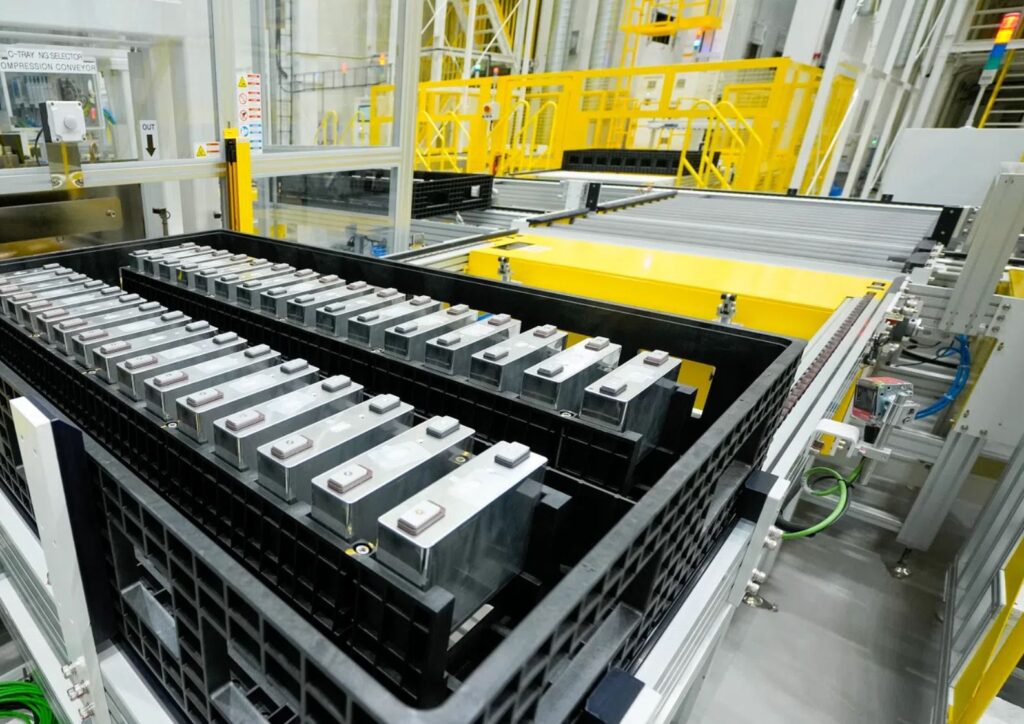
The closure of material loops for critical minerals—lithium, nickel, cobalt, manganese—is no longer theoretical. The Revolt Ett facility in Skellefteå, Sweden, represents one of Europe’s largest fully integrated battery recycling operations, with an installed capacity of 8,500 tonnes per year and infrastructure designed for further scaling. Originally developed by Northvolt as part of a $5 billion green financing package—the largest of its kind in Europe—the facility was acquired in early 2026 by Lyten, a California-based lithium-sulphur battery developer, as part of a broader strategy to build a vertically integrated industrial hub powered entirely by fossil-free energy.
The transaction underscores a critical point: even as Northvolt’s broader ambitions faltered amid rising capital costs and recalibrated EV demand forecasts, the recycling infrastructure retained independent strategic and financial value. Nordic institutional investors and project finance consortiums are increasingly structuring capital specifically for material recovery infrastructure, treating it as a discrete asset class with its own risk-return profile.
Built Environment and Real Estate
The concept of buildings as “material banks”—where every structural and finishing component is catalogued, certified, and designed for future deconstruction and resale—is gaining regulatory and financial traction. Green mortgages and construction loans in the Nordic market are beginning to carry pricing premiums tied to the verified use of certified circular materials and the incorporation of design-for-disassembly principles. As the EU’s Ecodesign for Sustainable Products Regulation (ESPR) mandates Digital Product Passports for construction materials by 2027, the data infrastructure required to verify circular claims will become a prerequisite for competitive financing terms.
The Friction Points: Why Scale Remains Elusive
A sophisticated analysis of circular finance must confront its operational and structural limitations. Three challenges stand out.
The Data Deficit
Circularity cannot be financed at scale without standardised, auditable data. How does a credit risk analyst verify that a supply chain is genuinely circular? The answer, in principle, lies in Digital Product Passports (DPPs)—electronic records mandated under the EU ESPR that track a product’s full lifecycle, from material provenance to end-of-life disposition. The regulatory timeline is now firm: battery passports become mandatory in February 2027, with textiles, iron and steel, and other priority sectors following through 2028–2030.
Yet the practical challenges are substantial. Data interoperability across sectors remains unresolved. Suppliers serving multiple industries may face conflicting passport requirements. The integrity of data carriers such as QR codes over a product’s multi-decade lifespan is uncertain. And for credit analysts, the leap from regulatory compliance data to actionable risk metrics is not automatic. The DPP framework provides transparency; translating that transparency into bankable underwriting standards is the next frontier.
The Scale Problem
Nordic markets benefit from a unique combination of high trust, tight-knit corporate networks, and strong institutional coordination between public and private sectors. These conditions facilitate ecosystem-wide collaboration on recycling, shared logistics, and standardised material flows. The question is whether this model can scale to fragmented, hyper-competitive markets such as the United States, or to the manufacturing complexity of Southeast Asia, where supply chain opacity and informal recycling sectors dominate.
The Nordic Roadmap for Circular Financing explicitly acknowledges this constraint, recommending the evaluation of public-private risk-sharing mechanisms—such as a Nordic “Circular Transition Guarantee” facility—to de-risk innovative circular ventures and provide a template for replication.
The Valuation Gap
Residual value financing requires confidence in long-term material prices, recycling technology performance, and secondary market liquidity. These variables are inherently uncertain. A bank lending against the future reclaimable value of battery minerals must model commodity price cycles, technological obsolescence, and regulatory shifts over a ten-to-fifteen-year horizon. The data history for these assets is thin. Until standardized benchmarks and insurance products emerge to backstop residual value risk, circular collateral will command a financing premium that may slow adoption.
The Strategic Outlook: Why This Matters Now
The transition from linear to circular capital allocation is not a distant sustainability aspiration. It is an immediate strategic imperative driven by three converging forces.
First, regulatory pressure is hardening. The EU ESPR, the Carbon Border Adjustment Mechanism (CBAM), and the Corporate Sustainability Reporting Directive (CSRD) are creating a compliance environment where material traceability and circular design are prerequisites for market access, not optional differentiators. Firms that cannot demonstrate circular credentials will face higher financing costs and restricted market participation.
Second, geopolitical risk is amplifying resource insecurity. The concentration of critical mineral processing in a handful of jurisdictions, combined with trade fragmentation and supply chain nationalism, has made material autonomy a strategic priority for European industry. Circular material loops—particularly in batteries, steel, and electronics—are increasingly viewed as industrial policy instruments as much as environmental ones.
Third, investor expectations are shifting. Asset managers with long-dated liabilities are recognising that portfolios concentrated in linear, resource-intensive business models carry unpriced transition risk. The institutions that develop robust circular underwriting frameworks today will be positioned to allocate capital more efficiently tomorrow, capturing alpha from the repricing of resource-dependent