Executive summary
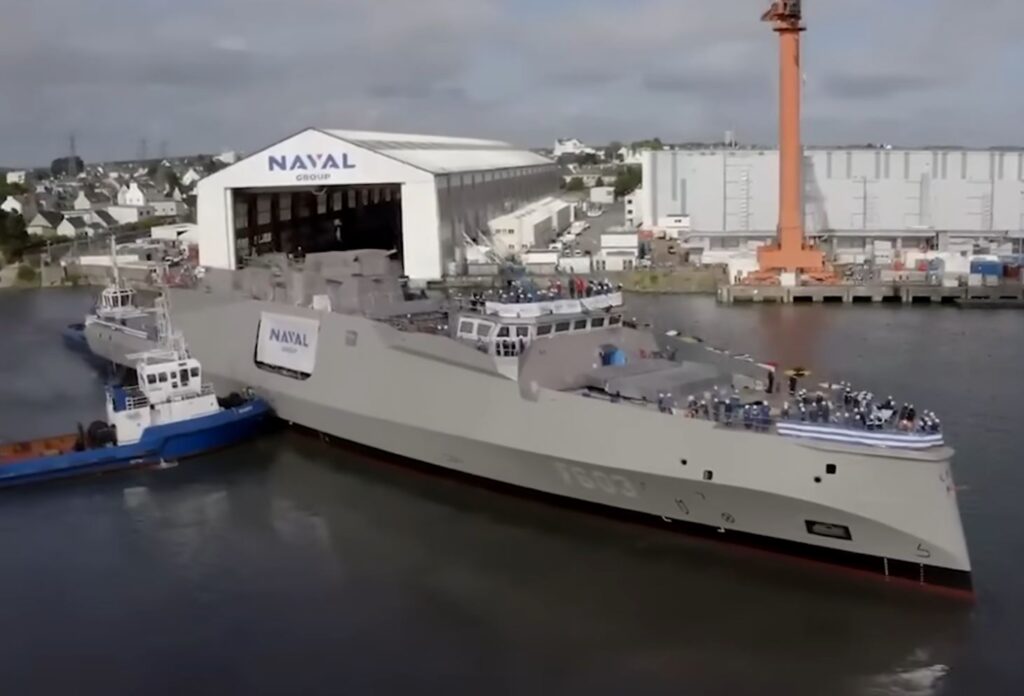
Sweden has agreed to buy four advanced frigates from France’s Naval Group in a procurement the government describes as one of the country’s largest defence investments since the Gripen fighter programme. The deal—priced at roughly 10 billion kronor per ship (approximately €0.8–0.9bn each) and expected to begin deliveries from 2030 at one vessel per year—signals a deliberate shift: from a primarily territorial navy focused on littoral defence to a more capable, expeditionary fleet interoperable with NATO partners. For executives, investors and policymakers, the purchase raises immediate questions about regional deterrence, defence industrial policy, supply‑chain resilience, and the long‑term cost of sustaining high-end maritime capabilities.
Why this matters now
The decision comes against a backdrop of heightened regional insecurity, accelerating naval modernisation across the Nordic and Baltic littoral states, and Sweden’s NATO accession. Faster delivery of an in‑production design and opportunities for cost‑sharing with allied customers were decisive. For Sweden, the ships provide a near‑term capability upgrade to counter aerial and ballistic threats, expand anti‑submarine and surface warfare reach, and improve the country’s capacity to operate alongside NATO in distant theatres. The transaction is therefore not merely an acquisition of hardware: it is a strategic realignment with economic, industrial and political consequences.
A decisive procurement amid shifting regional security
Prime Minister Ulf Kristersson framed the acquisition as “one of the largest defence investments since Gripen was introduced,” saying the frigates “best meet Swedish requirements” and will materially increase air‑defence capabilities. Commander‑in‑Chief Michael Claesson added that the vessels’ range and systems will enable Sweden to contribute to NATO operations where required, an important consideration following Sweden’s accession to the alliance.
Regionally, Nordic and Baltic nations have been investing heavily in maritime capabilities—modernising navies, expanding anti‑access/area‑denial (A2/AD) counters and bolstering maritime domain awareness. Sweden’s choice accelerates that trend and strengthens collective deterrence in the Baltic Sea, a flashpoint for geopolitical competition.
Why France and Naval Group
Sweden’s reported rationale emphasizes speed of delivery: Naval Group’s mature frigate design can be fielded sooner than bespoke domestic alternatives. The Swedish Defence Materiel Administration (FMV) has signalled talks with French authorities and Naval Group, and officials highlight potential cost‑sharing with France and Greece as an advantage. For Stockholm the trade‑off appears to be pragmatic: buy an off‑the‑shelf, proven platform fast, while securing options for local customisation—particularly around weapon fit, sensors and sustainment—during negotiations.
Operational and capability implications
Capability lift: The new frigates are larger than Sweden’s current corvette fleet and are built to defend against fighter aircraft and tactical ballistic missiles, enhancing layered air and missile defence. They also expand anti‑submarine and anti‑surface warfare reach.
NATO interoperability: Systems, communications and logistics will be selected to align with NATO standards, enabling combined operations, exercises and deployments beyond the Baltic.
Force posture: The ships provide Sweden with greater flexibility for forward deployment, coalition operations and maritime escorts, shifting the navy towards sustained presence rather than purely coastal defence.
Economic, industrial and investment implications
Fiscal profile: At roughly 10 billion SEK per vessel, total acquisition cost for four ships approaches 40 billion SEK before armament, sustainment and infrastructure costs. Long‑term operating expenses, training, munitions and shore support will add materially to lifecycle costs. Policymakers must plan for sustainment funding to avoid capability gaps.
Industrial impact: Sweden’s defence industry will press for meaningful participation in construction, systems integration, maintenance and offsets. Negotiations now underway should clarify technology transfer, workshare and local supply‑chain roles—decisive factors for jobs, skills and domestic industrial resilience.
Market signals: This procurement underlines the commercial opportunity in Nordic defence modernisation. Investors in shipbuilding, sensors, missiles, cybersecurity and sustainment services will watch contract terms and follow‑on domestic content clauses closely.
Risks and open questions
Cost and schedule risk: Large naval programmes are prone to overruns. Sweden selected a mature design to reduce schedule risk, but customisation, integration of national systems and supply‑chain bottlenecks can still drive costs and delays.
Sovereignty and strategic dependency: Relying on a foreign prime contractor raises questions about sovereign access to key technologies, sustainment dependencies and export controls—especially during crises. Negotiated offsets and local industrial workshare will modulate these risks.
Force‑mix and strategic coherence: Introducing larger, expeditionary frigates requires complementary investments—maritime logistics, basing, munitions stockpiles, and training pipelines—to realise their potential. Without parallel funding, a capability gap could emerge between acquisition and operational readiness.
Environmental and digital considerations: Modern warships must meet stricter environmental regulations and cyber‑resilience requirements. Sweden should insist on fuel‑efficiency, emissions mitigation and hardened command‑and‑control architectures.
Comparative Nordic perspective
Nordic countries are converging on a pattern: larger, sensor‑rich surface combatants combined with enhanced ASW and air‑defence layers to deter sophisticated threats in confined waters. Sweden’s decision to procure French frigates complements regional capability growth while underscoring divergent industrial approaches—some neighbours prioritise domestic builds, others foreign partnerships—each with different implications for jobs, supply chains and interoperability.
What leaders should do next
Secure sustainment funding: Parliamentary and budgeting authorities must budget for lifecycle costs—maintenance, training and munitions—to avoid capability shortfalls.
Lock in industrial participation: FMV should prioritise clear, enforceable industrial‑benefit clauses that preserve Swedish expertise and shipyard activity.
Strengthen regional procurement coordination: Joint procurement, shared logistics hubs and common standards across Nordic and Baltic partners can reduce costs and increase resilience.
Insist on green and digital standards: Contracts should embed environmental performance and cyber‑resilience as baseline requirements.
Manage strategic messaging: As the programme proceeds, Sweden should communicate transparently to allies, domestic stakeholders and industry about timelines, cost expectations and industrial outcomes.
Conclusion: a strategic choice with long tails
Sweden’s purchase of four French frigates is more than an acquisition—it is a strategic bet on a future in which the Baltic Sea is an arena for continuous allied engagement and deterrence. The immediate benefits are tangible: accelerated capability, NATO interoperability and a demonstrable commitment to regional security. The long game, however, will be decided by how Sweden manages cost and schedule risk, secures industrial gains at home, funds sustainment, and integrates these ships into a coherent defence posture with Nordic partners. For investors and policymakers, the coming months of negotiations will reveal whether this procurement becomes a template for efficient, alliance‑oriented modernisation—or a cautionary tale of capability procurement without the necessary follow‑through.