London’s political turbulence is no longer a domestic affair—it is a material variable in Nordic investment calculus. As Labour’s electoral setbacks trigger a leadership crisis, international executives must reassess UK exposure through a lens of regulatory continuity, currency volatility, and strategic optionality.
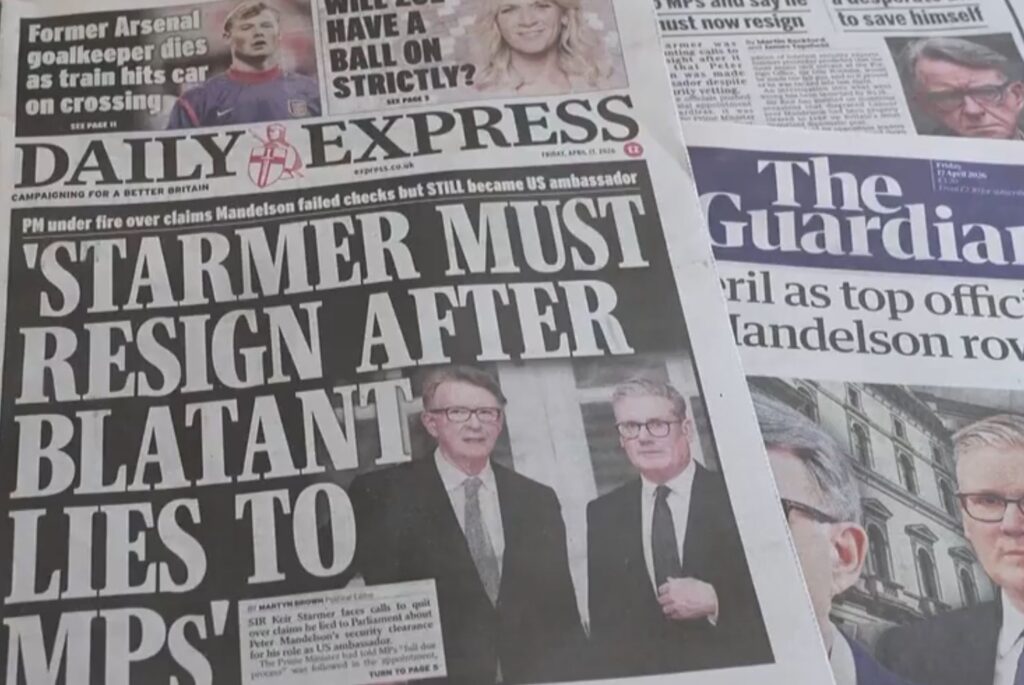
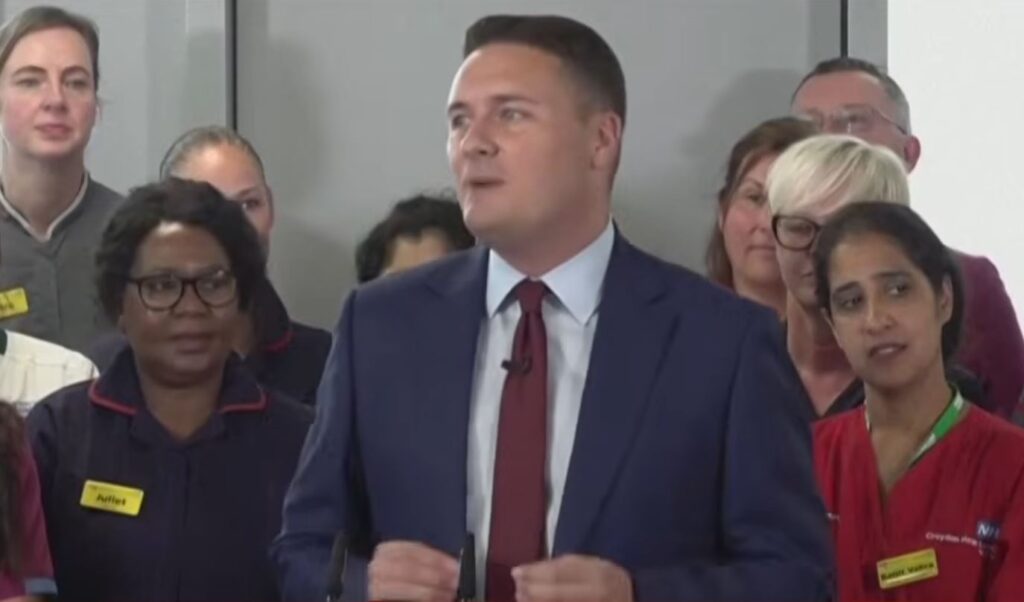
The United Kingdom’s political landscape has entered a period of acute uncertainty following the Labour Party’s historically poor performance in the May 2026 local elections. With the governing party shedding nearly 1,500 council seats and losing control of 38 local authorities, Prime Minister Keir Starmer now confronts mounting pressure from within his own ranks. The resignation of Health Secretary Wes Streeting on May 14—citing a “vacuum” of vision and “drift” in direction—has intensified speculation about a potential leadership contest.
For Nordic executives, investors, and policymakers, these developments warrant more than diplomatic observation. The UK remains a significant trade partner, investment destination, and strategic gateway for Nordic enterprises. Political instability at Westminster introduces tangible risks: policy discontinuity, regulatory ambiguity, sterling volatility, and potential shifts in the UK’s post-Brexit trajectory. This analysis examines the business implications of London’s political moment through a Nordic strategic lens.
The Electoral Signal: Decoding Voter Discontent
The May 2026 local elections delivered a stark verdict on Labour’s first term. Beyond the headline losses—Labour’s worst local election performance since 1995—the geographic pattern of defeat carries strategic significance. Traditional “Red Wall” strongholds in northern England and the Midlands shifted toward Reform UK, which gained over 1,450 councillors and secured control of 14 councils previously held by other parties.
Why this matters for business: Local government controls critical levers affecting commercial activity: planning permissions, business rates, infrastructure investment, and skills partnerships. Fragmentation at the local level complicates national policy implementation and creates a patchwork regulatory environment. For Nordic firms with UK operations—particularly in renewable energy, advanced manufacturing, or life sciences—this decentralisation demands more granular stakeholder engagement and scenario planning.
The rise of Reform UK introduces additional variables. While the party’s policy platform remains evolving, its emphasis on immigration restriction, regulatory simplification, and scepticism toward multilateral frameworks could influence the UK’s approach to EU relations, trade agreements, and environmental standards. Nordic investors, accustomed to stable regulatory regimes and consensus-driven policymaking, should monitor whether populist momentum translates into substantive legislative shifts.
Leadership Vacuum: Implications for Policy Continuity
Wes Streeting’s resignation letter framed the crisis as one of strategic direction rather than mere political management. His critique—”Where we need vision, we have a vacuum. Where we need direction, we have drift”—resonates beyond Westminster. For international stakeholders, the core concern is policy predictability.
A protracted leadership contest could delay critical decisions on:
Fiscal policy: The Autumn Statement’s timing and content may shift, affecting public investment priorities and tax frameworks.
Industrial strategy: Clarity on green technology subsidies, life sciences incentives, and digital infrastructure funding could stall.
EU-UK relations: Negotiations on financial services equivalence, research collaboration (Horizon Europe), and data adequacy require stable counterparties.
Nordic comparative perspective: Sweden and Norway’s consensus-oriented governance models—characterised by multi-party consultation, long-term policy horizons, and institutional continuity—stand in contrast to Westminster’s adversarial volatility. While no system is immune to political turbulence, Nordic executives should factor governance resilience into country-risk assessments. The UK’s current instability underscores the premium placed on jurisdictions with robust institutional safeguards against abrupt policy reversals.
Potential Successors: Scenarios for Business
Should a leadership contest materialise, several figures emerge as plausible successors, each carrying distinct implications for the business environment:
| Candidate | Political Position | Potential Business Implications |
| Wes Streeting | Centre-right Labour; fiscal pragmatist | Likely continuity on fiscal discipline; potential recalibration of social spending; emphasis on public-private partnerships in health/tech |
| Andy Burnham | Soft-left; mayor of Greater Manchester | Stronger focus on regional devolution, green industrial policy, and social infrastructure; procedural hurdles as non-MP |
| Angela Rayner | Soft-left; former deputy PM | Emphasis on worker protections, public investment; unresolved questions on tax governance may affect investor confidence |
| Rachel Reeves | Centre-left; Chancellor | Fiscal credibility focus; likely continuity on macroeconomic framework; potential for cautious regulatory approach |
Note: Labour leadership rules require nominees to secure backing from 20% of parliamentary Labour Party members (81 MPs) to trigger a contest.
Strategic insight: Regardless of outcome, the next 12–18 months may feature heightened political noise. Nordic firms should prioritise:
1. Engagement diversification: Build relationships across party lines and devolved administrations (Scotland, Wales, Northern Ireland).
2. Contractual safeguards: Include force majeure and regulatory change clauses in long-term UK agreements.
3. Currency hedging: Sterling volatility often correlates with political uncertainty; review FX risk management protocols.
The Nordic Lens: Governance, Investment, and Strategic Patience
Nordic capital has maintained significant exposure to the UK market: Swedish firms invested €4.2 billion in UK assets in 2024 alone, while Norwegian sovereign wealth holdings exceed £15 billion. This relationship rests on shared values—rule of law, innovation ecosystems, and open trade—but political turbulence tests the resilience of that foundation.
Three considerations for Nordic decision-makers:
1. Regulatory arbitrage vs. strategic commitment: Short-term policy uncertainty may tempt relocation of functions to EU hubs (Amsterdam, Copenhagen, Stockholm). However, the UK’s strengths in fintech, life sciences, and creative industries remain compelling. The question is not whether to exit, but how to structure UK operations for optionality.
2. ESG alignment under scrutiny: Nordic investors increasingly screen for governance stability alongside environmental and social metrics. Westminster’s current instability may affect UK assets’ ESG ratings, particularly on the “G” pillar. Proactive engagement with portfolio companies on political risk mitigation becomes essential.
3. Brexit’s unfinished chapter: Political distraction in London could delay resolution of outstanding EU-UK frictions (financial services, professional qualifications, agri-food standards). Nordic firms operating across both markets should maintain contingency plans for regulatory divergence.
Forward Outlook: Navigating Uncertainty with Discipline
While political headlines dominate, underlying economic fundamentals retain importance. The UK’s innovation infrastructure, skilled workforce, and legal system continue to offer competitive advantages. However, the current crisis elevates three structural trends that merit strategic attention:
Devolution acceleration: Regardless of Westminster’s leadership outcome, pressure for greater regional autonomy will intensify. Nordic firms with place-based strategies (e.g., offshore wind in Scotland, medtech in the North) should deepen subnational partnerships.
Digital governance divergence: UK approaches to AI regulation, data governance, and platform accountability may increasingly diverge from EU norms. Nordic tech leaders should monitor these developments for compliance and market-access implications.
Green transition pacing: Political instability risks delaying critical investments in grid infrastructure, carbon capture, and sustainable transport. Nordic clean-tech exporters should assess whether UK project pipelines remain viable under various political scenarios.
Conclusion: Strategic Clarity Amid Political Noise
The turbulence in Westminster is a reminder that political risk is not an abstract concept—it is a variable in capital allocation, market entry, and partnership decisions. For Nordic executives, the appropriate response is neither alarm nor complacency, but disciplined scenario planning.
Actionable recommendations:
Review UK exposure: Map revenue, supply chain, and regulatory dependencies against potential policy shifts.
Engage constructively: Participate in business councils and trade associations that advocate for stable, evidence-based policy.
Maintain optionality: Structure investments to allow for adaptation without premature retreat.
Monitor leading indicators: Track parliamentary voting patterns, devolved government statements, and business sentiment surveys for early signals of policy direction.
The UK remains a significant market for Nordic enterprise. Navigating its current political moment requires the same qualities that define Nordic business leadership: analytical rigour, long-term perspective, and strategic patience. By treating political uncertainty as a manageable risk factor rather than an existential threat, Nordic decision-makers can preserve value while positioning for the next phase of UK economic evolution.
Nordic Business Journal delivers strategic intelligence for executives shaping the future of Northern European enterprise. This analysis is based on verified reporting as of May 2026 and intended for informational purposes only.