Executive summary
A new Ebola outbreak centred in eastern Democratic Republic of Congo (DRC) with cross-border cases reported in Uganda has re‑ignited concerns about fragile health systems, supply‑chain vulnerability and the limits of existing medical countermeasures. With at least 136 deaths and more than 543 suspected infections reported by local authorities and the World Health Organization — and the WHO declaring an international emergency — business leaders must move beyond immediate safety responses to a strategic assessment of operational risk, investment exposure and the geopolitical and innovation implications for the region.
Professor Johan von Schreeb, a leading authority in disaster medicine, warns the outbreak may have spread undetected for weeks. “Look at the ball,” he told television audiences — a succinct reminder to focus on containment fundamentals: surveillance, contact tracing, safe clinical care and timely international coordination. For boards, investors and ministers, the strategic questions are whether existing tools and governance mechanisms are fit for purpose, which sectors and suppliers are most exposed, and where public‑private action can materially reduce future risk.
Where the outbreak stands
Geography and scope: The outbreak has been concentrated in Ituri province in northeastern DRC, with reported spillover into Uganda. The affected corridor covers large distances over difficult terrain and limited road networks — complicating access for health teams and the delivery of supplies.
Epidemiology: Local health authorities and the WHO have linked dozens of deaths to an Ebola virus of the Bundibugyo lineage. Official counts suggest hundreds of suspected infections; surveillance and contact‑tracing gaps mean these numbers are likely conservative.
International alert: The WHO declared the situation a public health emergency of international concern, with Director‑General Tedros Adhanom Ghebreyesus publicly “deeply concerned.” The declaration typically triggers coordinated international support but also signals heightened scrutiny from investors, insurers and governments.
Why this matters now — and for business
Operational continuity: Multinationals and commodity operations in eastern DRC (including mining, logistics and agribusiness) face acute workforce and transport risks. Even localized outbreaks can force site closures, curtail flights, and disrupt port and rail links.
Supply‑chain exposure: DRC is a linchpin for critical minerals. Outbreaks can delay production and complicate contractor access — a direct risk for companies and investors in battery, EV and electronics supply chains.
Investor confidence and insurance: Health crises elevate political, security and reputational risk premiums. Insurers and lenders may reassess coverage for force majeure, evacuation costs and staff safety clauses, with implications for project finance and working capital.
ESG and social license: Companies operating in affected regions are under growing scrutiny for their role in community health, labour protection and pandemic preparedness — areas now integral to ESG assessments and to maintaining social license to operate.
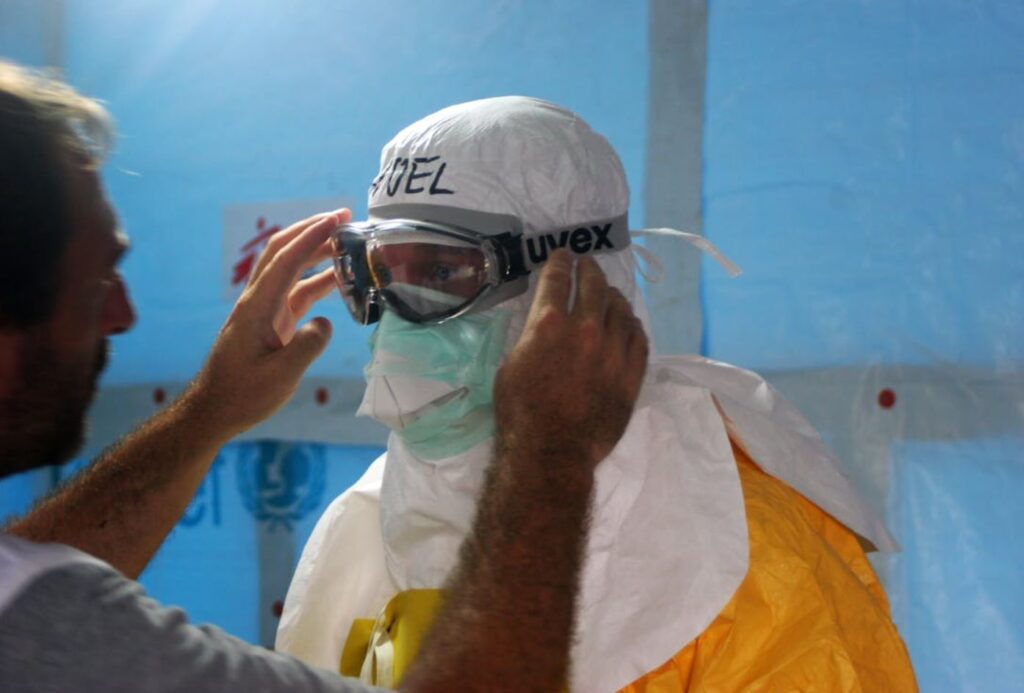
The medical countermeasure landscape — realistic expectations
Variant challenges: Bundibugyo (BDBV) is a recognized species of Ebola virus. Unlike the Zaire strain, for which ring‑vaccination strategies (rVSV‑ZEBOV) have been used in previous outbreaks, there is no widely licensed vaccine specifically for Bundibugyo. This limits immediate options for mass vaccination campaigns targeted at this variant.
Treatments: Approved therapeutics and monoclonal antibody treatments were developed and authorised largely against Zaire ebolavirus. Their efficacy against BDBV is uncertain and under evaluation.
R&D and deployment: The WHO and research partners are rapidly assessing candidate vaccines and therapeutics for cross‑protection. Several platform technologies (viral vectors, protein subunits, mRNA) developed or accelerated during recent outbreaks and the COVID‑19 pandemic could be adapted more quickly today than in the past — but regulatory, ethical and logistical hurdles remain.
Diagnostics and labs: Rapid, decentralized diagnostics and genomic sequencing are essential to confirm cases and track viral evolution. Strengthening lab networks is a priority for any effective response.
Operational, governance and geopolitical headwinds
Fragile states and access: Protracted insecurity in eastern DRC and logistical barriers inhibit contact tracing and the safe movement of health teams. Armed groups increase the cost and risk of delivering aid and maintaining essential services.
Cross‑border mobility: Porous borders with Uganda and regional movement of people create predictable spillover risks — complicating containment and emphasizing the need for regional coordination.
Funding and donor coordination: Emergency declarations mobilize international funding but also expose chronic underinvestment in routine public‑health infrastructure. Short funding cycles can leave health systems in the region susceptible to recurrent shocks.
Geopolitics: Competition among external donors and health actors can shape the response footprint. For private‑sector actors, this environment raises reputational and compliance considerations when coordinating evacuations, medical support or community engagement.
Opportunities for investors and innovators
Diagnostics, cold chain and logistics: There is a clear market for robust, field‑grade diagnostics, portable cold‑chain solutions and last‑mile delivery systems — technologies that also advance climate‑resilient supply chains in remote regions.
Platform vaccines and broad‑spectrum antivirals: Investors with a patient, mission‑oriented mandate may find attractive opportunities in platform technologies capable of rapid adaptation to diverse filoviruses and other high‑consequence pathogens.
Digital surveillance and data platforms: Scalable systems for contact tracing, workforce health monitoring and real‑time supply‑chain visibility are in demand — and can be applied across broader health and safety use cases.
Public‑private risk pooling: New models for contingent finance, insurance and public‑private preparedness funds could reduce the economic impact of outbreaks and make emergency responses faster and more predictable.
Policy and leadership imperatives
Strengthen regional health security: Nordic and EU policymakers, multilateral lenders and private investors should prioritize investments in laboratory networks, workforce training and health‑system resilience in the African Great Lakes region as strategic priorities — not charity.
Pre‑authorise emergency use pathways: Regulators should agree on clear, ethical frameworks for emergency use of candidate vaccines and therapeutics to allow rapid deployment while protecting trial integrity and community trust.
Integrate health into corporate risk frameworks: Boards and risk officers must incorporate epidemic scenarios into continuity planning, supply‑chain stress tests and investor disclosures — aligning health resilience with climate and cyber risk assessments.
Responsible corporate engagement: Companies should coordinate with host governments and NGOs on worker safety protocols, community support and transparent communications to preserve social license and operational continuity.
Nordic and international perspective
Nordic governments and firms generally have low direct exposure to clinical risk from regional outbreaks. Their comparative advantage lies in financing, innovation and platform delivery: investing in diagnostics, digital health, cold‑chain logistics and capacity building can deliver both commercial returns and measurable public‑good benefits. Nordic pension funds and impact investors should weigh long‑term resilience gains against short‑term macro uncertainty in frontier markets.
Conclusion — strategic takeaways for leaders
This outbreak is a reminder that infectious‑disease shocks still matter to global business, not just public health. For executives and investors, the priority is pragmatic: protect people and operations now, then update strategy to reflect structural vulnerabilities exposed by the crisis. For policymakers and development financiers, the imperative is to channel the headline attention that emergencies create into sustained investments in regional health security and adaptive innovation — from platform vaccines to resilient logistics.
“Look at the ball”: focus on the containment fundamentals today, and on building durable systems — regulatory, technical and financial — that reduce the probability of a local event becoming a regional economic shock tomorrow.