Executive Introduction
After a standout 2025, the Swedish krona has entered 2026 as a case study in how strong fundamentals can collide with risk aversion, positioning shifts, and geopolitical overhang. While Sweden’s growth outlook remains one of the healthiest in the G10, the SEK’s trajectory has diverged sharply from its economic narrative. For CFOs, investors, and policymakers with Nordic exposure, the krona now embodies the region’s broader tension: robust fiscal discipline and innovation capacity on one side, and heightened sensitivity to global risk, debt structures, and monetary policy expectations on the other.
1. From Star Performer to G10 Laggard: What Changed?
The SEK closed 2025 as the G10’s top performer, buoyed by relative growth and expectations of a more hawkish Riksbank. Yet early 2026 data show a reversal: the krona has weakened 2.4% against the Bloomberg dollar index, trading near 9.45 to the dollar, making it the worst-performing G10 currency year-to-date. Three structural forces explain the dislocation:
Geopolitical Beta: As a small, open economy with deep trade linkages, Sweden’s currency trades as a proxy for European risk sentiment. Escalating Middle East tensions have prompted systematic risk-off flows, with the SEK absorbing disproportionate selling pressure ahead of weekends.
The “Good News Is Bad News” Paradox: Sweden is forecast to be the only G10 economy to outgrow the U.S. in 2026, with ING projecting 2.5% GDP growth. Yet Q1 growth of 0.8% and CPIF inflation at 3.1% — above the Riksbank’s 2% target — have led markets to price “higher-for-longer” policy, straining Sweden’s household sector, where private debt and housing exposure remain elevated.
Positioning Unwind: Commodity Trading Advisors and trend-following funds entered 2026 with crowded long-SEK exposure after 2025’s rally. The technical correction has amplified spot moves beyond what fundamentals alone would dictate.
2. Nordic Divergence: Why Neighbours Aren’t Moving in Lockstep
| Currency | 2026 Performance Status | Primary Drivers | Strategic Implication |
| Swedish Krona (SEK) | Worst G10 Performer YTD | Geopolitical risk sensitivity, crowded longs, household debt concerns | Hedging costs rising for SEK-denominated exporters; valuation case building for long-term investors |
| Norwegian Krone (NOK) | G10 Outperformer, +8.4% vs USD | Oil price support, energy supply shock as “growth-negative” but currency-positive | Energy transition capex remains attractive; NOK offers carry but tied to commodity cycle |
| Danish Krone (DKK) | Stable | ERM II peg to EUR | Predictability for treasury planning; limited upside/downside for FX-driven returns |
The divergence underscores a key point for regional strategy: “Nordic” is not a single FX bloc. Monetary regimes, energy exposure, and balance-sheet structures create materially different risk profiles.
3. The Riksbank Dilemma: Policy, Inflation, and Housing
Market pricing now implies only ~15bp of Riksbank hikes on a 1-year view, yet this is still more hawkish than expectations for the ECB. The central bank faces a narrow path: tighten enough to anchor inflation, but not so aggressively as to trigger a correction in Sweden’s interest-rate-sensitive housing market. With public debt low at ~33% of GDP, Sweden has fiscal room to manoeuvre, but monetary policy remains the binding constraint for SEK sentiment.
4. Valuation vs. Volatility: Is the Krona a Coiled Spring?
Despite near-term weakness, several institutions argue the SEK is undervalued on medium-term models. Rabobank expects another “good year” for SEK in 2026 and sees EUR/SEK continuing its descent toward 10.50, citing growth and budget fundamentals. ING likewise forecasts “slower, more predictable appreciation” driven by solid 2.5% growth and no further Riksbank cuts.
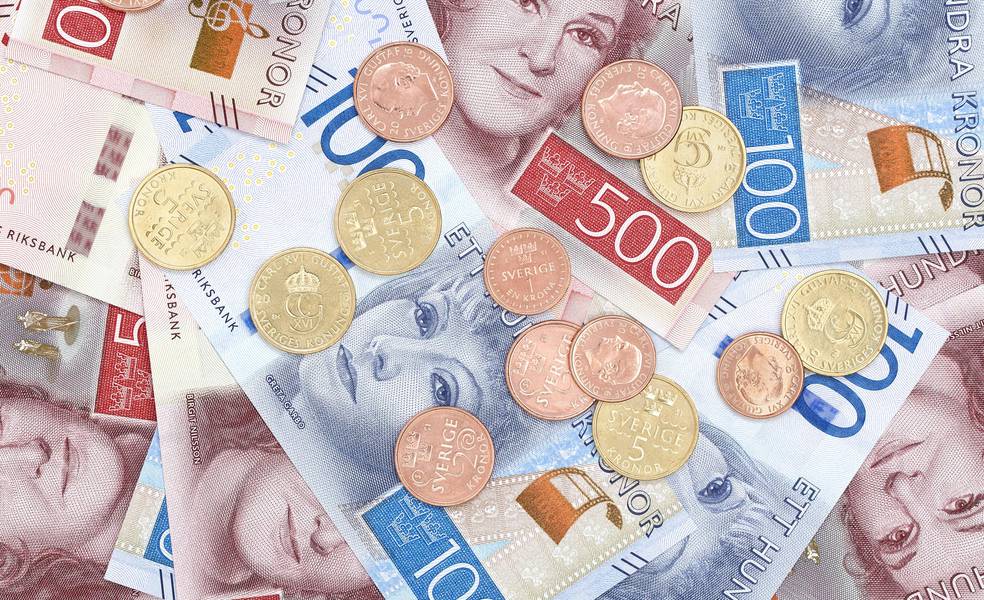
The catalyst for a rebound likely hinge on two variables:
1. Geopolitical De-escalation: A reduction in Middle East risk premia would disproportionately benefit high-beta G10 currencies like SEK.
2. Rate Differentials: If the Riksbank stays on hold while the ECB turns more dovish, interest-rate differentials could re-attract carry flows.
5. Why This Matters Now: Risks and Opportunities for Decision-Makers
For Corporate Treasurers: SEK volatility raises hedging costs for exporters in autos, industrials, and tech. Scenario planning should include a 5-10% range for EUR/SEK through H2 2026.
For Investors: The unwind of crowded positioning has improved risk-reward. Undervaluation plus fiscal strength makes SEK an asymmetric play on European risk normalisation.
For Policymakers: Sweden’s case illustrates the challenge for small open economies: strong growth can invite currency instability if it triggers policy uncertainty. The trade-off between inflation control and financial stability will define Riksbank credibility.
For Entrepreneurs: Currency weakness lowers foreign acquisition costs for Swedish tech firms but increases imported input costs. Supply-chain localisation and EUR invoicing are tactical responses.
Strategic Perspective and Forward-Looking Trends
The krona’s 2026 performance is less a verdict on Sweden’s economy than a reflection of how global capital now prices geopolitical and positioning risk. Long-term trends remain intact: digital transformation, green energy leadership, and fiscal prudence anchor Sweden’s competitiveness. Yet the near-term lesson is clear — in a fragmented geopolitical environment, even strong macro stories need a risk-management overlay.
If de-escalation materializes and the Riksbank maintains its path, the SEK is positioned for a structural rebound later this year. If not, expect continued two-way volatility. Either way, the krona will remain a real-time barometer of how markets weigh Nordic fundamentals against global uncertainty.
For senior executives and investors, the SEK is no longer just a currency — it’s a signal. Watching it means monitoring the intersection of geopolitics, central bank divergence, and market structure. The upside case is compelling, but timing will be dictated by forces far beyond Stockholm.